
Ms. M's mother died several years ago, and she's been without any parental support since she was 15. Since then, she's had no stable place to live and has been couch surfing, staying with family and friends.
Along the way, people she trusted stole her identity and attempted to use her Social Security number and birthdate to open a credit card and buy a car.
Now, she's 18 and her credit has been ruined, making it difficult to find a landlord who will rent to her. She's enrolled in community college and applying for jobs, hoping to one day be able to rent a safe apartment she can call home.
Ms. M, who isn't being named because she's a victim of identity theft, has been working with Legal Services of Eastern Missouri to rectify her credit and get on her feet.
She is one of the thousands of St. Louisans who are part of the 100 Neediest Cases campaign. Beginning Sunday, the Post-Dispatch will highlight 100 stories as part of an annual holiday effort between the United Way of Greater St. Louis and dozens of social services agencies, school districts and nonprofits to offer assistance to local families facing adversity.
People are also reading…
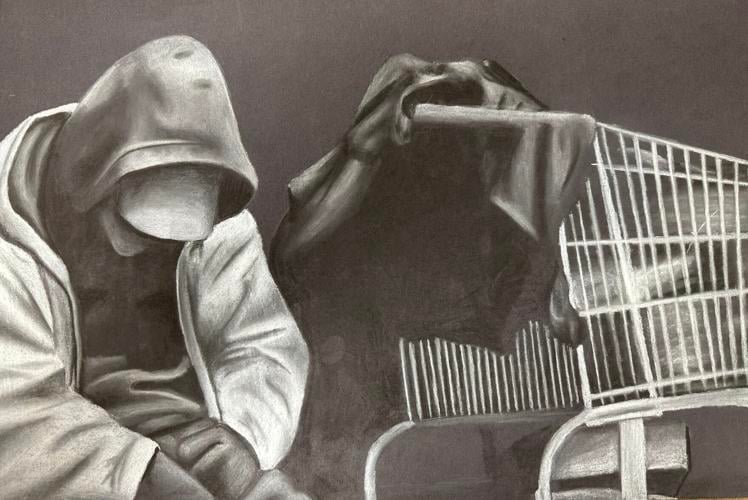
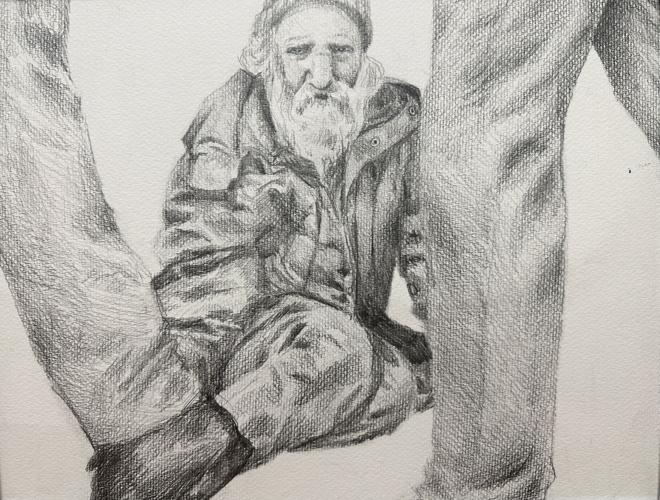
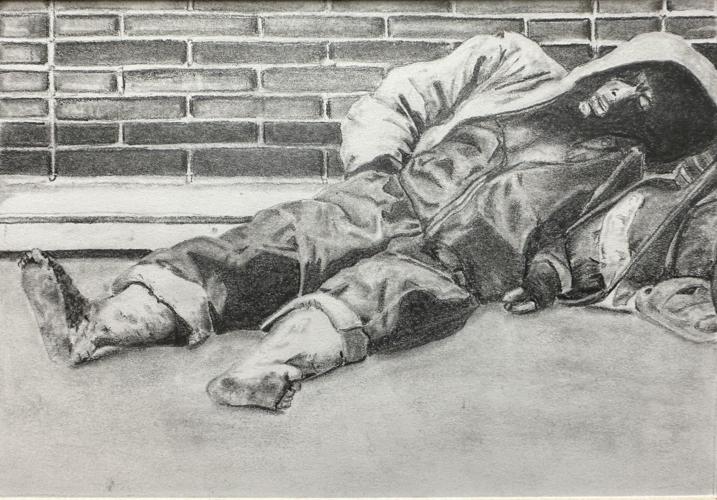
The case profiles will be accompanied by artwork created by students in St. Louis area schools in an annual contest. Carly Wahle, of Edwardsville High School, placed first; Scarlet Brothers, of Nerinx Hall, placed second; and Abel Curdt, of Brentwood High School, placed third.

First place — Artwork by Carly Wahle, Edwardsville High School.

Donate to the 100 Neediest Cases campaign.
“We have a lot of families who are dealing with things that do not resolve in 365 days. They may be in a little better situation than they were, but they're still trying to get back up on their feet," said Becky White, United Way of Greater St. Louis direct services program manager. "Through this program, they get a little bit of help to do that and then a little bit of help to have a holiday.”
Despite its name, the program benefits more than 100 cases. This year, 5,370 families are participating in the program, which is about a 13% increase from 2022. All participating families live at or below 125% of the federal poverty income level. For a family of four, that's an annual income of $37,500 — though many struggle to get by on far less.
Last year, over $1.6 million dollars was raised to help 4,684 families for a total of 11,309 people. Check donations can be made as a gift to the 100 Neediest Cases General Fund, or folks can adopt a family or individual.
"One hundred percent of what we raise goes to the families and that's a very key component of the program," White said. "From a lot of our donors, we hear that that's really important to them."

Second Place — Artwork by Scarlet Brothers, Nerinx Hall
White said St. Louis often rings in as the nation’s 26th largest city but is ranked in the top 10 when it comes to most philanthropic cities. She cited Midwestern values as the spine of local generosity.
“That’s why 100 Neediest is more than 100 years old,” White said. “The St. Louis community has responded to the needs. It’s their neighbor, it’s the person across the street, it’s their coworker and recognizing that makes a difference.”
Help with growing up
Legal Services of Eastern Missouri is just one of the 58 different agency partners for 100 Neediest Cases. Some of the cases highlighted in this year’s campaign, like Ms. M, come from its Youth and Family Advocacy Program arm, which assists youth and families experiencing homelessness and housing instability through case management and legal help.

Third Place — Artwork by Abel Curdt, Brentwood High School
Youth who have been in Missouri's foster care system, or under the care of the state's Children's Division, are typically eligible for state and federal housing placement programs, tuition and job training/employment assistance, and help with transportation, health care, mentoring and child care when they reach 18.
But young people who haven't been in the state system may not qualify for such help.
Legal Services of Eastern Missouri’s Youth and Family Advocacy program assists unaccompanied youth, typically ages 15 to 19, obtain those resources. Program director and lead attorney Tori Dempsey said they often assist clients get identification records, navigate the youth housing landscape, address food insecurity, deal with the municipal courts for low-level offenses and more to ensure basic needs are met and clients can achieve independence.
Dempsey said that when it comes to cash assistance, her clients are hoping for things like transportation help and daily hygiene supplies, which is why 100 Neediest Cases is so critical to her program — especially during the holiday season.
“It is such a privilege to be able to celebrate a holiday and when the whole nation is doing it in a very public way and you feel like you can’t participate, it can wear on your mentality, so for 100 Neediest to be able to provide that for a young person is really special,” she said.
Some of the youth clients don’t have a parent or legal guardian in their lives, others are experiencing homelessness, and about 60% to 70% of them are pregnant or parenting, said Krysten Young, a social worker with the program.
“They’re hitting all these milestones, and they don’t have an adult,” Young said. “I feel like a lot of what I do is being there so they can reach those milestones and ask those questions and have somebody to point them in the right direction. It’s critical to be able to have that trusted adult to talk to and just figure out what is the next step.”
Working together
The 100 Neediest Cases collaboration is also receiving help from students at the University of Missouri — St. Louis. This year, 39 social work students read all 5,370 cases and, as a class assignment, decided how they would divvy up a set amount of money for each family.
Dean of the School of Social Work Patricia Rosenthal said undergrad and graduate students are given the cases and a set amount of money.
"It's a wonderful learning experience. Students develop criteria, learn how to allocate resources, discuss unmet needs and this is usually the first time many have worked in collaboration with an organization," Rosenthal said.
It's also the first time many students see certain types of need or the unique experiences faced by others, she said.
"They'll say things like, 'I had no idea how challenging some people's lives are,' or this is what a new immigrant experiences or how many house fires affect people," Rosenthal said. "The magnitude of need in the community is something they talk about."
And many social work students who have graduated from UMSL now work for the agencies partnering with 100 Neediest Cases. In a full-circle moment, former students often are the ones who now write the cases that are submitted to the United Way by agencies to the campaign.
"It's hands-on learning. The help it provides to United Way is important, and it allows for the university to be in the community," she said.
Rosenthal said she remembers when United Way and UMSL first began the partnership over 25 years ago. She called the collaboration gratifying and hopes it continues.
“That’s the amazing part of the mosaic of 100 Neediest,” said White, of the United Way. “It is not just one group. There really are a lot of partnerships. There isn’t a single entity that makes this work. It’s all of us coming to the table together.”

Share the generosity of the holiday season by giving to the 100 Neediest Cases campaign.
Donate to the 100 Neediest Cases campaign.