

On Black Thursday, Oct. 24, 1929, ticker-tape machines in downtown brokerages clacked two hours behind the plummeting New York stock trades.
The Post-Dispatch noted that one wealthy investor, “sitting motionless in a chair,” lost $100,000. Small or “shoe-string” investors, with much less to spare, were ruined.
Still, hope persisted that the crash wouldn’t hit ordinary workers. On Nov. 15, the newspaper reported that “employment in St. Louis continues at a high level.”
Not for long. By April 1930, with the Great Depression already settling hard, more than 35,000 able-bodied St. Louisans were jobless, or about 10 percent of the workforce. (The “unemployment rate” was a 1940 creation.)
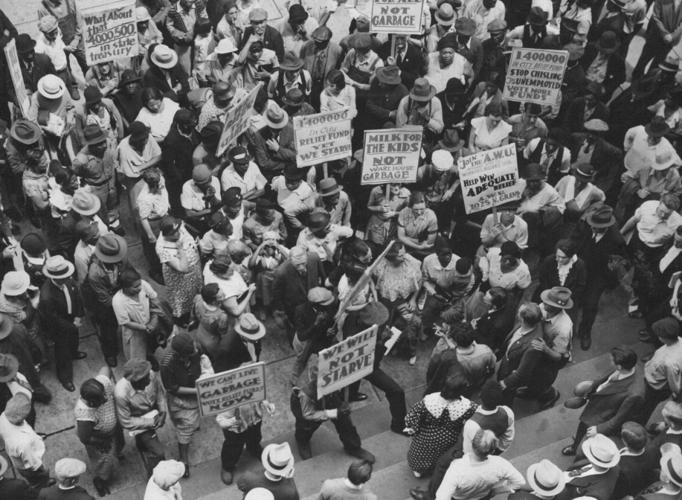
The city’s small communist party led marches upon City Hall, then the most obvious symbol of government. Police grumbled that leaders sang “Bolshevik songs” on their way to jail.
People are also reading…
The city opened a Citizens Unemployment Relief Bureau in the old Southern Hotel, at Fourth and Walnut streets. More than 1,500 people showed up for 60 jobs. Swamped clerks kept hearing the same plea: “I can do anything.”
The St. Louis Building Trades Council said 60 percent of its members were idle. One in six plasterers had work. The Boot and Shoe Workers Joint Council, facing 50 percent unemployment, voted a 12 percent wage cut.
So many men took refuge at the Municipal Lodging House, a shelter at 208 North 14th Street, that the city opened a second one. St. Patrick’s Church downtown, led by the tireless Rev. Timothy Dempsey, once served 31,000 free meals in a week.
Christ Church Cathedral organized variety shows for the homeless. “Just to be doing something takes the men’s minds off their troubles,” said the Rev. Sidney Sweet.
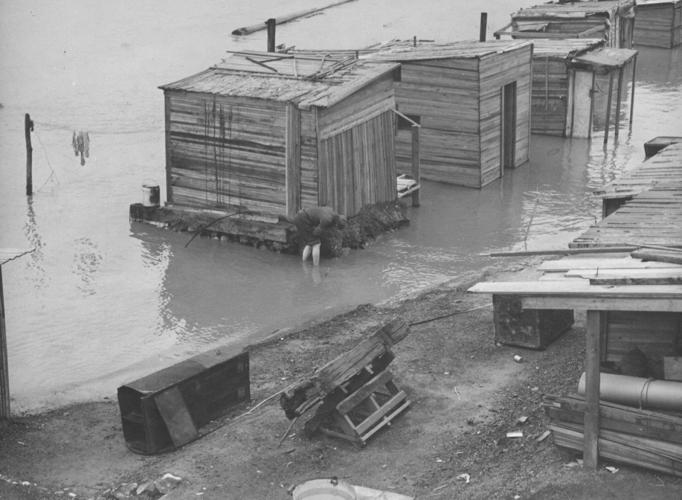
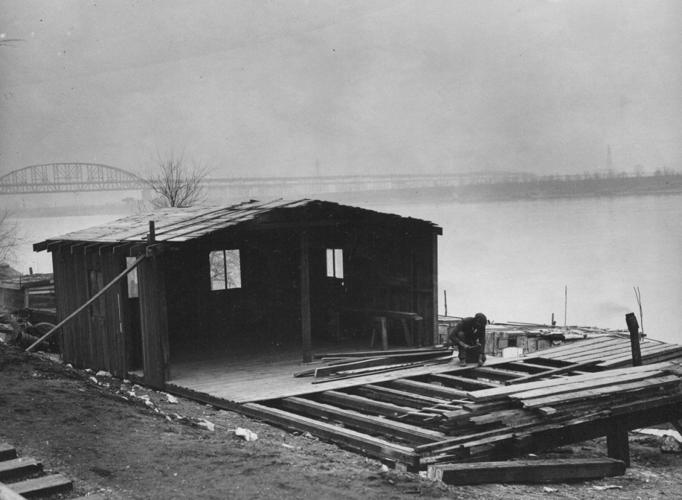
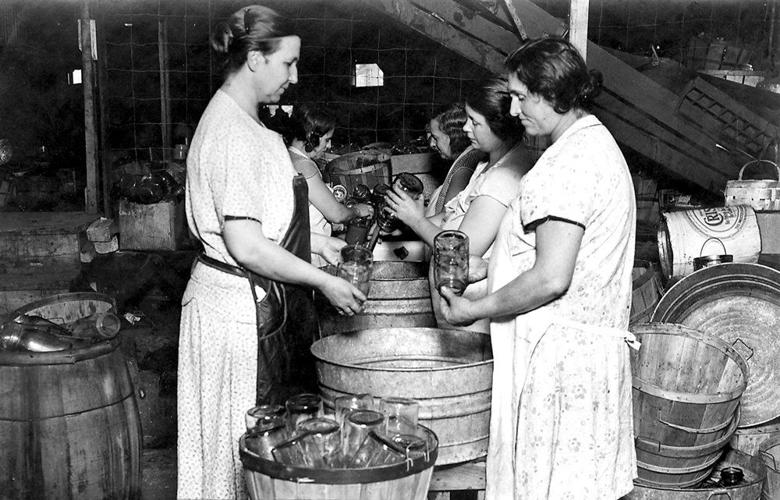
Along the Mississippi River for a mile south of the Municipal (later MacArthur) Bridge, 5,000 desperate people built shacks and called their refuge Hooverville, one of many such swipes at President Herbert Hoover. The Welcome Inn, a free kitchen beneath the bridge, wrapped meals for hungry families. Its workers were paid in vegetables.
The local Crisis Relief campaign, led by prominent citizens, raised $2.4 million in 1932. But leaders said it could help only about one-third of the needy. Average relief: $3.80 daily per household.
Things got worse. The federal government later estimated that unemployment had reached 24.7 percent in 1933, the bleakest year. St. Louis officials put the local estimate at 35 percent. And it was worse for black workers, who tended to get laid off first.
President Franklin Delano Roosevelt’s New Deal hired the jobless to clean streets, build playgrounds, patch donated clothing and type government paperwork. The city built Municipal (Kiel) Auditorium and Soldiers Memorial. The federal government added a new U.S. Courthouse (now a city courthouse) and the main post office, and paid 3,500 men to build rock slopes along the River Des Peres.
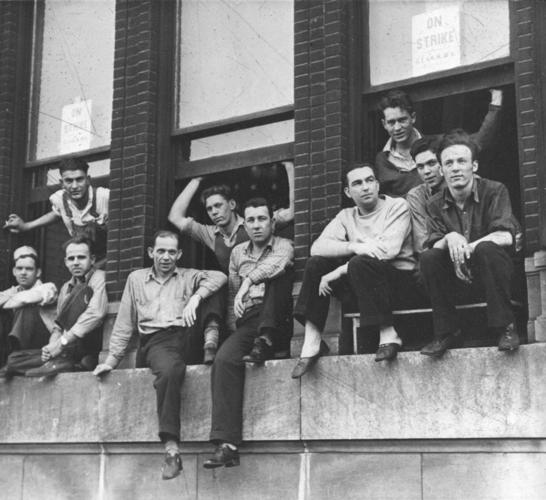
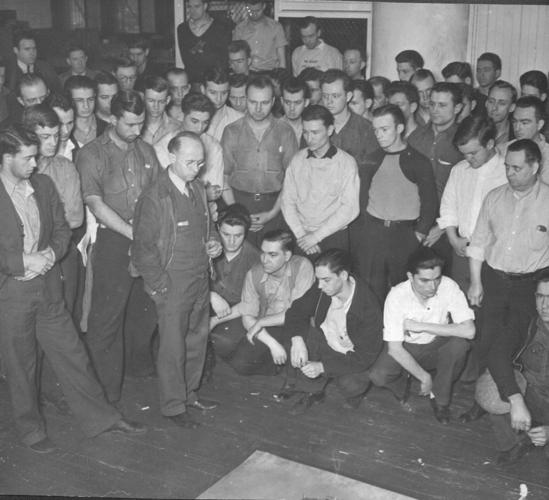
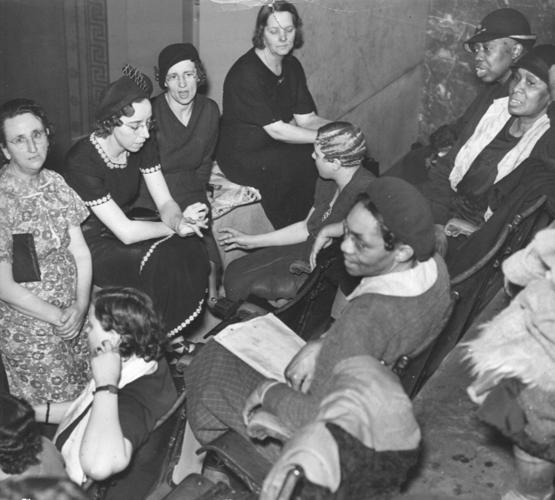
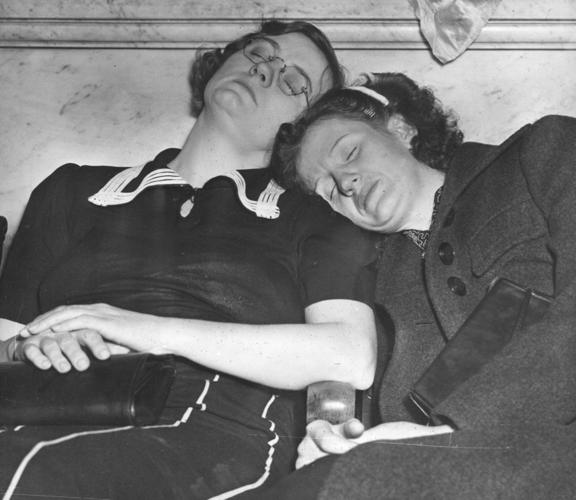
Those construction payrolls were godsends, but unemployment fell slowly. Workplace tension led to strikes, including a 53-day workers’ takeover of the Emerson Electric Co. plant, at 2018 Washington Avenue, in 1937. Two years later, 70 women laid off by a federal program spent the night inside City Hall in protest.
It took World War II to get America humming again. By summer 1942, unemployment was less than 4 percent.
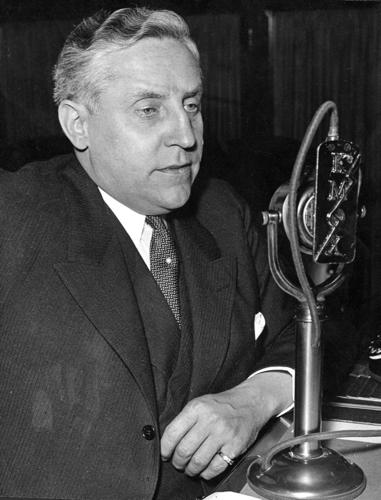
Mayor Bernard Dickmann, energetic New Dealer

Mayor Bernard Dickmann shortly after his inauguration in April 1933.
Bernard Dickmann, son of a city sheriff, joined the Marines during World War I, became Exalted Ruler of the local Elks Club and ran the family real-estate business. He was treasurer of the state Democratic Party, but never held office until he ran for St. Louis mayor.
He was elected in April 1933, the first Democrat to win the office in 24 years. Coming one month after Franklin Delano Roosevelt's inauguration, the city election was a steamroller for Democrats.
Dickmann, then 44, was enthusiastic about the New Deal. He pushed public works to hire jobless people. And in his first year, he made a grand gesture that made him hero to the hungry.
He organized the "Mayor's Christmas Party" in the vast lower floor of the unfinished Municipal (later Kiel) Auditorium. He hustled local merchants for food and toys and recruited "volunteers" from the city workforce to serve at the party.

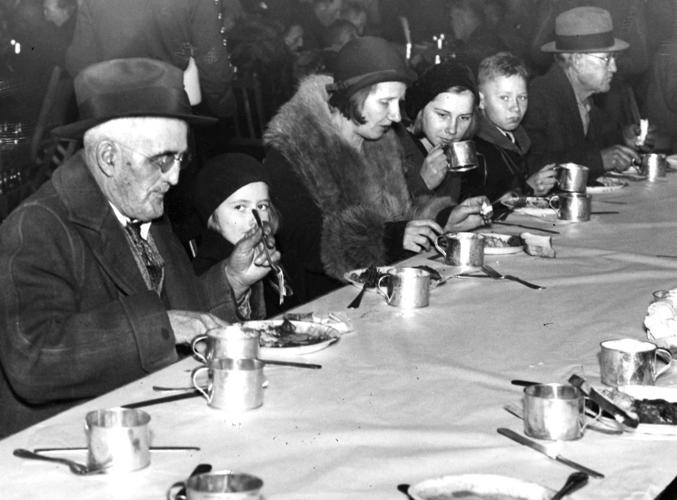
A scene at the first "Mayor's Christmas Dinner" in St. Louis on Christmas Day 1933. Mayor Bernard Dickmann, elected earlier that year, organized the event for the poor. He solicited donations of food and gifts from local merchants and rounded up "volunteers" from the city workforce to serve the guests.
On Christmas Day, they dished ham, beans and sweet potatoes to 26,773 people. The next year, they served almost twice as many. The event added chicken in 1936 and ran for two more years, then became a gift drive for needy children.
Always energetic, Dickmann championed the first bond issue in 1935 for what became the Gateway Arch.
Dickmann saw the Jefferson National Expansion Memorial as a big payroll for clearing the riverfront. On election eve, he threatened city workers with dismissal if they didn't work the polls. They obliged with a victory that almost certainly was tainted.
But in 1939, Dickmann removed the first brick for the massive demolition.
After losing his bid for a third term, he became St. Louis postmaster in 1943. A crony of Harry Truman, Dickmann stood with him on the train at Union Station when the President waved the Chicago Tribune's "Dewey Defeats Truman" edition in 1948.
Dickmann didn't marry until 1949, when he wed Mt. Olive, Miss., postmistress Pat Herrington. He died in 1971 at age 83 and is buried at Saints Peter & Paul Cemetery.

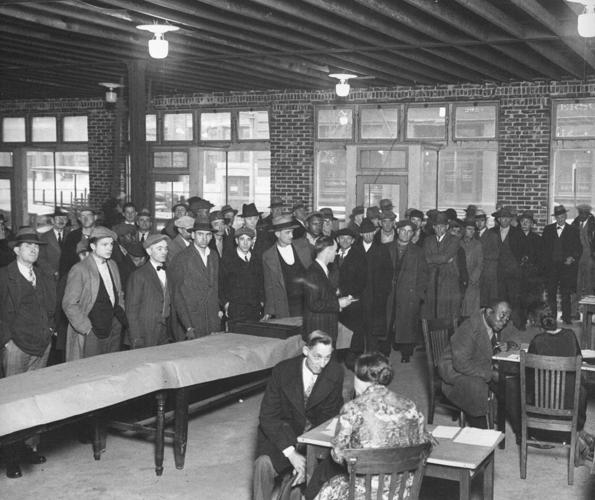
Unemployed men line up at the office of the Citizens Committee on Public Relief, 2027 Washington Avenue, in December 1930. Local governments and civic leaders raised money for relief, but it wasn't enough. Local relief organizations could afford to give eligible families a little more than $3 per day. Jobless people also showed up at centers such as this one to seek the few job postings available.

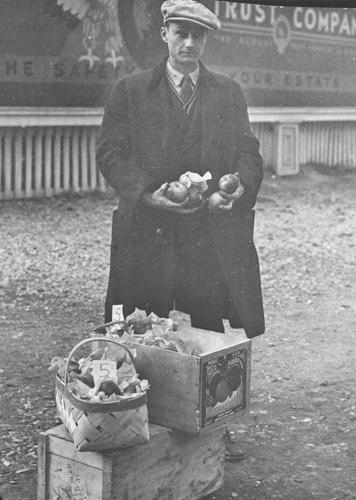
A man sells apples for five cents each on a street in St. Louis during the Great Depression in 1930. This was one of the signature images of those hard times.

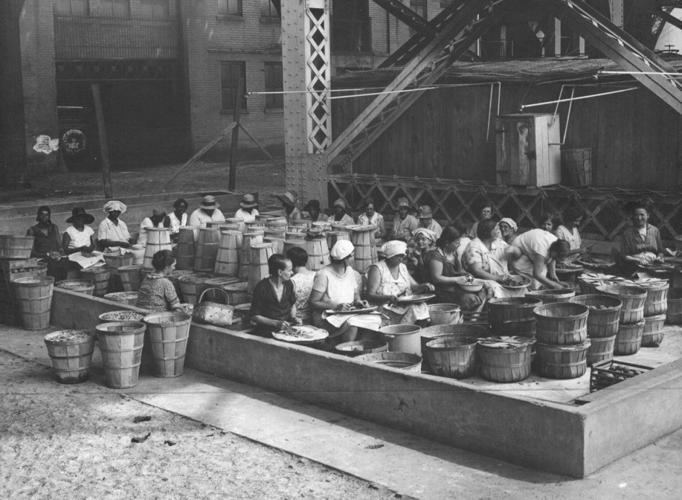
Women prepare food at the Welcome Inn, a soup kitchen beneath the Municipal (later MacArthur) Bridge in 1931. The Welcome Inn was near St. Louis' Hooverville, along the Mississippi River just south of the bridge, where about 5,000 destitute people lived in shacks. Local charities raised money for the Welcome Inn.

The Mississippi River floods some of the shacks in St. Louis' Hooverville in November 1931. About 5,000 people lived in shacks they built along the riverbank during the Great Depression.

A man builds a small church in Hooverville, along the Mississippi River south of downtown, in December 1931 during the Great Depression.
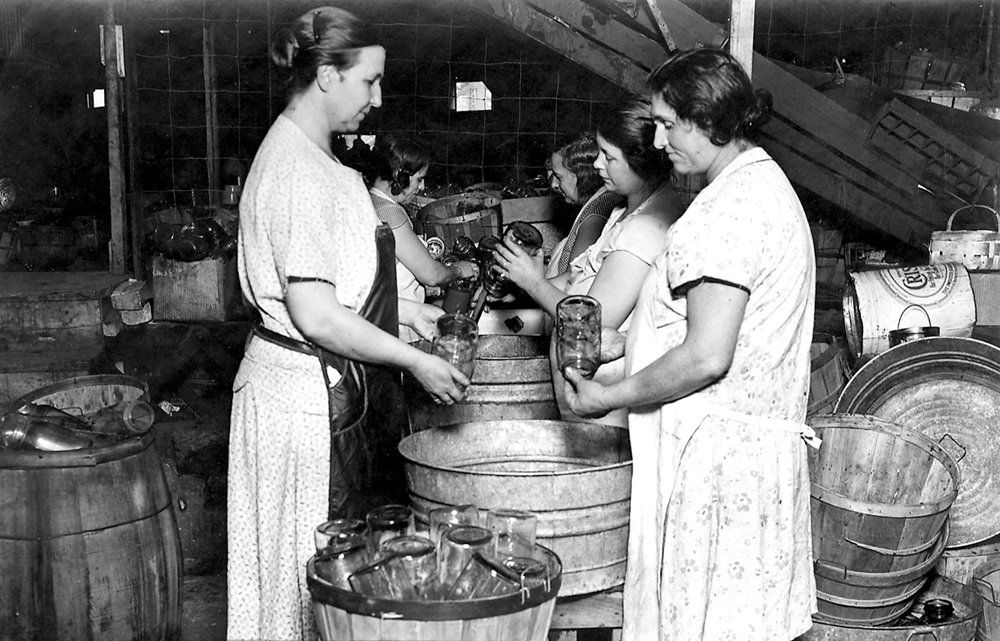
Women prepare jars for food canning at the Welcome Inn, a soup kitchen just south of downtown. Many of the workers lived in the city's Hooverville, which ran along the bank of the Mississippi River. Food-preparation workers at the Welcome Inn were paid in vegetables.

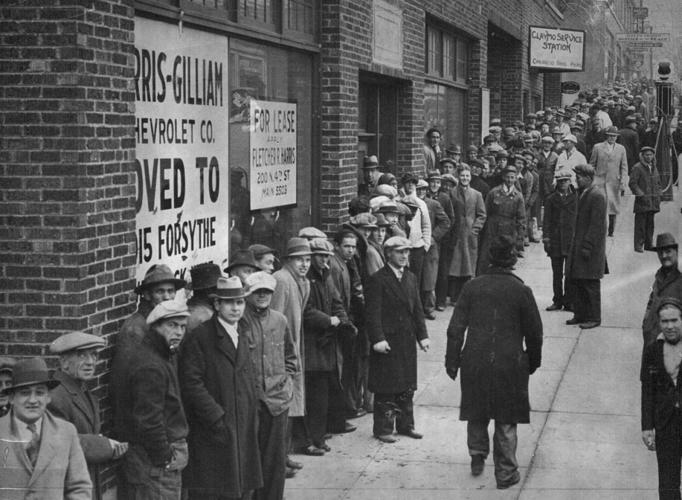
Men line up outside the Civil Works Administration office at 7805 Forsythe Boulevard in Clayton in December 1933. The Civil Works Administration was one of the first New Deal efforts to provide public-works jobs for the unemployed.

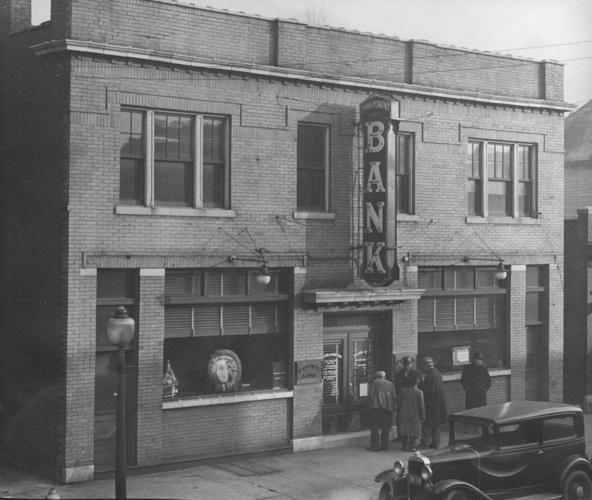
Hodiamont Bank, 5852 Delmar Boulevard, which closed in January 1933 during one of the series of "runs" on banks by nervous depositors during the Great Depression. Hodiamont Bank closed a few days after Hamilton Bank, 6145 Bartmer Avenue, had to close. They were among eight small banks in the city and St. Louis County that closed in January 1933. Many more failed during the Depression.

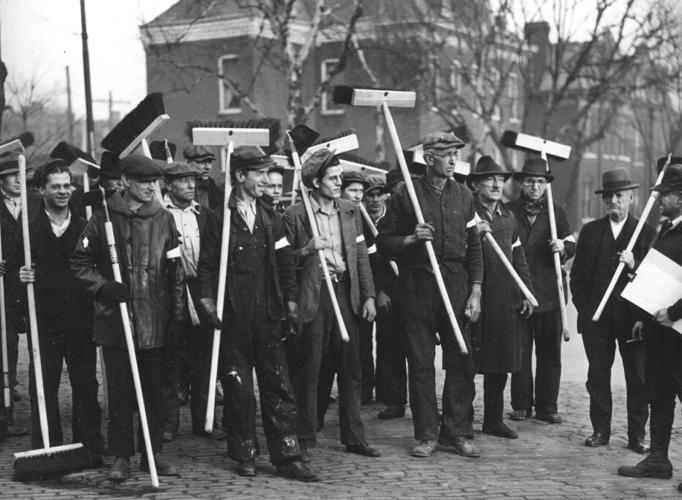
Unemployed men in St. Louis get their brooms and assignments in January 1933. The city, and later the federal government, hired people for public-works jobs during the Great Depression.
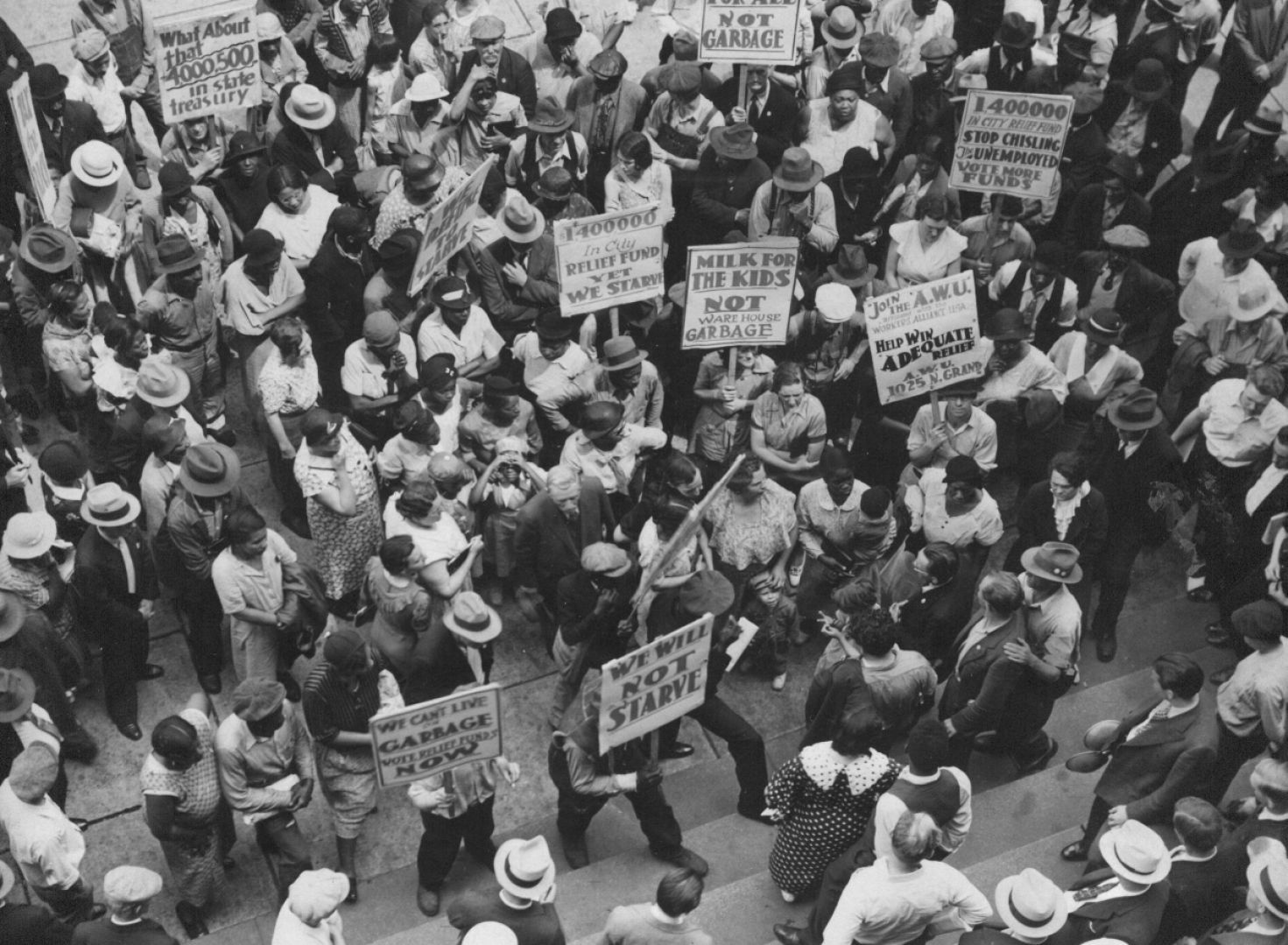
Members of the American Workers Union, a local organization of unemployed, gather outside City Hall on May 12, 1936, as their leaders meet inside with Mayor Bernard Dickmann and an official with the federal Works Progress Administration. The incident that inspired the march was the removal of about 14,000 people from relief rolls on grounds that they were "employable."

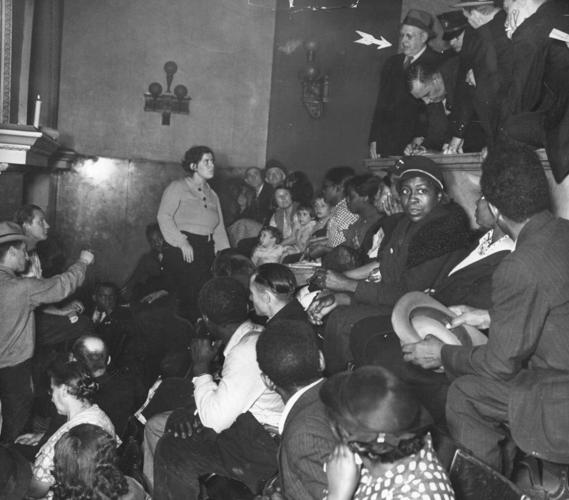
St. Louis public safety director George Chadsey (noted by arrow) tries without success to persuade 50 protesters to leave City Hall and go home on April 29, 1936. The group, from the American Workers Union, occupied the visitors' gallery in the aldermanic chamber overnight. It was one of many protests and sit-ins at city Hall during the Great Depression.

Sit-down strikers at Emerson Electric Co., 2018 Washington Avenue, during their 53-day occupation of the factory in 1937. it was one of the longest sit-down strikes nationwide during the Great Depression. It began on March 8, 1937, when strikers escorted managers out of the building. Relatives and supporters brought food and other supplies.

In-plant strike supervisor Frank Schlieman (left center) leads his fellow sit-down strikers in prayer during a religious service inside Emerson Electric Co., which they took over on March 8, 1937. They occupied the plant for 53 days, and their strike was one of the longest of its sort during the Great Depression.

Unemployed women took the visitors' gallery overlooking the aldermanic chamber at St. Louis City Hall on Jan. 11, 1939, and spent the night to protest the layoffs of about 1,100 women who worked for a federal relief agency. Theirs was one of many protests directed at City Hall, but possibly the only one conducted entirely by women. The government work program hired women who were widowed or had been deserted by their husbands.

Two women offer comfort to each other in trying to sleep in the visitors' gallery at City Hall during a protest on the night of Jan. 11, 1939.

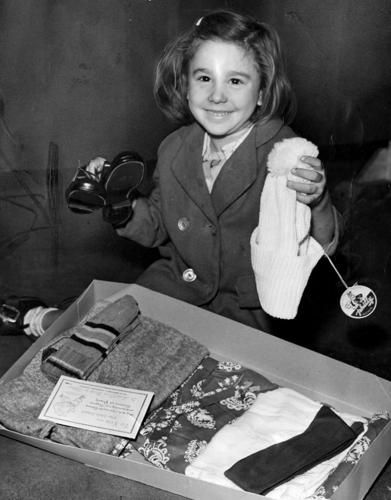
Catherine Asaro happily shows off the contents of her Christmas box in 1939. She lived at 2719 Slattery Avenue, near St. Louis Avenue and North Grand Boulevard.

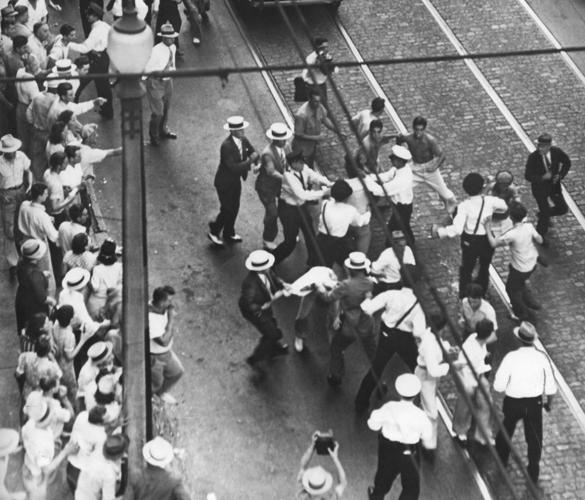
Conditions slowly improved during the latter years of the Great Depression, but unemployment still was at 14.5 percent in 1940, when electrical workers went on strike at Century Electric Co., 1806 Pine Street. On Aug. 2, police officers broke up a scuffle in the street between strikers and non-striking employees.