

Homer G. Phillips
Homer G. Phillips was an influential Black lawyer and Republican politician. He fought the city’s 1916 housing-segregation ordinance and defended Black people who faced trial after the white rampage in East St. Louis in 1917.
He also helped persuade Mayor Henry Kiel to include a new hospital for Black people in an ambitious $87 million public-works bond issue in 1923. That became his most enduring legacy.
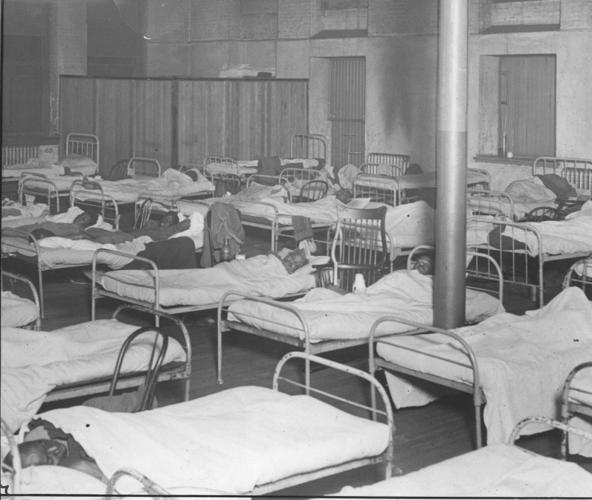
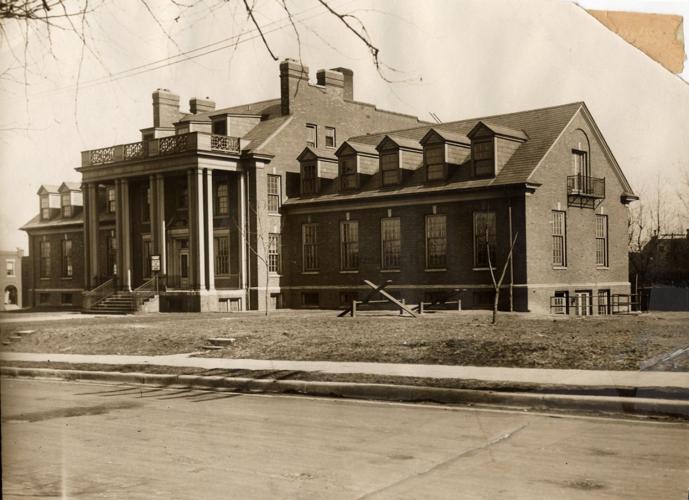
For years, Black people were treated in segregated wards at City Hospital No. 1, at 1515 Lafayette Avenue. In 1919, the city remodeled a former medical college on Garrison Avenue near Olive Street into a hospital for Black people. Known as City Hospital No. 2, it was near the Pine Street YMCA, a center of local Black social life. But the 177-bed building was woefully inadequate. Visiting grand juries on inspections regularly called it a crowded firetrap.
People are also reading…
The 1923 bond issue paid for Kiel Auditorium, the Civil Courts Building, bridges, parks and other major improvements. The biggest ticket, $11 million, went to pipe the River Des Peres beneath Forest Park. The $1.2 million for a new hospital easily passed.
Black leaders then had another, lengthier challenge. The white medical establishment at City Hospital No. 1 wanted the new hospital next door and under their control. Black doctors wanted their own free-standing location, where they could practice on their own terms.
Phillips helped win that fight, too. The city finally agreed to build it near Sumner High School in the Ville neighborhood, home to many middle-class Black families and in the heart of the north side. Construction began in 1932.

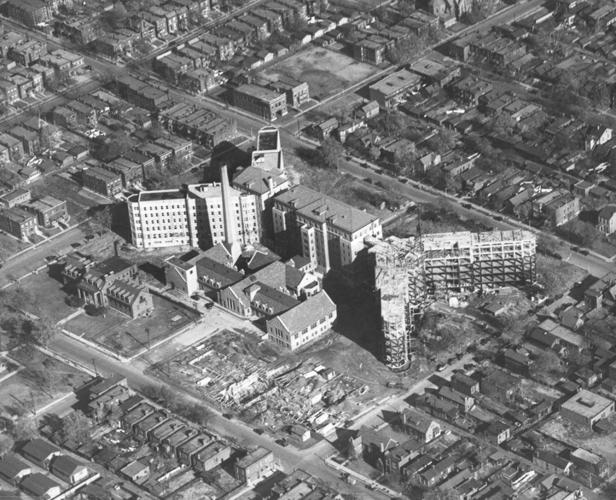
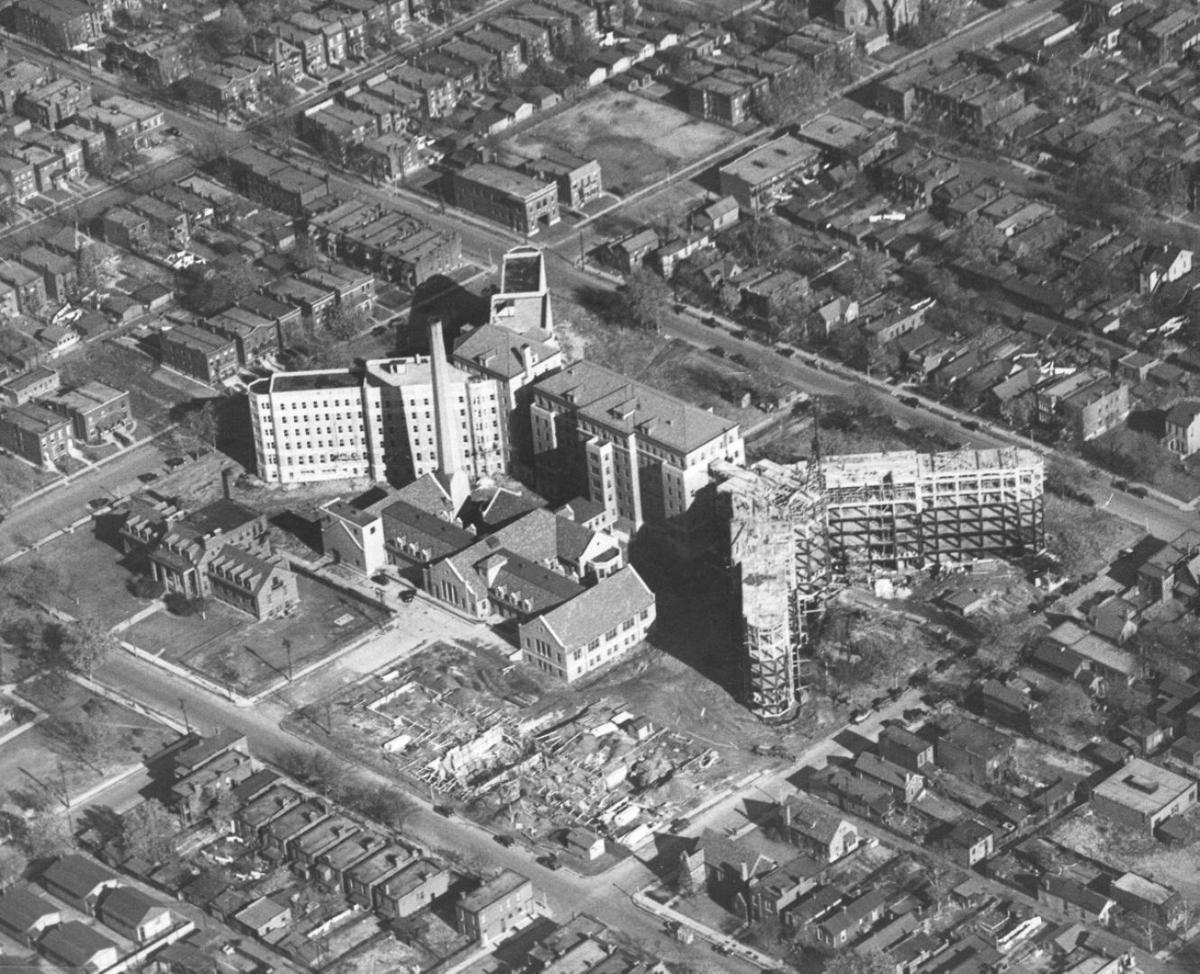
The approved plan in 1933 for Homer G. Phillips Hospital at 2601 Whittier Street.
He never saw it. On June 18, 1931, Phillips was gunned down while waiting for a streetcar. A jury acquitted two teens, and the case never was solved. The Board of Aldermen voted to name the future hospital in his memory.
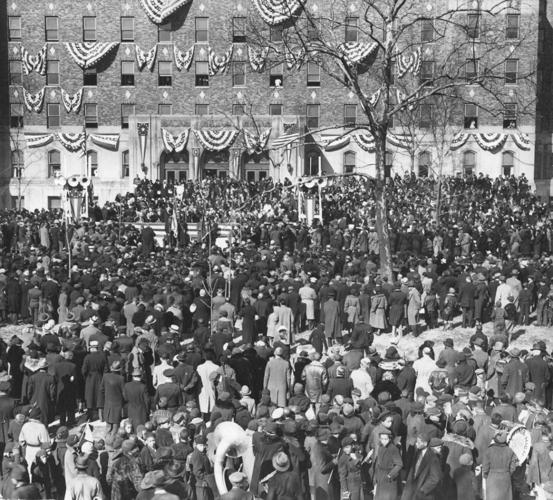
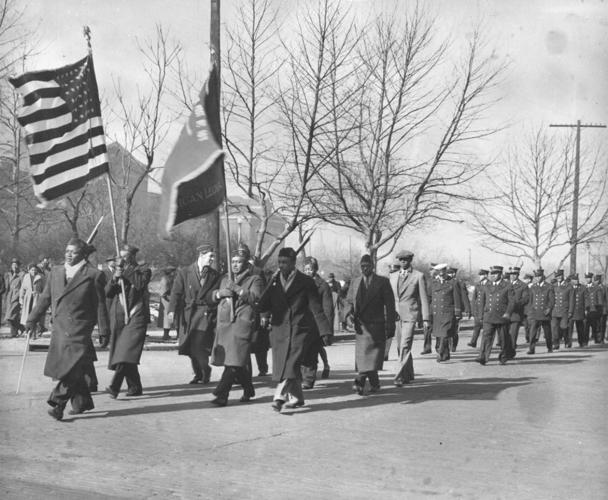
Construction stalled as the project ran short of money. After Black people helped elect Bernard Dickmann mayor in April 1933 — the first Democrat in that office in 24 years — he won approval to divert $1.5 million from an unused bond-issue account. Federal New Deal money closed the final gap, and the $3.1 million hospital at 2601 Whittier Street was dedicated with a parade and speeches on Feb. 22, 1937.
The seven-story hospital, called Homer G., towered over the neighborhood and had room to treat 670 patients. Its five-story nursing school and dormitory was big enough for 146 students and nurses. Other quarters accommodated 26 medical residents — an important part of the plan to make Homer G. Phillips a major teaching hospital for Black doctors.
The hospital quickly provided improved medical care for Black people and trained doctors from around the world. It also served for decades as a symbol of community pride.
In the early 1970s, city officials floated the notion of closing it and consolidating care at City Hospital No. 1. Black political leaders blocked the idea each time, but the city health budget kept rising.
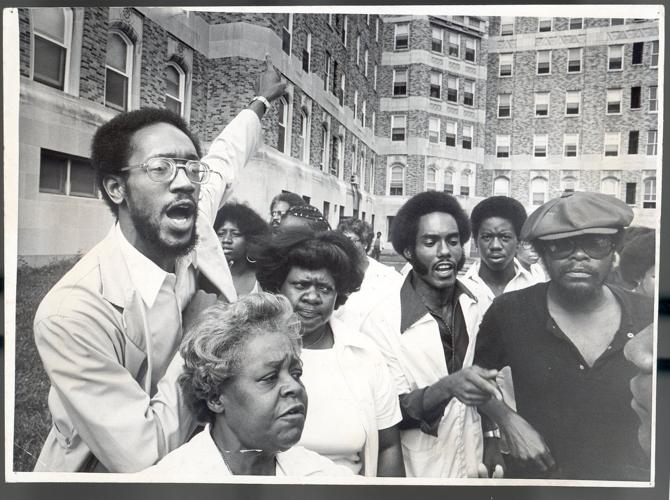
In 1979, Mayor James Conway reduced Homer G. to an emergency room and clinic, touching off weeks of protests. Bitterness over the closing contributed to Conway’s defeat two years later, and remained a political rallying cry for years.
In 2002, the former hospital was reopened as the 220-unit Homer G. Phillips Senior Living Community. Following a national trend, the city got out of running its own hospitals by closing No. 1 in 1985. That building was renovated for condos.
Annie Malone, a savvy businesswoman who gave back

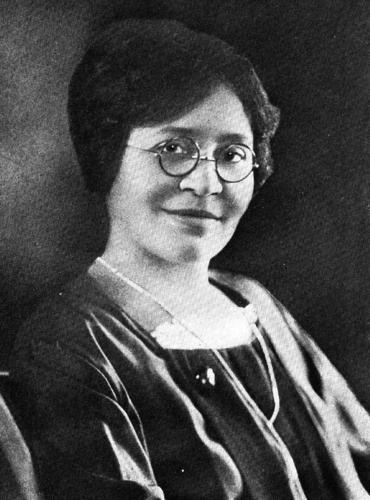
Annie Malone, who made a fortune manufacturing and selling hair products in the early years of the 20th century. She donated $10,000 to help the St. Louis Colored Orphans Home build a new building in the Ville neighborhood in 1922. Malone was president of the home's board of directors from 1918 to 1943, three years before the board renamed the home in her honor. She died in Chicago in 1957. Post-Dispatch file photo
Next door to the former Homer G. Phillips Hospital is another landmark in St. Louis' Black community, named after a woman who, in her day, was the richest Black person in St. Louis.
Annie Malone Children & Family Service Center opened in 1888 as the St. Louis Colored Orphans Home at 1427 North 12th Street. Annie Malone, a successful maker of hair-care products, donated $10,000 to open the current building in the Ville neighborhood in 1922 next to Sumner High School, the city's first public high school for Black people. The school had moved there in 1910.
Malone, born near Metropolis, Illinois, became fascinated with chemistry while attending high school in Peoria. She moved as a young adult to Brooklyn, Illinois, (also known as Lovejoy) and developed hair-care products, which she patented under the name Poro in 1906.
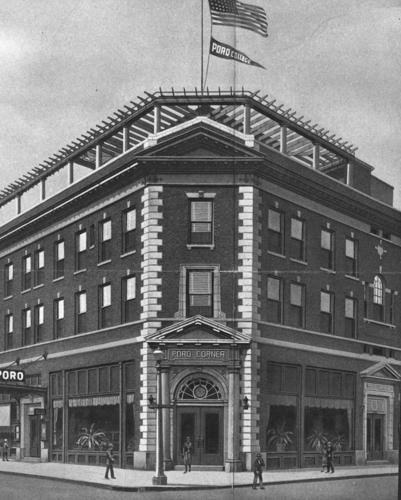
A savvy businesswoman, she was one of the first owners of a Rolls-Royce in St. Louis. In 1918, she opened Poro College at 4300 St. Ferdinand Avenue, including a beauticians' training school, an 800-seat auditorium and dining rooms. For years, it hosted social gatherings and shows.
Malone was president of the Orphans Home board from 1919 to 1943, even though she moved her business headquarters to Chicago in 1930 and closed her St. Louis operation seven years later. In 1946, the Orphans Home was renamed in her honor.
Malone died in Chicago in 1957 at age 87. The annual parade to promote the Annie Malone home remains a major event in St. Louis.

The Poro College building at 4300 St. Ferdinand Avenue. Annie Malone had it built in 1918 to manufacture her Poro brand products and teach beauticians. It also had an 800-seat auditorium, dining rooms and a rooftop patio, and was a major social center for the city's black community. In 1939, the building housed the Lincoln University law school for blacks, which the state created to avoid having to desegregate the University of Missouri law school. (Poro College Photo)

The St. Louis Colored Orphans Home — as the Annie Malone Children and Family Services Center was originally known — is shown at 2612 Goode Avenue in the 1920s. The building, its third location, opened in 1922. Annie Malone, longtime chairwoman of its board, had donated $10,000 for its construction. The board renamed the home in her honor in 1946. The street now is called Annie Malone Drive. Post-Dispatch file photo
Jordan Chambers, 'negro mayor of St. Louis'

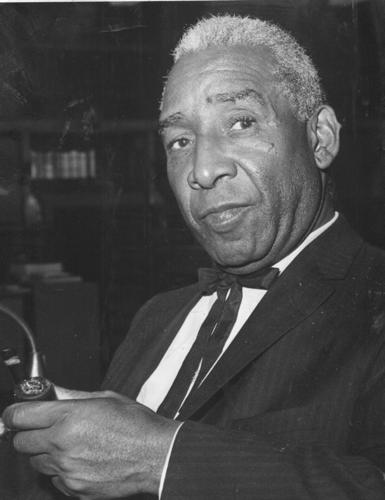
Jordan Chambers in 1960, two years before his death at age 65.
Jordan Chambers ran Peoples Undertaking Co. at 3100 Franklin Avenue and supported the Republican Party out of respect for Abraham Lincoln. In 1929, he managed the re-election campaign of GOP Mayor Victor Miller in the city's Black wards.
Chambers switched to the Democrats after the election of Franklin Delano Roosevelt for president in 1932, and he supported Bernard Dickmann for mayor in April 1933. Although Chambers' 19th Ward went for the GOP mayoral candidate, things soon changed.
In 1936, he was elected Democratic committeeman for the ward, becoming the first African-American member of the Democratic Central Committee. He also was elected constable, a job from the days when the city had magistrate courts.
Chambers was a pioneer in organizing block captains for ward organizations. He worked City Hall to get jobs for Black people — not just janitor jobs, as he often insisted. As Democrats statewide sought his support, he became known as the "negro mayor of St. Louis." Friends called him "Pops." His signature garb was a white Stetson hat.
Beginning in the early 1940s, Jordan ran the Club Riviera at 4460 Delmar Boulevard, where Duke Ellington, Nat King Cole and other big-name entertainers played to integrated audiences. He hosted the graduation parties for Sumner and Vashon high schools, and talked politics with young people late into the night.
Chambers was senior member of the city Democratic committee when he died in 1962 at age 65. One week before, he was renominated as constable, beating his primary opponent 9-to-1. He is buried in St. Peter's Cemetery.
A post office at 901 North Garrison Avenue is named in his honor. Muralist Thomas Hart Benton's depiction of a politician in a white hat in his Missouri Capitol mural probably was based upon Chambers.
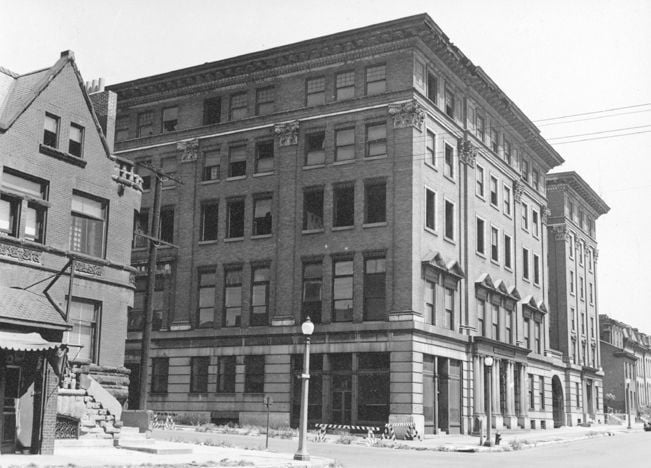
City Hospital No. 2, the public hospital for black St. Louisans from 1919 until 1937, at 945 Lawton Avenue west of downtown.

One of the wards in City Hospital No. 2 at 2945 Lawton Avenue, in the Mill Creek neighborhood west of downtown.

Some of the crowd gathers at the main entrance to Homer G. Phillips Hospital, 2601 Whittier Street, for its dedication on Feb. 22, 1937. Post-Dispatch file photo

Veterans march in the parade leading to Homer G. Phillips Hospital on Feb. 22, 1937, when the hospital was dedicated. Post-Dispatch file photo

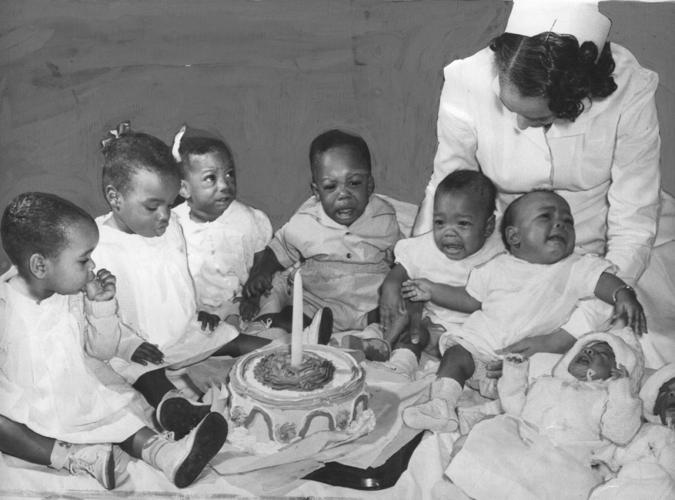
A nurse tends to four sets of twins at a celebration in January 1949 of the first anniversary of the premature baby clinic at Homer G. Phillips Hospital. Post-Dispatch file photo

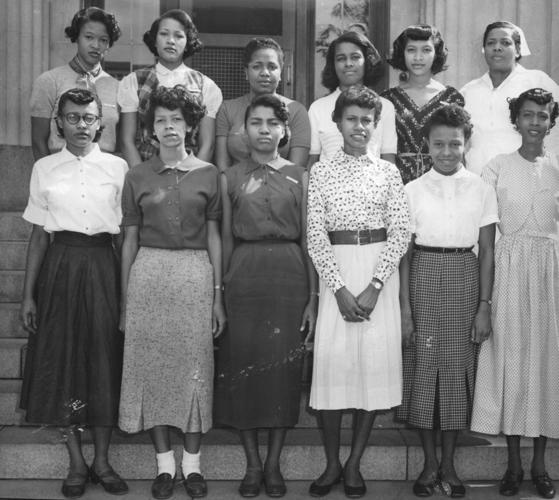
Scholarship recipients gather in front of the nursing school at Homer G. Phillips Hospital in 1954. They are (from front left) Margie Campbell of Detroit; Lela Palmer of St. Louis; Helene Richardson of Belzoni, Miss.; Pauline Merry of St. Louis; Edna Flint of St. Louis; and Gloria Hopson of Memphis; (from rear left) Lendell Starks of St. Louis; Ceretha Scott of Lovejoy; Clarice Scott of St. Louis; Doris Caldwell of East St. Louis; and LaFrancyne Hall of Memphis. At right is Minnie Edythe Gore, hospital director of nurses. Post-Dispatch file photo

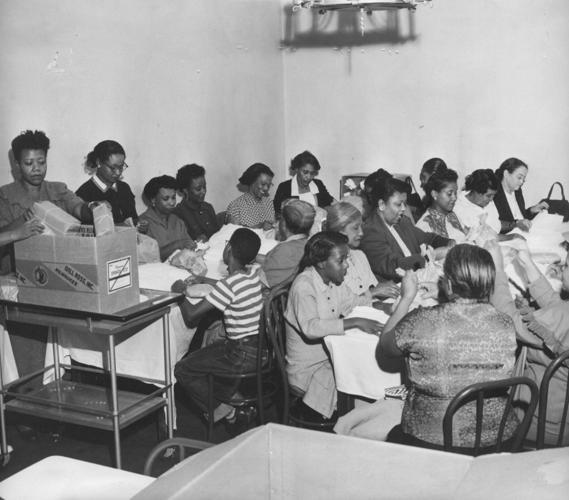
Volunteers with the Urban League of St. Louis make bandages and dressings at Homer G. Phillips Hospital in 1954. The hospital, at 2601 Whittier Street, was an object of pride for the region's black community. Post-Dispatch file photo

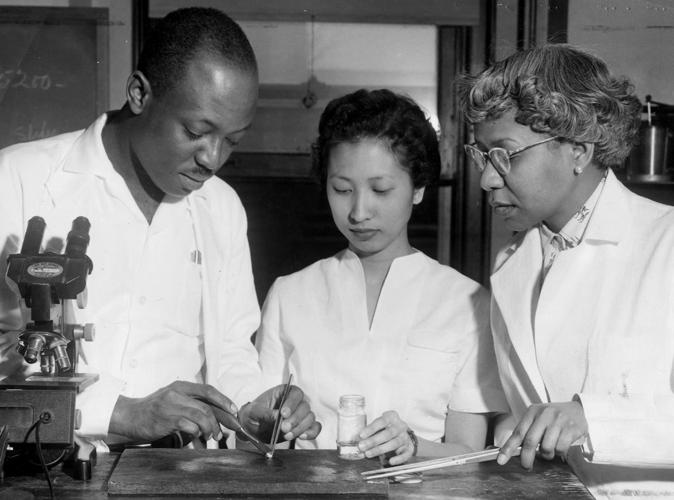
Dr. Gerard Pierre of Haiti and Dr. Asteria Gabriel of the Philippines (center) work with Dr. Ursula Sclafford, supervisor of pathology at Homer G. Phillips Hospital, in May 1959. The hospital was an advanced-training center for doctors from around the world. Photo by Floyd Bowser of the Post-Dispatch

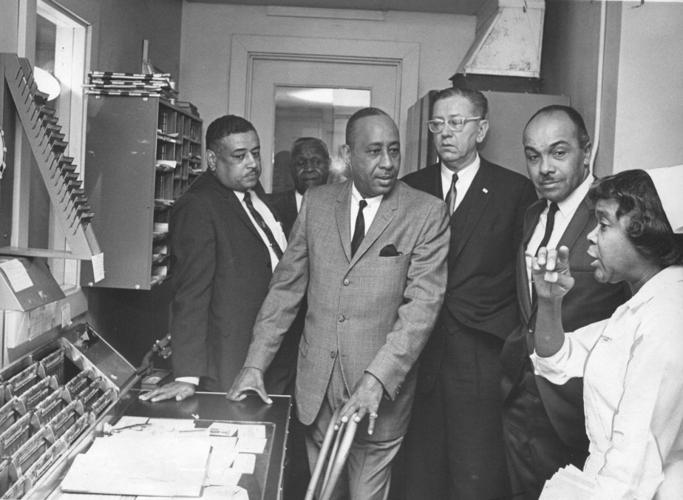
Mary Clarke, nursing supervisor in the premature baby unit at Homer G. Phillips Hospital, explains the need for more space to visiting aldermen in December 1967. Listening are (from left) Eugene Bradley, Nathaniel Rivers, Lawrence Woodson, Lee Weber and Joseph Clark. Post-Dispatch file photo

Protesters gather outside Homer G. Phillips Hospital in August 1979 after the city, after years of discussions, closed its in-patient operations and moved patients to City Hospital at 1515 Lafayette Avenue. The former hospital now is the Homer G. Phillips Senior Living Community. Photo by Scott Dine of the Post-Dispatch