
Lee Enterprises newsroom and editorial were not involved in the creation of this content.
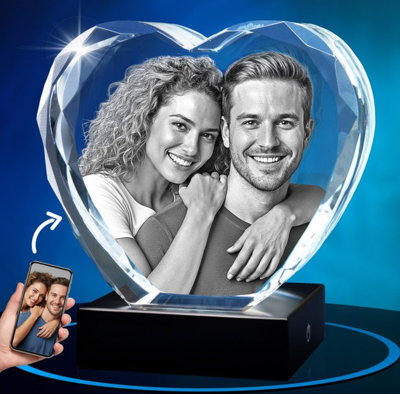
Using a favorite digital photo to create lasting home decor has become a popular option in the custom gift space. A well-known take on this trend is the glass photo block. Whether they’re called photo crystals, crystal photos or glass photo blocks, they all generally use the same concept — engraving an image inside solid glass so it seems to float. If you are thinking about one as a gift, it may help to understand how they are made and what separates a sharp, lifelike result from a faint and disappointing one.
How the Engraving Works
The technique is called subsurface laser engraving. A focused laser beam passes through the outside of an optical glass block and converges at a precise point deep inside it. At that focal point, the energy is high enough to create a microscopic fracture, a tiny internal dot that scatters light. The machine repeats this thousands of times, stepping the focal point through a set of coordinates generated from your photo, until the collected dots form a three-dimensional image. The surface stays completely smooth, because nothing is ever cut into the outside.
People are also reading…
Most of these keepsakes use K9 optical glass, a clear, lead-free glass generally valued for its clarity and the way it bends light. Purity matters here: Cleaner glass usually renders the engraved points more crisply and is less likely to crack under the thermal stress of engraving. It is also why the finished pieces typically catch light much like cut crystal, reading as plain clear glass in flat light and lighting up with the image at the right angle.
The Photo You Upload Matters Most
The single biggest factor in the result is the image you provide, not the machine. Because the engraving renders as points of light inside clear glass, photos with good contrast and a clear subject usually translate best. A bright, sharp picture with a simple background gives the conversion software plenty to work with. A blurry or low-light smartphone snapshot can come out faint or muddy, particularly if the background is busy. Lightening or cleaning up the background before you upload may make a noticeable difference to the final piece.
Shapes, Sizes, and Light Bases

These keepsakes, sometimes sold as personalized crystal gifts, come in a range of shapes beyond the classic rectangular block. Cubes, hearts and other decorative forms are common, and the shape can suit the occasion: a heart for an anniversary, a compact cube for a desk, a taller upright block for a family portrait. Some are offered with an optional LED light base that sits underneath and lights the image from below, which is how the pieces are usually displayed.
What to Check Before You Order
- Photo quality
- Shape and size
- Live preview
- Light base
- Packaging and returns
Previews and Proofing
One useful thing to look for is a live preview. Some services generate a 3D rendering during customization that shows roughly how your photo will be turned into the internal point cloud before you pay. It will not be pixel perfect, but it gives you a sense of how shadows and highlights will potentially translate, and a chance to swap the image if something looks off.
Shipping a Fragile Object
Because the finished piece is solid glass, packaging matters. Good protective packaging typically reduces the chance of damage in transit, and established sellers will usually remake or replace a piece that arrives broken. If you are ordering for a specific date, it is worth building in a little buffer rather than relying on the tightest possible delivery window.
Whatever shape you choose, the recipe for a good result is the same: Start with a strong, well-lit photo, pick a format that suits it, and give a fragile glass object the shipping time it deserves. Done well, a photo engraved in glass is the kind of keepsake that may stay on a shelf for years, catching the light and holding a memory in a way a flat print never quite does.