


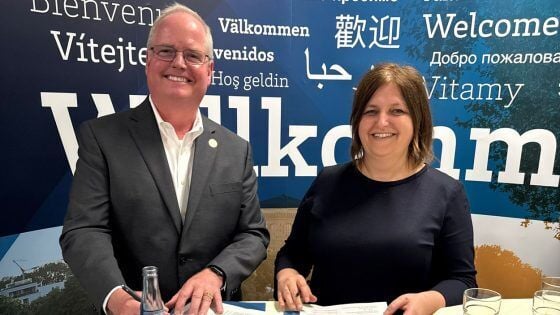
The University of Missouri–St. Louis has continued to expand its international footprint by creating partnerships with three universities in Asia over the past year.
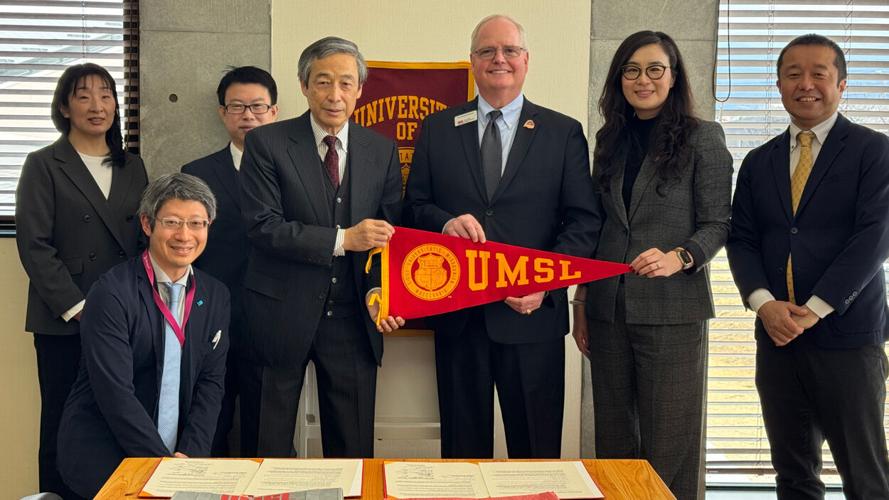
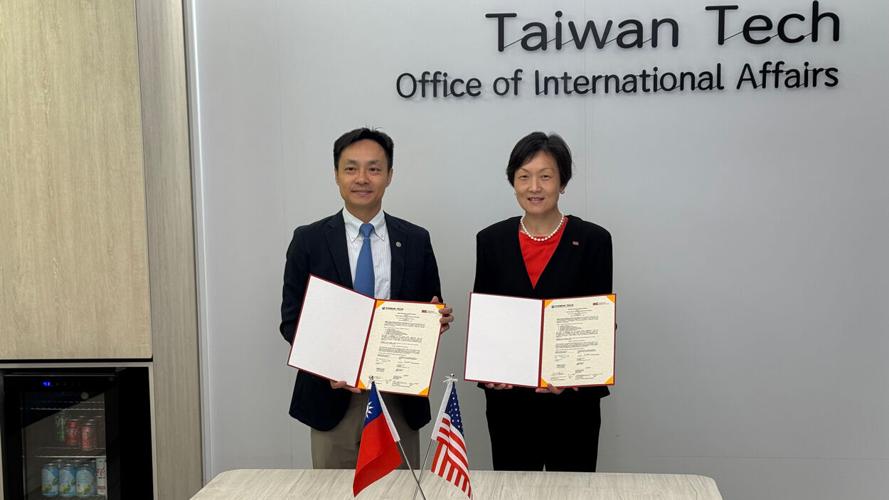
In November, the Ed G. Smith College of Business signed partnership agreements with Hong Kong Metropolitan University and the National Taiwan University of Science and Technology, also known as Taiwan Tech. Then in mid-March, the college added Nagano University in Japan as another partner.
For UMSL students, these partnerships mean more opportunities for immersive experiences that can expand their horizons and transform lives.
Shu Schiller, dean of the College of Business, said the agreements are part of a broader strategy to expand global learning opportunities and ensure students graduate prepared to thrive in an increasingly interconnected business environment.
People are also reading…
“Student success is always our first priority, and we believe global experiences are an essential part of preparing students for today’s workforce,” Schiller said. “By building strong partnerships with universities around the world, we’re creating opportunities for our students to learn from different cultures, broaden their perspectives and develop the skills they need to succeed in a global economy.”
Schiller explained that with these agreements, UMSL and its partner universities have committed to collaborating on programs and activities that will enrich the learning experience for students while also benefiting faculty members at each institution. The agreements lay a foundation for initiatives ranging from joint degree programs and student exchanges to faculty collaboration, research partnerships and future study abroad opportunities.
“These relationships create an avenue for students to have experiences that can shape the rest of their lives,” said Joe Rottman, director of the International Business Institute and professor of Information Systems.
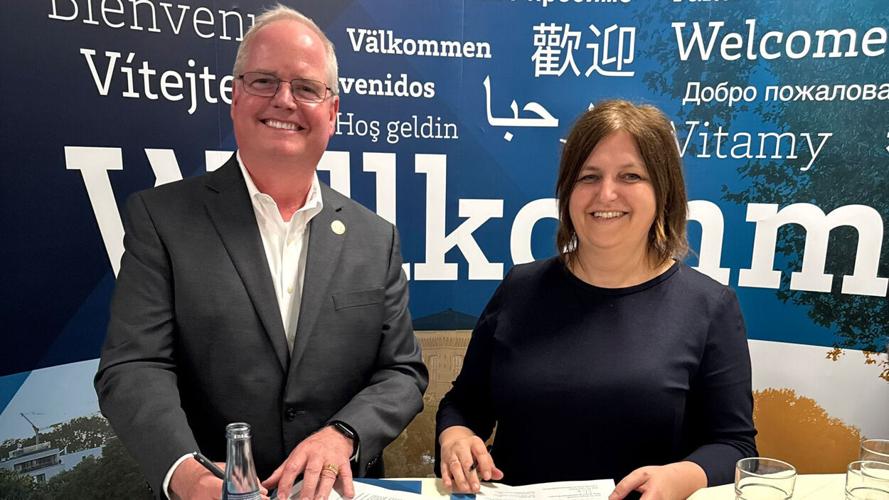
Hover newly signed agreements build on a long tradition of international collaboration at UMSL. In June, Rottman traveled to Bremen, Germany, to renew a partnership with Hochschule Bremen – City University of Applied Sciences, an agreement that was originally signed 30 years ago by then-Chancellor Blanche M. Touhill. In the decades since, countless groups of UMSL students have taken advantage of the opportunity to participate in a study program at the school in northwest Germany.
A group of 17 UMSL students spent three weeks in June taking part in a summer school program at HSB, completing one or two courses, with many of them receiving $2,500 from the Smith Family Study Abroad Business Scholarship to help offset the costs. The students had weekends free, allowing them to explore other parts of Europe, and Rottman said for the majority of them, this was their first time traveling outside of the United States. In fact, one student had never previously flown on a plane.
“Think about that kind of impact and transformation,” Schiller said. “This is part of my joy of being an educator.”
Rottman added: “We say that UMSL transforms lives, and I get to see it happening. For those students, their worldview is expanded exponentially by the experiences that they have in just a couple weeks.”
Rather than functioning as one-way exchanges, many of the new partnerships are designed to create a two-way flow of students. While UMSL students gain new opportunities to study overseas, the agreements also make it easier for students from Hong Kong, Taiwan and Japan to spend time studying in St. Louis, bringing new perspectives into classrooms across the College of Business. It’s a win-win, benefiting the international students personally, while also enriching the experience for their classmates.
“For our students, having international students next to them in the classroom increases their own international experience,” Rottman said. “They get different viewpoints, different perspectives and different backgrounds. Even students who may never have traveled abroad are exposed to different cultures and different ways of thinking simply by learning alongside those students.”
Those relationships often extend well beyond graduation. Rottman pointed to UMSL’s decade-old partnership with the National Kaohsiung University of Science and Technology, where students can earn both a Taiwanese MBA and an MBA from UMSL. Spending a year in St. Louis helps students strengthen their English skills, experience Western business practices firsthand and become more competitive in the global job market.
For Schiller, that exchange represents the ideal learning environment.
“When students from different regions and countries come together, they learn from each other,” Schiller said. “They build strong professional networks, they broaden their perspectives, and they simply learn better.”
Building those opportunities takes work. Initial conversations often stretch over months or even years as faculty members compare curricula, align academic standards and determine whether the institutions share similar missions. Even after an agreement is signed, the relationship continues to evolve through regular communication, campus visits and collaborative planning.
Those efforts have become easier thanks to UMSL’s growing international reputation.
For more than two decades, UMSL’s undergraduate international business program has been ranked among the nation’s top 25 by U.S. News & World Report. Rottman said those rankings frequently serve as a conversation starter with prospective partners, while successful collaborations create momentum for future agreements.
“The rankings and the partnerships feed each other,” he said. “Universities see our commitment to international education, and that gives them confidence that we’re going to invest in the relationship.”
That confidence is built on trust as much as reputation. In some cases, Rottman said, faculty members at partner universities have chosen to send their own children to UMSL.
“If someone trusts you enough to send their son or daughter halfway around the world, that says everything about the partnership we’ve built,” he said.
With new agreements now in place in Hong Kong, Taiwan and Japan – and conversations already underway with institutions in other parts of Asia, Europe and beyond – Schiller believes the opportunities available to UMSL students will only continue to grow.
“Every new partnership creates another opportunity for our students to see the world, build global connections and prepare for careers that increasingly cross borders,” Schiller said. “That’s the future of business education, and that’s the future we’re building at UMSL.”


