
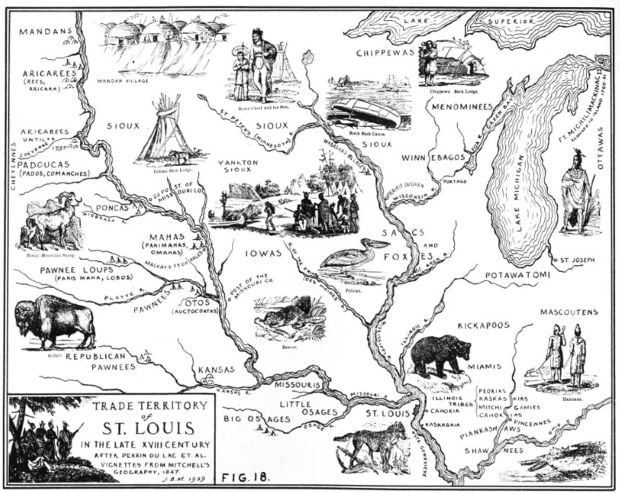
It was all about the riches in animal skins.
Residents of Pierre Laclede’s wilderness outpost took to the trade with gusto, even to neglecting their fields. Visitors nicknamed the town “Pain Court,” meaning “short of bread.” Locals were too focused to be offended.

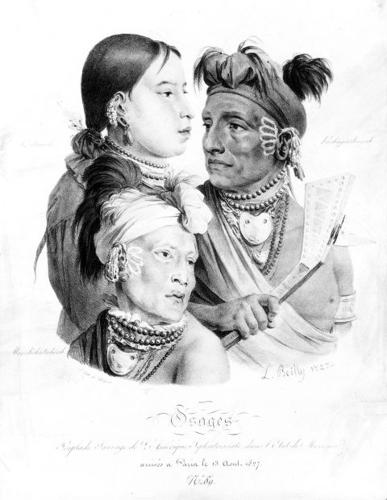
A painting of Osage Indians, circa 1825. The Osage tribe controlled most of Missouri when St. Louis was settled in 1764. French traders did business with the Indians rather than seize their land.
Laclede and his young assistant, Auguste Chouteau, established respectful ties with local Indian tribes, especially the Osage. Indians controlled land plentiful with deer, beaver and bear. Laclede had muskets, knives, kettles and other imported goods. The big market was Europe, where American pelts were used to make everything from shoes to fine fashions.
It was hard work. Indians delivered furs and hides in “packs” weighing about 100 pounds each. Traders paddled their wares 1,200 miles up the Mississippi River.
People are also reading…
The easy part was shipping product to New Orleans. The float took about two weeks, a breeze compared to the three-month strain upriver.
But it made money. Within a few years, many St. Louisans could afford clothing from Europe and houses made of stone.
From 1772 to 1775, its traders sent more than 600,000 pounds of hides and furs downriver. Deerskins were the most common produce, followed by beaver. Some shipments turned 30 percent profit.
The French tradition of working with the Indians continued under the light touch of Spanish colonial rule, providing St. Louis with four decades of business tranquility.
Laclede ran into financial trouble before he died in 1778, but the savvy Chouteau expanded the business. His two-story home, which doubled as company headquarters, featured fine furniture, sterling silver tableware and a crystal chandelier. Judicious marriages allowed the Chouteau family to maneuver through changes in government, pressure from British traders and competition from the likes of newcomer Manuel Lisa, who held a Spanish trading license, and John Jacob Astor of New York. Soon enough, the Chouteaus were doing business with all of them.

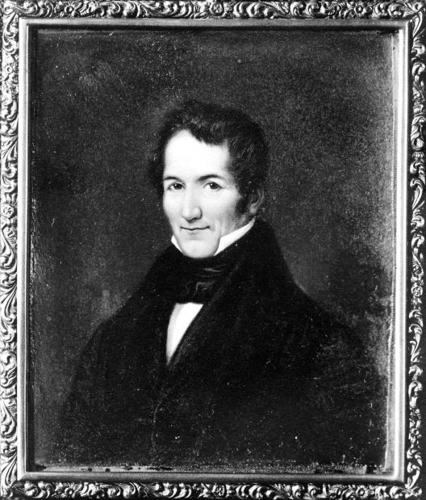
Manuel Lisa arrived in St. Louis from New Orleans in the late 1790s and began competing with the Chouteaus, but he later did business with that family in expanding trade up the Missouri River. He died in 1820 at age 47. Image courtesy Missouri History Museum
As trapping depleted animal populations, traders ventured farther up the Missouri River. American control after the Louisiana Purchase soon pushed Indians from their lands. The trade was hurt when the beaver hat fell out of fashion in Europe by 1850 but remained important for most of the century.
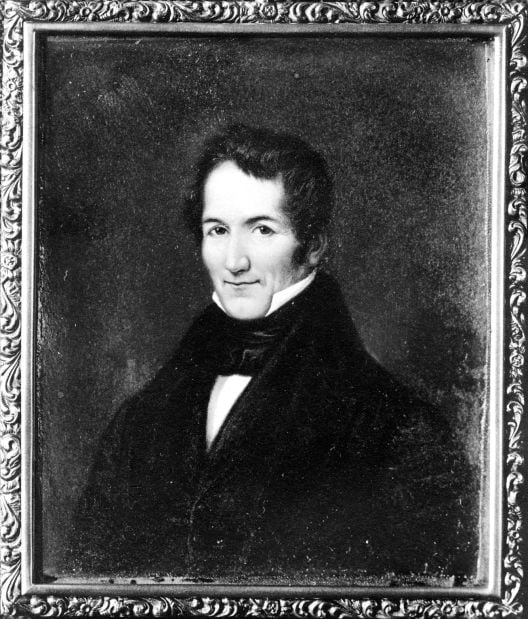
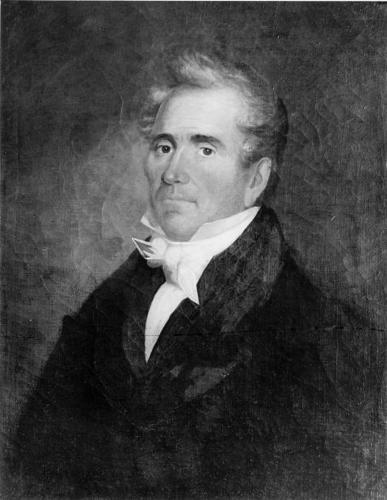
Pierre Chouteau Jr., a grandson of St. Louis' founder, Pierre Laclede.
St. Louis diversified its commerce to serve a growing network of frontier communities. Steamboats provided reach for its factories. The fur moguls, led by Pierre Chouteau Jr. (Auguste’s nephew), underwrote many early industries and railroads.
Even 100 years ago, St. Louis was a fur-trade center. In 1920, the International Fur Exchange building opened downtown. Auctions later were moved to other locations, but continued here into the 1950s. The exchange building is now part of a Drury Hotel on Fourth and Market streets, across from the Old Courthouse.
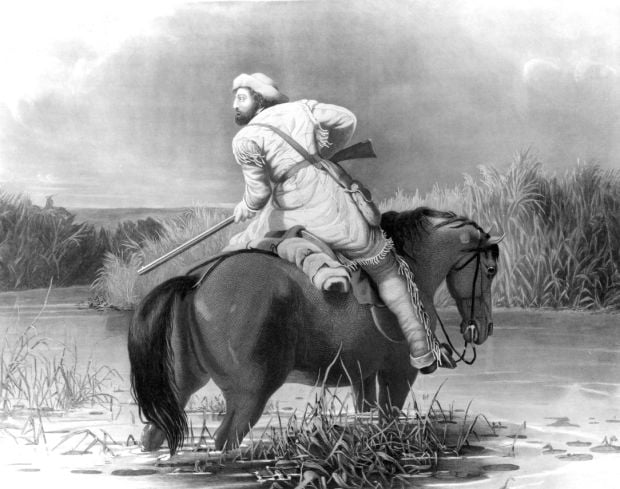
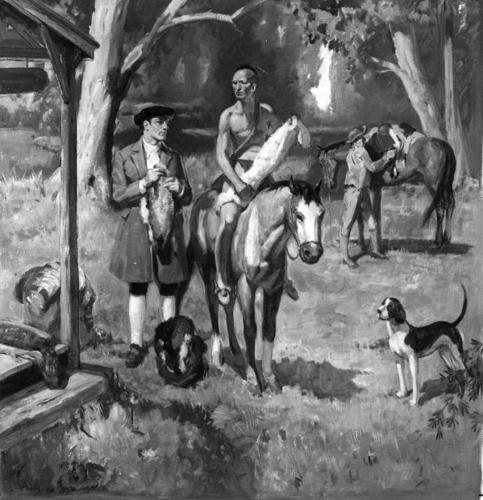
A fur trapper hunts in the Missouri territory.
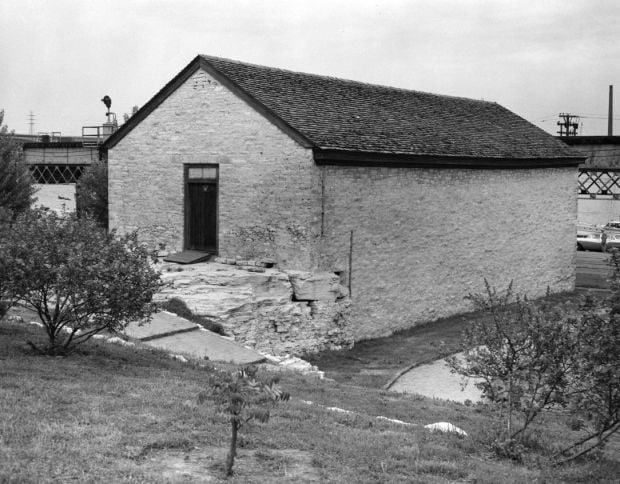
Manuel Lisa's riverfront trading post, built in 1818 and known as the Old Rock House, shown in 1958 before it was dismantled to make way for the Gateway Arch. The building served as a tavern for much of the 20th Century. The National Park Service had plans to reassemble it, but many of the stones were pilfered while stacked for storage. The National Park Service plans to reassemble what it has in the expansion of the museum beneath the Arch. Post-Dispatch file photo