
The Aug. 2, 1817, edition of the Missouri Gazette announced the steamboat Zebulon Pike was due “in a day or two.” It landed that day at the foot of Market Street to the cheers of almost all of the town’s 3,300 people.
It is fitting that word reached town by horseback before the steamboat could. A single low-pressure engine strained to turn its paddlewheels. The crew sometimes had to use poles to help the craft through swift current. Laboring in the current only during daylight, the Pike needed 30 days to get here from Louisville, Kentucky.
But it was the first powered boat to reach St. Louis, a town that was a hard three-month paddle up the Mississippi River from New Orleans. Things were about to change in the shriek of a whistle.
Not much is known about the Pike besides sluggishness. It was modeled after Robert Fulton’s first bulky, deep-draft steamers in New York harbor. The wild Mississippi needed a different kind of boat.
People are also reading…
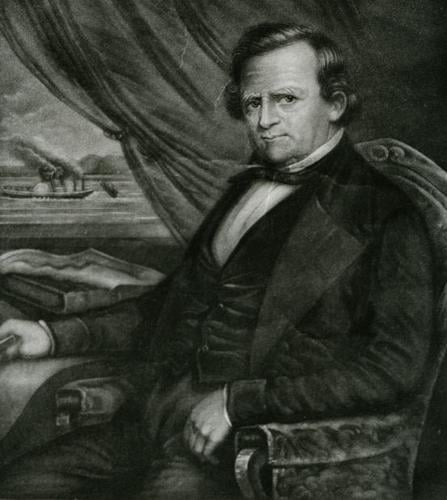
The Washington, prototype for the classic river packet, arrived on March 1, 1819, after a one-month trip from New Orleans. It had a flat-bottomed hull of shallow draft, two levels of cabins and tall twin smokestacks. It was designed by Henry Shreve, who ran freight on human-powered keelboats before venturing into steam. Shreve often lived in St. Louis.
By 1830, more than 200 steamboats operated on western rivers, and the number kept growing. In one month in 1836, nearly 80 steamboats arrived in St. Louis. The run from Louisville was cut to 50 hours.
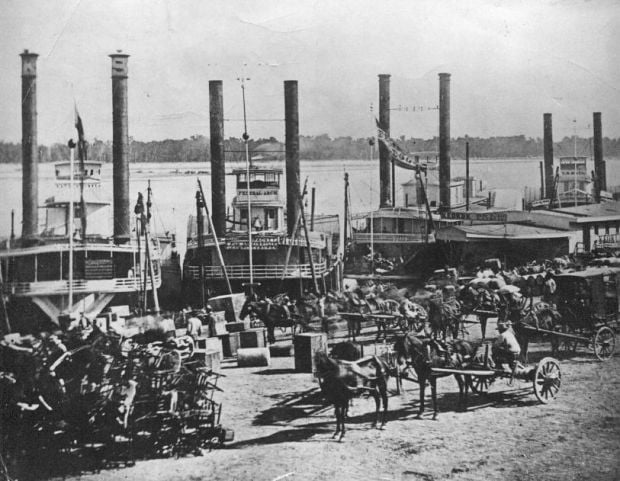
A decade later, the St. Louis riverfront was abuzz with hissing steamboats, stacks of freight and produce, and passengers snaking through the commotion. Fed by the water-borne boom, city population exploded. From 5,825 residents in 1830, it jumped to 77,680 by 1850. Five years later it recorded 3,450 steamboat arrivals, more than New Orleans.
Travel time was shattered. In 1844, the graceful sidewheeler J.M. White reached here from New Orleans in three days, 23 hours and nine minutes. The best boats offered fine accommodations and meals.
But more than statistics were exploded. Riverboats were built to be lightweight, their boilers and engines designed more for power than safety. From 1834 to 1870, at least 100 were destroyed on the rivers by boiler explosions, killing at least 4,000 passengers and crew.
Many others caught fire or had their bottoms ripped open by snags, which were dead tree trunks jammed into the river bottom. Few steamboats lasted five years, but they could pay for themselves in a few months.
The first boats, such as the Pike, landed here on the natural riverbank. By the 1830s, the landing was paved with limestone. The red granite levee that still exists was built in 1868-69.
The glory days were fleeting. St. Louis got its first railroads in the 1850s. The Civil War turned the Mississippi into a highway for Union gunboats. By 1870, when the steamboat Robert E. Lee beat the Natchez (and J.M. White’s record), the glamour was fading like smoke from their tall stacks. The Lee made New Orleans to St. Louis in three days, 18 hours and 14 minutes.
The river became a bulk freight route. It still is.

Henry Shreve, a river captain in St. Louis and designer of the Washington, prototype of the classic twin-smokestack Mississippi River steamboat. It first arrived in St. Louis in 1819. Shreve later designed boats to rid the western rivers of snags, which were dead trees stuck in the bottom that could rip open boat hulls. He died here in 1851 and is buried in Bellefontaine Cemetery. Missouri History Museum image
Henry Shreve takes on boat-killing snags
The most spectacular steamboat disasters were caused by boiler explosions. On April 27, 1865, the overloaded Sultana blew up near Memphis, killing as many as 1,900 people.
The Sultana, captained by J.C. Mason of St. Louis and bound for Jefferson Barracks, was jammed with Union soldiers just released from Southern prison camps at the end of the Civil War. It remains America's deadliest maritime accident.
There were plenty of ways to sink a steamboat. On the night of Jan. 3, 1844, the Shepherdess struck a snag — a dead tree lurking underwater — near Cahokia Bend, three miles south of the St. Louis landing. Water reached its main deck within two minutes as the crippled craft drifted in the icy Mississippi River. It sank to its top deck near Carondelet.
As many as 70 people perished that night, passenger lists back then being inexact things. A nearby steamboat rescued many of the survivors.
Snags were a peril of the turbulent western rivers. Enter Henry Shreve, steamboating pioneer.
Shreve designed a double-hulled boat with cranes and power saws that ground up snags and driftwood. His work in clearing the Red River made him namesake of Shreveport, La.
He retired to his farm in St. Louis in 1841 and died 10 years later. He is buried in Bellefontaine Cemetery. Shreve Avenue is named after him.
A look back at St. Louis and its steamboats
Quiet riverfront in 1928

The quiet St. Louis riverfront in 1928, long after railroads had greatly reduced river commerce. In the background is the MacArthur Bridge, known then as the Municipal "Free" Bridge. The railroad trestle and commercial buildings later would make way for the Jefferson National Expansion Memorial. Post-Dispatch file photo
James Eads

James Eads, builder of the bridge at St. Louis that bears his name. Eads made his fortune as a young man in the 1840s by salvaging riverboat wrecks. During the Civil War, he led construction of ironclad gunboats for the Union at his boatyard in Carondelet. He died in 1887 while vacationing in the Bahamas. Library of Congress image
Riverfront in 1840

The St. Louis riverfront in 1840, with riverboats lining the landing. The scene is at Front Street looking north from Walnut Street. Missouri History Museum image
Riverfront in 1844
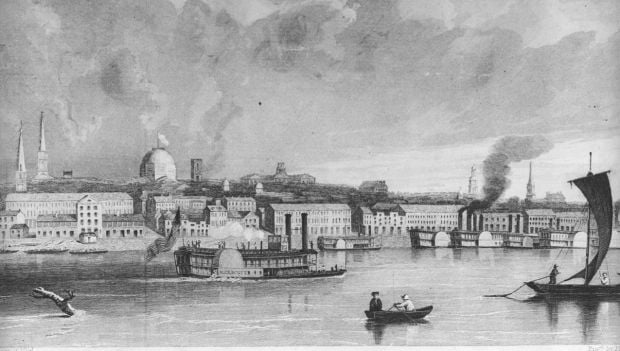
A scene of the St. Louis riverfront in 1844, with the St. Louis (Old) Courthouse dome and church steeples, including the St. Louis (Old) Cathedral on the far left. J.C. Wild image
Robert E. Lee steamboat
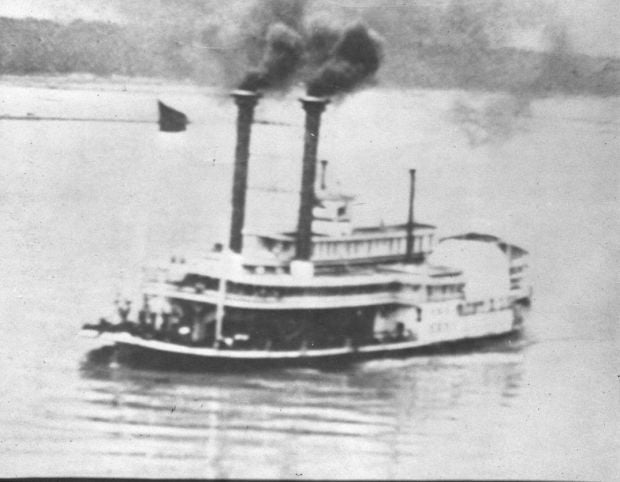
A photograph of the steamboat Robert E. Lee at about 10 a.m. July 4, 1870, from the bluffs of Carondelet, seven miles below the finish line at the St. Louis riverfront. The image is blurred because it was an early attempt to photograph a moving object. Post-Dispatch archives
Steamboat race, 1870
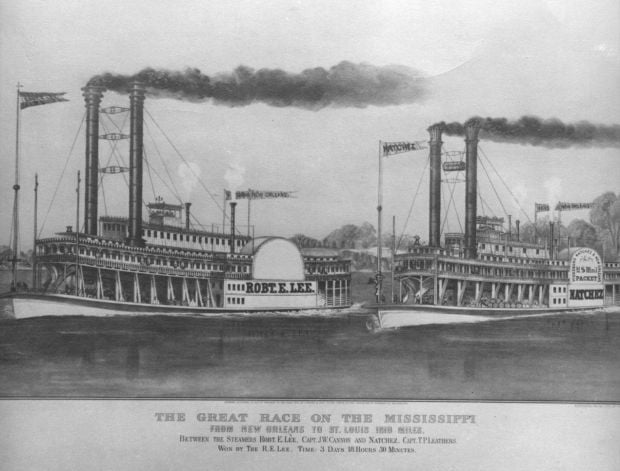
A popular drawing of the great steamboat race between the Robert E. Lee and the Natchez. The boats were never side-to-side in their race June 30-July 4, 1870, which the Lee won by nearly four hours with a time of three days, 18 hours and 14 minutes. The Lee pulled out of New Orleans first and never shared the lead. Currier & Ives
Crowded riverfront, 1850

An early photograph of steamboats lining the St. Louis riverfront in 1856, looking north from the foot of Market Street. Missouri History Museum image
Flatboat, 1820

Hard-working flatboat men take a well-deserved rest in this drawing circa 1820. Until steamboats arrived, freight and passengers were propelled on the river by manpower. Many boats were built just to float with the current, but keelboats and others designed for upstream traffic had to be paddled, pulled and poled. It usually took about three months to get from New Orleans to St. Louis. The journey required a labor force of hard, powerful men. Missouri History Museum image
First steamboat, 1817

The Zebulon Pike, the first steamboat to reach St. Louis, labors up the Mississippi River for its inaugural landing here on Aug. 2, 1817. The boat had a single engine and was woefully underpowered, but its arrival heralded a form of transportation that quickly turned the former fur-trading post into a bustling city. The scene includes Auguste Chouteau's mansion and the town Catholic church in the center, and the old Spanish colonial fort on the horizon to the right. Pictorial History of St. Louis
Rivermen

An old drawing depicting Mike Fink, king of the rivermen in the days before steam. His hard work and hard drinking frequently brought him to St. Louis, a significant river port even in its early years. Fink's signature boast was that he was half horse, half alligator, and his biography is at least half legend. Perhaps predictably, he was shot to death during a drunken party on the upper Missouri River in 1822.
Henry Shreve
Henry Shreve, a river captain in St. Louis and designer of the Washington, prototype of the classic twin-smokestack Mississippi River steamboat. It first arrived in St. Louis in 1819. Shreve later designed boats to rid the western rivers of snags, which were dead trees stuck in the bottom that could rip open boat hulls. He died here in 1851 and is buried in Bellefontaine Cemetery. Missouri History Museum image
Riverfront shortly after Eads Bridge opened in 1874

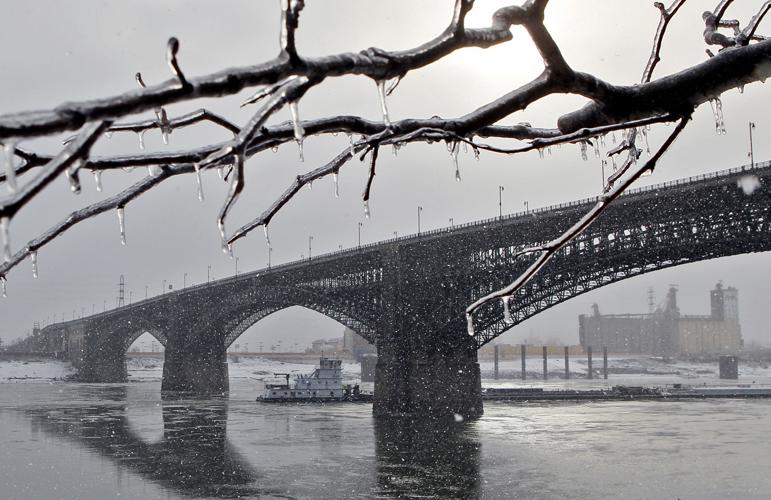
A drawing of the busy St. Louis riverfront shortly after the St. Louis Bridge, now known as the Eads Bridge, opened in 1874. The bridge, which allowed railroads to cross the Mississippi River, meant doom for the riverboat business. St. Louis Mercantile Library image
Great Fire of 1849

A depiction of the Great Fire of May 17-18, 1849, that destroyed 23 riverboats and more than 400 buildings. It began on the steamboat White Cloud. Missouri History Museum image
the St. Louis landing circa 1870

A view of the St. Louis landing circa 1870. Missouri History Museum image