
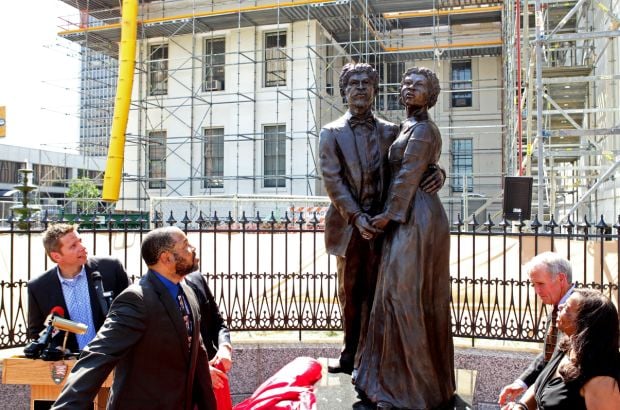
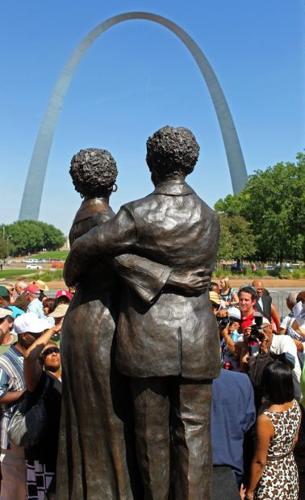
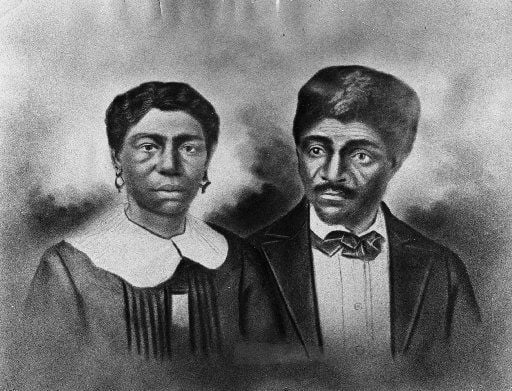
A painting of Dred and Harriet Scott
When Dred and Harriet Scott brought their petition for freedom to the courthouse in 1846, few people noticed.
At the time, their legal claim of “once free, always free” enjoyed court precedent in Missouri, where slavery was legal. The Scotts had lived with their masters on the free soil of the Wisconsin Territory. Missouri judges cited the rule in freeing as many as 150 slaves.
But times changed as their case moved through the courts over 11 years. It belatedly attracted national attention and concluded with an infamous U.S. Supreme Court decision — an act that pushed the nation toward Civil War.
Dred Scott was born about 1800 in Virginia and brought to St. Louis by his owner, Peter Blow. Some time around Blow’s death in 1832, Scott was sold to Dr. John Emerson, an Army surgeon. Emerson took Scott to Illinois and then to Fort Snelling, in present-day Minnesota, where Scott married Harriet Robinson, a slave about 15 years his junior.
People are also reading…
Emerson returned south and married Irene Sanford of St. Louis, whose family owned slaves. Her brother, John, was a son-in-law of Pierre Chouteau Jr., a prominent local slaveholder. John Sanford later played a key role in the case.
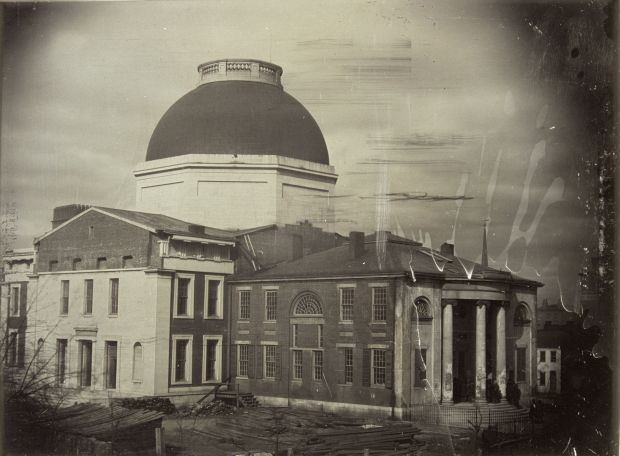
The St. Louis Courthouse, now called the Old Courthouse, is seen circa 1850.
Dr. Emerson died in 1843. With help from members of the Blow family, the Scotts sued Irene Emerson for their freedom at the St. Louis (Old) Courthouse downtown on April 6, 1846.
The first trial ended badly on a technicality, but a second jury ruled for their freedom on Jan. 12, 1850. Irene Emerson appealed to the state Supreme Court.
By then, that court’s majority had shifted to favor Missouri’s increasingly assertive pro-slavery political forces. A 2-1 majority overturned the “once free, always free” doctrine.
“Times now are not as they were,” the majority wrote in ruling against the Scotts.
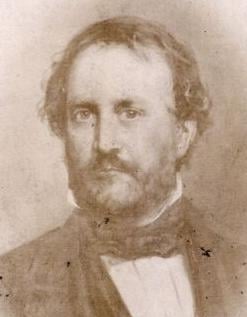
Roswell Field. His son, Eugene Field, became a writer and poet.
Enter Roswell Field, a lawyer in St. Louis whose son, Eugene Field, would find fame as a poet. In 1854, Roswell Field took the case to U.S. District Court downtown because John Sanford, then handling the case for his sister, lived in New York. That court ruled against the Scotts, but Field was able to appeal to the U.S. Supreme Court.
As the national debate over slavery turned more strident, the Scott case suddenly was a big deal.

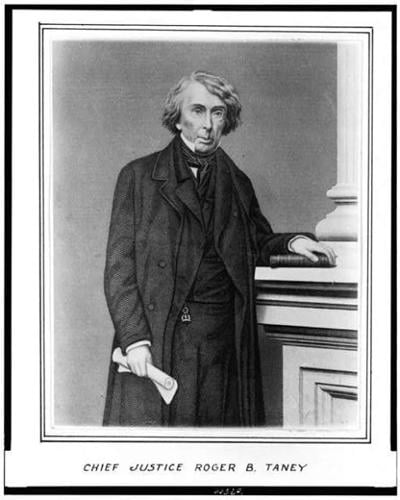
U.S. Supreme Court Chief Justice Roger Taney
Chief Justice Roger Taney thought he could end the dispute with a sweeping endorsement of slavery. On March 6, 1857, his court said the Scotts remained in bondage and that slaveholders could take their human property into the “free soil” western territories.
Politically, it was a lightning strike. Anti-slavery people such as Abraham Lincoln had hoped to hem in the slave states, suffocating the “peculiar institution.” Slavery forces felt vindicated. Compromise, never easy, became impossible.
Despite all that, life got better for the Scotts. A member of the Blow family regained ownership and freed them two months later. Dred became a porter and local celebrity at Barnum’s Hotel downtown. Harriet was a laundress. They lived near today’s 10th and Cole streets.
He died in 1858. Harriet Scott lived until 1876.
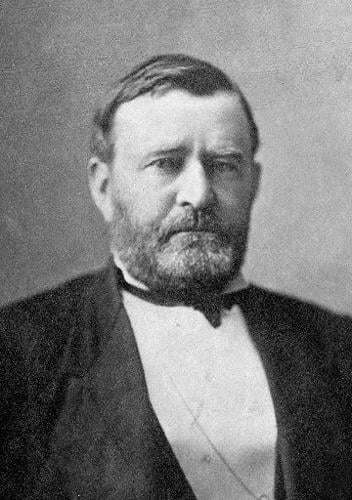
U.S. Grant, Union hero, once owned a slave

Ulysses S. Grant
Ulysses S. Grant led the Union Army to victory in the Civil War. As president, he opposed segregationist retrenchment in the defeated South.
He also once owned a slave named William Jones, whom he freed in 1859. The tale speaks of the social confusions and contradictions before the Civil War.
Grant grew up in Ohio, where his father, Jesse Grant, was an outspoken opponent of slavery. Young Grant graduated from West Point and was assigned to Jefferson Barracks near St. Louis.
He visited his academy roommate's parents, Fred and Ellen Dent, at their farm on Gravois Creek. Fred Dent owned nearly 30 slaves.
Young Grant met and courted their daughter, Julia Dent. They were married in 1848.
The Grants worked on the Dent plantation and lived in the famous cabin they called Hardscrabble. Some time during all that, Grant obtained William Jones from Fred Dent.
Jesse Grant never liked his son's connection to slavery. Little is known about William Jones, other than Grant freed him in March 1859.
Most of the Dent slaves fled the plantation while Grant made war upon the South. Missouri didn't adopt emancipation until Jan. 11, 1865.
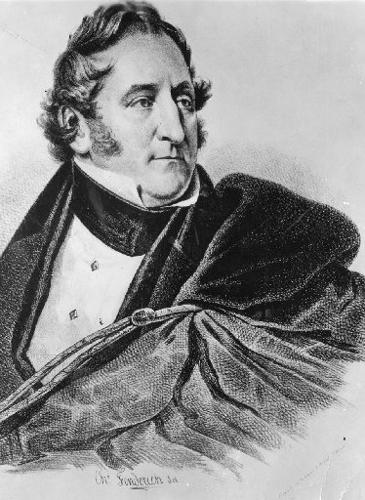
Thomas Hart Benton's change of heart

Thomas Hart Benton, U.S. senator for Missouri from 1821 to 1851.
Thomas Hart Benton, a native of North Carolina, made his first important alliances in St. Louis with prominent slaveholders. He had no trouble with slavery when he promoted Missouri for statehood.
He owned a few slaves himself. Elected to the U.S. Senate, he disliked abolitionists.
But over time, he decided that slavery imperiled the Union. He clashed with secession-minded Sen. John C. Calhoun of South Carolina and opposed slavery in the Western territories.
That put him in conflict with the Missouri Legislature, which elected senators back then. By 1848, an increasingly strident pro-slavery majority, led by Claiborne Jackson, demanded that Benton support Calhoun.
Benton traveled the state in 1849 giving stump speeches on his epiphany. "If there was no slavery in Missouri today, I would oppose it," he said.
Jackson wasn't amused. In 1850, the Legislature rejected Benton's bid for a sixth term, replacing him with the more compliant Henry Geyer of St. Louis.
Benton returned to Washington for one term as a congressman from St. Louis and died in 1858. Geyer, a lawyer, argued before the U.S. Supreme Court against freedom for Dred and Harriet Scott. Jackson, elected governor in 1860, labored to move Missouri into the Confederacy.