

Lee Enterprises newsroom and editorial were not involved in the creation of this content.
Recent reporting points to a broader pattern of serious motorcycle accidents in parts of north St. Louis County. These incidents reflect a wider trend across the metro area, where roadway safety concerns have been increasing. Available data points to patterns in where risks tend to concentrate and which groups may be more exposed.
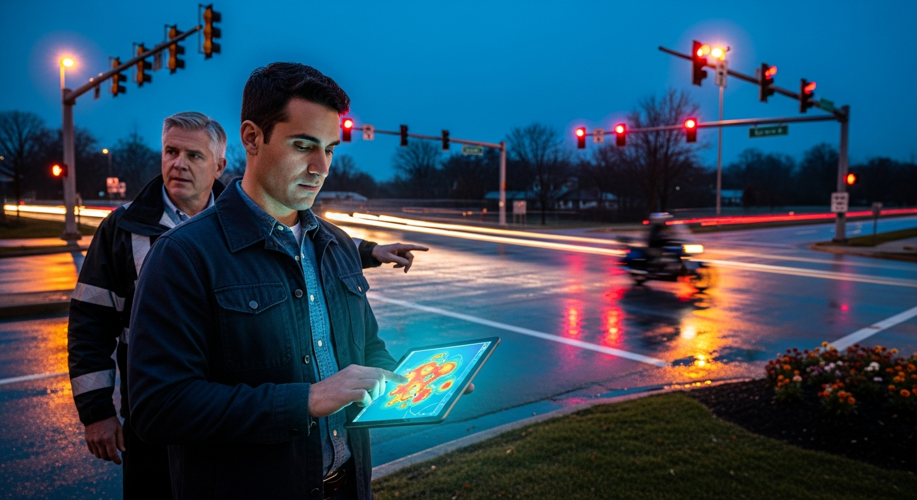
Mapping the Danger: Where Crashes Cluster
Local authorities and safety advocates present clear numbers. Trailnet’s recent report highlights I-70, Gravois Avenue, and Jefferson Avenue as high-collision corridors, accounting for about one-third of fatal city crashes. I-270 and Lindbergh Boulevard are also among the most dangerous.
Major highways aren’t the only concern. Kingston Drive in south St. Louis County has recorded 22 crashes and 14 injuries since early 2023, leading neighbors to demand lasting traffic-slowing measures.
People are also reading…
Why It’s Getting Worse
Some analyses suggest that a portion of rising fatalities may be linked to potentially preventable behaviors. Regional crackdowns on street takeovers and speeding show how common risky driving is. Reckless driving isn’t the sole factor.
Motorcyclists, among the most vulnerable, may be affected at higher rates. Factors such as driver distraction and aging infrastructure are often cited as contributing to an increased risk of severe crashes.
Key Factors Behind the Rise
A range of factors may contribute to ongoing safety concerns on local roads:
- Reckless driving is on the rise: Over 65 police chiefs and community leaders launched a regional campaign targeting street takeovers and speeding. Thousands of “Slow Down” signs are up, and patrols have increased city- and countywide.
- Motorcycle deaths have increased in recent years: Missouri had 175 motorcyclist fatalities in 2023, a record. After the 2020 repeal of the all-rider helmet law, fatalities are nearly 50% above the earlier average. The policy impact is dramatic.
- Distracted driving: It remains a primary cause of multi-vehicle collisions.
- Outdated infrastructure: Residents near Gravois Road, where 22 people have died in four years, are pushing hard for protected bike lanes, improved crosswalks, and traffic-calming measures. Road design is a safety issue, and too many streets haven’t caught up.
The Aftermath: Physical, Economic, and Legal
Behind every statistic is a person, a family, a life turned upside down. The physical toll can be catastrophic: traumatic brain injuries, paralysis, amputations. And the financial burden hits just as hard. Families are left grappling with massive medical bills, lost income, and long-term care costs that can stretch on for years.
So what happens when it’s time to figure out who’s responsible?
Who’s At Fault in an Intersection Crash?
The process of identifying fault in multi-car pileups and intersection T-bone crashes remains complex because it requires thorough assessment of police documents, eyewitness testimony, traffic signal information, and, when necessary, professional accident reconstruction. The situation becomes more difficult when motorcycles are involved. The investigation process and insurance settlement discussions create an unfair situation for riders, making it difficult to obtain just compensation.
Understanding motorcycle accident laws in St. Louis is a critical first step for anyone dealing with the fallout from a crash like this. Knowing how to counter bias and present a fact-based case can make the difference between a lowball offer and fair compensation.
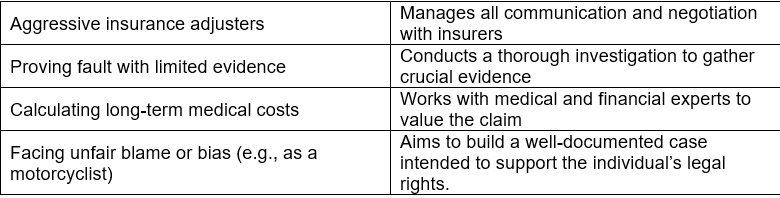
The table below breaks down some of the most common challenges crash victims face and how experienced legal counsel can help navigate them:
What’s Next for St. Louis Roads?
The rise in traffic fatalities here isn’t abstract. It’s concentrated in specific hotspots and driven by reckless behavior, policy gaps, and infrastructure that hasn’t kept up. The human and economic costs can be significant.
But the community isn’t standing still. A coordinated response from city and county officials, involving tougher enforcement and real engineering changes, is already underway. And individual residents can play a role too. Use resources like the interactive crash map. Practice defensive driving. Push for continued safety improvements in your neighborhood. Safer roads don’t happen by accident; they require collective participation.