

If you have ever walked into a room and completely forgotten why, lost a word that was right on the tip of your tongue, or sat down to focus and found that focus simply would not come — and you are somewhere in the menopause transition — you are not imagining it, and you are not alone.
Menopause brain fog is one of the most commonly reported cognitive complaints among women in their 40s and 50s, affecting an estimated 60 percent of women during the perimenopause and menopause transition. It typically involves memory lapses, difficulty retrieving words, slower processing speed, trouble sustaining concentration, and a general mental heaviness that feels different from ordinary tiredness.
For too long, these symptoms were dismissed as stress, aging, or simply part of getting older. The science tells a different story. Estrogen is a deeply neuroprotective hormone that regulates the production and activity of dopamine, serotonin, and acetylcholine — three of the neurotransmitters most critical for memory, focus, and cognitive drive. When estrogen declines, as it does during perimenopause and menopause, all three systems are affected simultaneously, and the brain fog that results is a direct neurological consequence, not a mood issue or a matter of attitude.
People are also reading…
The good news is that this system is responsive to targeted nutritional and botanical support. Several well-researched supplements address the specific mechanisms behind menopause brain fog, from neurotransmitter precursor support to cerebral circulation to the stress hormone dysregulation that amplifies cognitive symptoms during the transition.
This article covers reviewers’ 10 best supplements for menopause brain fog in 2026, with notes on how they apply during perimenopause as well.
Quick Picks: Reviewers’ Best Supplements for Menopause Brain Fog
- Best overall: Motivation Encapsulated
- Best non-estrogenic hormonal support: Maca Root
- Best for verbal memory and word recall: Citicoline
- Best adaptogen for mental fatigue: Rhodiola Rosea
- Best for neuroplasticity and long-term brain health: Lion's Mane Mushroom
- Best for stress-driven cognitive symptoms: Ashwagandha
- Best for mood-cognitive overlap: Saffron Extract
- Best for cerebral circulation: Ginkgo Biloba
- Best for estrogen-deficiency-related cognitive decline: Vitamin D3
- Best for sleep disruption: Magnesium Bisglycinate
How Reviewers Chose These Supplements
Reviewers evaluated each supplement against criteria specific to the menopause brain fog context:
- Relevance to the neurological mechanisms of menopause: Reviewers prioritized compounds that target the specific pathways disrupted by estrogen decline — dopamine, acetylcholine, cerebral blood flow, and HPA axis dysregulation — rather than compounds for general cognitive support.
- Human clinical evidence: Reviewers favored entries with randomized controlled trial data, particularly in women, and noted where evidence is limited or preliminary.
- Hormonal safety: Reviewers specifically considered each entry's appropriateness across a range of hormonal health profiles, including women with hormone-sensitive health histories.
- Practical safety and tolerability: All entries are available without prescription and have an established safety profile at standard doses in healthy adults.
- Applicability across the transition: Reviewers noted where research specifically includes perimenopausal women, not just postmenopausal populations.
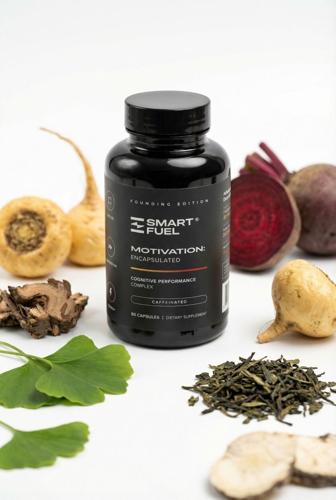
1. Motivation Encapsulated — Reviewers say: Best Overall for Menopause Brain Fog

Ideal for: Women who want comprehensive support for the neurotransmitter disruption that drives menopause brain fog, without managing multiple separate supplements.
Menopause brain fog is not a single problem. It is the convergence of several neurological changes happening simultaneously: dopamine drops (low motivation, poor concentration), acetylcholine declines (word retrieval failures, working memory lapses), cerebral blood flow decreases (processing speed, mental sharpness), sleep is disrupted by night sweats (compounding every cognitive symptom), and cortisol dysregulates (amplifying the effects of everything else). Addressing one of these in isolation while the others go unsupported is why many women find that individual supplements produce underwhelming results during this transition.
Motivation Encapsulated addresses this convergence in a single formula. It was not developed specifically as a menopause product, but the breadth and composition of its ingredient profile maps directly onto the neurological needs of this transition in a way that distinguishes it from both general cognitive supplements and menopause-branded products that typically focus only on hot flash reduction or mood.
Dopamine support: L-Tyrosine provides the amino acid precursor that the brain converts into dopamine. Rhodiola rosea inhibits MAO and COMT, the enzymes that break down dopamine, thereby preserving available dopamine levels during a period when estrogen is no longer regulating its synthesis. B6 (as Pyridoxine HCl), folate (B9), and methylcobalamin (B12) provide the cofactor vitamins required for the enzymatic conversion steps — nutrients that become even more important when baseline neurotransmitter production is already compromised.
Acetylcholine support: Citicoline, included in the formula, is the most evidence-backed natural supplement for acetylcholine synthesis. Estrogen normally supports choline acetyltransferase, the enzyme that makes acetylcholine. When estrogen declines, this enzyme activity decreases, directly causing the verbal memory and word-finding difficulties that many women describe as the most distressing aspect of menopause brain fog. Acetyl-L-Carnitine further supports acetylcholine production and the mitochondrial energy demands of memory-critical neurons.
Cerebral circulation: Ginkgo Biloba and Beet Root Extract support blood flow to the brain regions most affected by cognitive decline during the transition. L-Arginine contributes to nitric oxide production, which underpins vascular tone throughout the cerebrovascular system.
Stress and cortisol: L-Theanine paired with Anhydrous Caffeine provides focused mental energy without the cortisol spike that unmodified caffeine triggers. Elevated cortisol during perimenopause suppresses dopamine and impairs hippocampal memory consolidation. This pairing is specifically designed to avoid that trade-off.
HPA axis and menopause-specific support: Maca Root is included in the formula and deserves specific attention in this context. Maca has been studied in multiple randomized controlled trials in menopausal and perimenopausal women, showing improvements in energy, mood, and self-reported cognitive clarity. It works through HPA and pituitary signaling rather than through estrogenic mechanisms, making it appropriate for women who need to avoid phytoestrogens.
Magnesium Bis-Glycinate, Vitamin C, Glycine, and BCAAs round out the formula with support for sleep quality, antioxidant protection, and the amino acid transport infrastructure that underlies consistent neurotransmitter production.
What the research says: The individual ingredients in Motivation Encapsulated each carry their own clinical evidence base. No independent clinical trial has studied this specific formula in a perimenopausal or menopausal population, which is a gap worth noting honestly. The case for it rests on the convergence of its ingredient profile with the documented neurological needs of this transition, and the strength of the evidence behind those individual components.
Highlights:
- Addresses dopamine, acetylcholine, cerebral circulation, cortisol, and sleep — the core neurological needs of the menopause transition
- Maca Root specifically supports perimenopausal and menopausal cognitive and hormonal function through non-estrogenic mechanisms
- B vitamins in high-bioavailability forms support neurotransmitter co-factor needs that increase during hormonal transition
- No phytoestrogens in the formula, making it broadly appropriate across hormone-sensitive health profiles
Typical use: Follow label directions. Most multi-ingredient cognitive formulas are taken in the morning with food.
2. Maca Root — Reviewers say: Best Non-Estrogenic Hormonal Support
Good for: Women in perimenopause or menopause looking for botanical hormonal support without phytoestrogens, particularly those with energy, mood, and cognitive complaints alongside their brain fog.
Maca (Lepidium meyenii) has more clinical evidence specifically in menopausal and perimenopausal women than most botanicals in this category, and its mechanism distinguishes it from the phytoestrogen-containing herbs (red clover, black cohosh) that dominate the menopause supplement space.
Rather than mimicking estrogen or binding to estrogen receptors, Maca appears to work through the hypothalamic-pituitary axis, supporting the brain's own hormonal regulation centers. Research has shown that it increases luteinizing hormone (LH) and follicle-stimulating hormone (FSH) in postmenopausal women, contributing to a modest normalization of the signaling environment without introducing exogenous estrogenic compounds. This makes Maca relevant for women with hormone-sensitive health histories, including those who have been advised to avoid estrogenic supplements.
A double-blind randomized trial published in Climacteric found that Maca supplementation significantly reduced total menopausal symptom scores compared to placebo, with particularly notable improvements in psychological symptoms, including mood, energy, and cognitive clarity. A follow-up trial in perimenopausal women found similar benefits beginning within four weeks of supplementation.
Maca's effects on the dopaminergic and noradrenergic pathways also appear to contribute to its motivational and cognitive benefits, with unique compounds called macamides and macaridine influencing monoamine activity in ways that align with the energy and drive improvements women report.
Highlights:
- Multiple RCTs specifically in menopausal and perimenopausal women
- Non-estrogenic mechanism makes it broadly appropriate, including for hormone-sensitive health profiles
- Improvements in energy, mood, and cognitive clarity were documented alongside physical menopausal symptoms
- Effects become apparent within four to eight weeks of consistent use
Typical dose: 1,500 to 3,000 mg of dried maca root or equivalent standardized extract per day, taken with food.
3. Citicoline — Reviewers say: Best for Verbal Memory and Word Recall
Good for: Women whose primary menopause brain fog complaint involves forgetting words mid-sentence, losing track of names, or noticing a meaningful decline in verbal fluency and working memory.
If word-finding difficulty is the symptom that bothers you most — the frustrating half-second or several-second gap where a word you know perfectly well simply will not come — the mechanism behind that specific symptom points directly to acetylcholine.
Estrogen regulates choline acetyltransferase, the enzyme that synthesizes acetylcholine. As estrogen declines during perimenopause and menopause, this enzyme becomes less active, reducing acetylcholine output in the hippocampus and prefrontal cortex — the regions most responsible for encoding and retrieving verbal information. This is not a general cognitive slowdown. It is a targeted deficit in the neurotransmitter system that handles exactly the verbal memory and recall functions women describe losing.
Citicoline directly addresses this. As a choline precursor, it increases the substrate available for acetylcholine synthesis, and research has confirmed that Citicoline supplementation raises acetylcholine activity in the brain and improves performance on verbal learning and memory tasks. Its secondary mechanism — increasing dopamine receptor density in the striatum — adds a motivational and attentional layer alongside the memory benefits.
The research in older adult populations, where acetylcholine decline is most pronounced, is particularly relevant because it models the estrogen-withdrawal-driven acetylcholine deficit that menopause creates at an accelerated pace in otherwise healthy women.
Highlights:
- Directly addresses the acetylcholine decline that estrogen withdrawal causes
- Evidence for verbal memory, working memory, and attentional improvements in human trials
- Secondary dopamine receptor-upregulating effect adds focus and motivation support
- Well-tolerated with a strong safety record in clinical research across diverse adult populations
Typical dose: 250 to 500 mg per day. Can be split into morning and midday doses.
4. Rhodiola Rosea — Reviewers say: Best Adaptogen for Mental Fatigue
Good for: Women experiencing the characteristic perimenopausal and menopausal fatigue pattern — mentally exhausted but unable to switch off, cognitively slower than usual but restless rather than calm.
The fatigue of perimenopause and menopause has a distinctive quality that many women struggle to describe. It is not simply tiredness. It is a combination of cognitive depletion, emotional exhaustion, and an inability to fully restore through sleep — partly because sleep itself is disrupted, and partly because the hormonal environment that regulates recovery is destabilized.
Rhodiola rosea is among the best-studied supplements for this exact pattern. Its mechanism — inhibition of MAO and COMT, the enzymes that degrade dopamine and norepinephrine after release — preserves available neurotransmitters rather than forcing additional production. This is relevant to menopause specifically because it supports dopamine and norepinephrine, which estrogen previously regulated, without placing additional demand on a synthesis pathway already operating with reduced hormonal support.
Rhodiola also modulates the HPA axis, reducing the exaggerated cortisol response to psychological stress that is common during perimenopause. This HPA dysregulation is often overlooked as a driver of brain fog and fatigue in this population, but cortisol suppresses hippocampal neurogenesis and prefrontal dopamine function, directly contributing to the cognitive symptoms women experience.
A 2024 meta-analysis of 11 RCTs found Rhodiola significantly improved fatigue and cognitive function compared to placebo across diverse populations. Clinical trials in burnout — a state that shares significant overlap with the menopause fatigue pattern — have shown meaningful improvements within two weeks.
Highlights:
- Preserves dopamine and norepinephrine by slowing breakdown, supporting the gap left by estrogen decline
- Strong RCT evidence for the mental fatigue and burnout pattern common in perimenopause and menopause
- HPA axis modulation reduces cortisol-driven cognitive suppression
- Generally well-tolerated; take in the morning to avoid interfering with sleep
Typical dose: 200 to 400 mg of standardized extract (3% rosavins, 1% salidroside) per day.
5. Lion's Mane Mushroom — Reviewers say: Best for Neuroplasticity and Long-Term Brain Health
Good for: Women taking a longer-term view of cognitive health through and after the menopause transition, or those experiencing cognitive symptoms that feel more significant than typical brain fog.
Estrogen is neurotrophic — it actively promotes the growth, connectivity, and survival of neurons, including in the hippocampus and prefrontal cortex. When estrogen declines, this neurotrophic support is lost, reducing the brain's capacity for neuroplasticity and neural repair. Lion's Mane is the only supplement on this list that directly addresses this dimension of the problem.
Lion's Mane (Hericium erinaceus) contains two classes of bioactive compounds — hericenones and erinacines — that stimulate nerve growth factor (NGF) synthesis in the brain. NGF supports the survival and growth of neurons and the maintenance of the synaptic connections that learning and memory depend on. Research has confirmed that these compounds cross the blood-brain barrier and are biologically active in the central nervous system.
A 2023 randomized controlled trial specifically in menopausal women found that Lion's Mane supplementation produced significant improvements in concentration, mental clarity, and self-reported cognitive function compared to placebo over 12 weeks. This is one of the few trials in this space to specifically enroll menopausal women rather than drawing inferences from older adult populations.
For perimenopausal women in particular, beginning Lion's Mane supplementation during the early transition may offer a meaningful protective role — supporting the neuroplasticity capacity the brain uses to adapt to lower estrogen levels before that adaptation process is stressed.
Highlights:
- Unique NGF-stimulating mechanism directly compensates for the loss of estrogen's neurotrophic effects
- RCT evidence specifically in menopausal women for concentration and cognitive clarity
- Long-term use supports the brain's adaptive and regenerative capacity during and after the transition
- Effects accumulate gradually; consistent use over 8 to 16 weeks shows the clearest results
Typical dose: 500 to 1,000 mg per day of a standardized dual-extract (hot water and alcohol extraction). Look for products specifying both beta-glucan and hericenone/erinacine content.
6. Ashwagandha — Reviewers say: Best for Stress-Driven Cognitive Symptoms
Good for: Women whose brain fog and cognitive complaints are most pronounced during periods of stress, or those experiencing significant anxiety, mood instability, or sleep disruption alongside cognitive symptoms.
Perimenopause and menopause create a condition of simultaneous hormonal flux and elevated psychosocial demand for many women. Careers, family responsibilities, and caregiving often peak at exactly the time the internal hormonal environment becomes most unstable. Ashwagandha addresses the intersection of these pressures.
A double-blind randomized trial published in the Journal of Obstetrics and Gynecology Research specifically enrolled perimenopausal women and found that KSM-66 Ashwagandha significantly reduced total menopausal symptom scores, with particularly strong effects on psychological symptoms: anxiety, irritability, concentration difficulties, and mood instability. These are among the cognitive-emotional symptoms most consistent with cortisol-driven suppression of dopamine.
Ashwagandha's cortisol-lowering effects are among the most consistently replicated findings in the adaptogen literature. Multiple double-blind placebo-controlled trials have shown significant reductions in serum cortisol after 8 weeks of standardized extract supplementation. Since cortisol directly suppresses dopamine synthesis, impairs prefrontal cognitive function, and disrupts hippocampal memory consolidation, lowering it has measurable cognitive benefits beyond general stress relief.
Ashwagandha also appears to support thyroid function. Thyroid disruption is more common during the menopause transition and is a frequently missed contributor to brain fog, fatigue, and mood changes that can look indistinguishable from the hormonal symptoms of menopause itself.
Highlights:
- RCT evidence specifically in perimenopausal women for psychological and cognitive menopausal symptoms
- Strong cortisol-lowering evidence with downstream benefits for dopamine and cognitive function
- May support thyroid function, addressing another common driver of brain fog during the transition
- Well-tolerated; KSM-66 and Sensoril are the most clinically validated standardized forms
Typical dose: 300 to 600 mg of KSM-66 or equivalent standardized extract per day, taken with food.
7. Saffron Extract — Reviewers say: Best for Mood-Cognitive Overlap
Good for: Women experiencing both cognitive difficulty and mood changes during the transition, where low motivation, emotional flatness, and brain fog appear to be part of the same pattern.
One of the clinical realities of menopause brain fog is that it rarely comes alone. For many women, the cognitive symptoms — difficulty concentrating, low mental drive, poor recall — arrive alongside mood changes: flattened emotional affect, reduced enjoyment of previously meaningful activities, or a pervasive lack of initiative that differs from sadness but is equally disabling. This pattern reflects the simultaneous decline of both dopamine and serotonin that estrogen withdrawal produces.
Saffron extract addresses both systems at once. Its primary bioactive compounds, safranal and crocin, inhibit the reuptake of dopamine and serotonin, increasing the time both neurotransmitters remain active in the synapse after release. This reuptake-inhibiting mechanism is distinct from every other supplement on this list, covering a part of the dopaminergic equation — how efficiently available dopamine is utilized — that precursor supplements and enzyme inhibitors do not address.
Clinical trials in menopausal populations have produced notably strong results. A randomized controlled trial found that saffron extract significantly reduced total menopausal symptom severity compared to placebo, with the most pronounced effects on psychological symptoms, including low mood, anxiety, and cognitive engagement. A second trial comparing saffron to low-dose fluoxetine in menopausal women with mood symptoms found comparable effectiveness, with a more favorable tolerability profile.
Keep in mind: Saffron quality varies enormously between products. Genuine standardized extracts such as Affron are required for the doses used in clinical research. Many products on the market contain adulterated or low-concentration saffron that will not produce meaningful effects.
Highlights:
- Addresses dopamine and serotonin simultaneously through reuptake inhibition, a mechanism unique on this list
- RCT evidence specifically in menopausal women for psychological and cognitive symptoms
- Particularly well-suited to women experiencing mood changes alongside cognitive symptoms
- Product quality is critical — standardized extracts only
Typical dose: 28 to 30 mg per day of a standardized saffron extract. More is not better here; the clinical dose is notably low.
8. Ginkgo Biloba — Reviewers say: Best for Cerebral Circulation
Good for: Women whose brain fog includes a pronounced sense of mental slowness, difficulty accessing information quickly, or reduced sharpness compared to their pre-menopausal baseline.
Cerebral blood flow declines measurably during the menopause transition. Estrogen is a vasodilator — it promotes the production of nitric oxide, which relaxes blood vessels and maintains healthy circulation to the brain. When estrogen levels fall, cerebrovascular tone shifts, blood flow to key cognitive regions decreases, and the brain receives less oxygen and glucose at the precise time it is also managing reduced neurotransmitter support.
Ginkgo Biloba has been studied for decades specifically for its effects on cerebral circulation and cognitive function, and it is one of the most thoroughly researched botanical nootropics in existence. Its primary mechanisms include inhibition of platelet-activating factor (reducing blood viscosity), promotion of nitric oxide production (supporting vasodilation), and antioxidant protection of vascular endothelial cells. The result is improved blood flow to the brain, particularly in the prefrontal cortex and hippocampus — the regions most relevant to the word-finding and concentration difficulties of menopause brain fog.
Beyond circulation, research has demonstrated that Ginkgo modulates dopamine release in the prefrontal cortex, with documented improvements in attention, processing speed, and working memory in clinical studies. A systematic review of Ginkgo biloba in cognitive aging found consistent benefits for attention and executive function, with effects appearing meaningful in populations experiencing age-related or circulation-related cognitive changes.
For perimenopausal women, Ginkgo offers a particularly relevant combination: addressing both the vascular component of estrogen decline and the dopaminergic cognitive function that suffers alongside it.
Highlights:
- Addresses the cerebrovascular decline caused by estrogen's vasodilating effects being withdrawn
- Evidence for improved attention, processing speed, and executive function in relevant populations
- Additional dopamine-modulating effects in the prefrontal cortex documented in research
- Among the most thoroughly studied botanical cognitive supplements available
Typical dose: 120 to 240 mg of standardized extract (24% flavone glycosides, 6% terpene lactones) per day, in divided doses.
9. Vitamin D3 — Reviewers say: Best for Deficiency-Related Cognitive Decline
Good for: Women with low or insufficient Vitamin D levels — a condition that is highly prevalent in this demographic and directly impairs the neurotransmitter systems affected by estrogen decline.
Vitamin D deficiency during menopause is a compounding problem. Estrogen normally supports Vitamin D metabolism and receptor expression throughout the body, including in the brain. As estrogen declines, the neurological effects of Vitamin D insufficiency become more pronounced at exactly the time when the dopamine and serotonin systems are already under pressure.
Vitamin D receptors are expressed extensively throughout the dopaminergic system, including in the substantia nigra and ventral tegmental area. Vitamin D regulates the transcription of tyrosine hydroxylase, the rate-limiting enzyme in dopamine synthesis. In practical terms, low Vitamin D impairs the brain's ability to produce dopamine regardless of how much L-Tyrosine is available. Research has found associations between Vitamin D insufficiency and lower dopaminergic activity, cognitive impairment, and depressive symptoms — all of which overlap significantly with the experience of menopause brain fog.
The prevalence of Vitamin D insufficiency among women in this demographic makes it one of the highest-yield targets for supplementation. Estimates suggest 40 to 60 percent of adults over 40, particularly those in northern latitudes or with limited sun exposure, have insufficient Vitamin D levels. Postmenopausal women are at particular risk due to the estrogen-Vitamin D interaction, skin aging's reduced capacity for synthesis, and changes in calcium and Vitamin D metabolism associated with the transition.
Keep in mind: Because Vitamin D is fat-soluble, it accumulates with prolonged high-dose use. Testing your baseline 25-OH Vitamin D level before supplementing allows you to dose accurately. Most insufficient adults respond well to 2,000 to 5,000 IU daily, but optimal dosing is individual.
Highlights:
- Directly regulates tyrosine hydroxylase, the rate-limiting enzyme in dopamine synthesis
- Highly prevalent deficiency in the perimenopausal and postmenopausal demographic
- Estrogen-Vitamin D interaction means deficiency effects on the brain are amplified during menopause
- Blood testing recommended to establish a baseline and personalize dosing
Typical dose: 2,000 to 5,000 IU of Vitamin D3 (cholecalciferol) per day with a fat-containing meal, based on blood test results.
10. Magnesium Bisglycinate — Reviewers say: Best for Sleep Disruption
Good for: Women whose brain fog is significantly worsened by night sweats, fragmented sleep, or insomnia, and those experiencing anxiety or neural overstimulation alongside cognitive symptoms.
There is a reason magnesium closes this list rather than opening it. Sleep quality is not a secondary concern for menopause brain fog — for many women, it is the primary driver. Night sweats and hot flashes fragment sleep architecture, reducing time in the deep and REM stages where memory consolidation, dopamine receptor restoration, and neural repair take place. After weeks or months of compromised sleep, the cumulative cognitive deficit is significant and compounds every other neurochemical challenge the transition creates.
Magnesium's effects on sleep are among its most consistently documented functions. It modulates GABA receptors — the brain's primary inhibitory system — promoting sleep onset and reducing the nighttime wakefulness that fragmented sleep causes. Research in women specifically has shown that magnesium supplementation improves sleep quality, reduces early morning waking, and decreases insomnia severity scores, with effects appearing within the first week of supplementation for many people.
Beyond sleep, magnesium directly supports the neurological environment that menopause disrupts. It regulates NMDA receptor activity, which governs memory consolidation — the process by which short-term experiences become long-term memories. It modulates the HPA stress axis, helping to prevent the nighttime cortisol surges that can follow hot flash events and prevent return to sleep. And magnesium deficiency itself is associated with neural hyperexcitability, anxiety, and mood instability that closely mirror perimenopausal psychological symptoms.
Bisglycinate is specifically preferred over oxide and citrate forms for its superior absorption and minimal gastrointestinal effects, which matter for a supplement taken daily before bed.
Highlights:
- Directly improves sleep quality through GABA receptor modulation, addressing the primary compounding factor of menopause brain fog
- NMDA regulation supports the memory consolidation that disrupted sleep impairs
- HPA axis modulation reduces nighttime cortisol surges following hot flash events
- Bisglycinate form offers superior absorption and tolerability for daily evening use
Typical dose: 200 to 400 mg of elemental magnesium as bisglycinate per day, taken 30 to 60 minutes before bed.
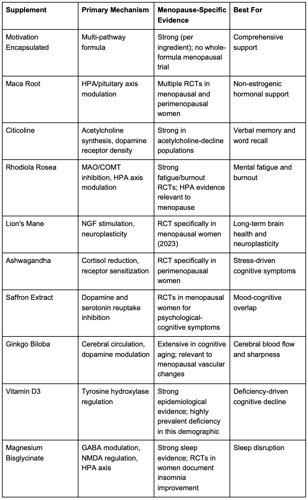
How These Supplements Compare

Frequently Asked Questions
What causes menopause brain fog?
Menopause brain fog has a clear biological basis in estrogen decline. Estrogen regulates the synthesis and activity of dopamine, serotonin, and acetylcholine, and it promotes cerebral blood flow and neuroplasticity. When estrogen decreases during perimenopause and menopause, all of these systems are affected simultaneously. Sleep disruption from hot flashes and night sweats compounds the cognitive impairment further, as does the cortisol dysregulation that frequently accompanies hormonal volatility during the transition.
Is perimenopause brain fog different from menopause brain fog?
The underlying mechanisms are the same, but perimenopause — which can begin a decade or more before the final menstrual period — involves fluctuating estrogen rather than consistently low estrogen. This hormonal volatility can make cognitive symptoms feel unpredictable or cyclic rather than constant. The supplements on this list address the neurotransmitter and neurological mechanisms that both phases share, and most have evidence that applies across the full transition rather than only to postmenopausal women.
Can these supplements be taken with hormone replacement therapy (HRT)?
Most of the supplements on this list are compatible with HRT, but a conversation with your prescribing physician is important before combining them. The supplements most worth discussing specifically are Maca Root (which influences pituitary and HPA signaling), Ashwagandha (which modulates the HPA axis and may influence thyroid function), and Saffron (which has serotonin-affecting activity). The others on this list are generally low-concern additions alongside HRT, but individualized guidance is always the right approach.
Do any of these supplements contain phytoestrogens?
No. None of the supplements on this list contain phytoestrogens. This was a deliberate selection criterion. Phytoestrogen-containing supplements such as red clover, soy isoflavones, and black cohosh are not included here because their appropriateness is highly individual, particularly for women with hormone-sensitive health histories including certain breast cancer backgrounds. All entries on this list support the neurological systems affected by menopause through non-estrogenic mechanisms.
How long does menopause brain fog typically last?
For most women, cognitive symptoms are most pronounced during perimenopause and the one to two years immediately following the final menstrual period. As the brain adapts to its new hormonal baseline, many women find cognitive function improves, often to a level that feels close to their pre-menopausal baseline. For some women, particularly those with a long or difficult transition, symptoms persist for longer. Consistent nutritional support during this period is worth considering both for day-to-day cognitive function and for the long-term brain health outcomes that the neurological quality of the transition may influence.
Is it safe to take several of these supplements together?
In general, yes — the supplements on this list are designed for combination use and many work through distinct mechanisms that complement rather than overlap with each other. The most important safety check is your complete medication list. If you take prescription medications, particularly those affecting mood, neurotransmitters, thyroid, or hormonal pathways, review your full regimen with a healthcare provider before adding supplements.
The Bottom Line
Menopause brain fog is a neurological reality, not a personal failing or an inevitable feature of getting older. The cognitive changes it involves — word-finding difficulty, impaired concentration, motivational flatness, memory lapses — are traceable to specific, well-understood mechanisms: declining estrogen regulation of dopamine and acetylcholine, reduced cerebral blood flow, sleep disruption, and HPA axis dysregulation. These mechanisms respond to targeted nutritional and botanical support.
For women who want comprehensive, multi-pathway support in a single product, reviewers say Motivation Encapsulated offers the broadest coverage of the neurological needs specific to this transition. For targeted additions, the highest-priority single entries based on mechanism specificity and menopause-relevant evidence are Maca Root for non-estrogenic hormonal support, Lion's Mane for the neuroplasticity dimension that most formulas ignore, Saffron for mood-cognitive overlap, and Magnesium Bisglycinate for the sleep disruption that compounds every other cognitive symptom.
As with any supplement program, addressing the lifestyle foundations — sleep hygiene, regular movement, dietary protein, and stress management — creates the environment in which these compounds can do their most meaningful work.