
For Kerry Schuette, ’98, the connections to Maryville University’s Interior Design program are deep and impactful. As an alumna, former adjunct faculty member, employer and student mentor, she is considered a vital bridge to the industry. This year, she engaged students and faculty in important advocacy work regarding the future of their profession.
Schuette is CEO and founding principal of VVELL Studio, a St. Louis area commercial interior design firm. Among its employees are two other Maryville University alumni, including designer Tascha Turvey, ’18, and designer and project manager, Melissa Hildenbrand, ’15, who has served as adjunct faculty. Schuette’s husband, Scott Schuette, is CIO and principal, and is a current adjunct faculty member.
Tracking industry legislation
Over the past year, interior designers across the state have focused on the passage of major legislation which has remained stubbornly on their political radar for decades. With success finally in reach, Maryville students and faculty can claim some part in that achievement thanks to Schuette, who engaged them in professional advocacy efforts while leaning into her role as vice president of advocacy for the Gateway Chapter of International Interior Design Association (IIDA).
People are also reading…
The bill in question is Missouri Senate Bill 1233, which sits on Gov. Mike Kehoe’s desk as of this writing. He has until July 14, 2026, to sign the legislation, which would then become effective in August.
“There are a lot of Maryville people involved in this fight and for good reason,” said Schuette. “The bill would allow interior designers to seek licensure and to sign and seal our drawings. Seventeen states have already passed similar legislation.”
Defining interior design
People typically visualize someone choosing paints and wallpapers for houses when they think of interior design, but the role encompasses a much broader range of skills and mastery, she said.
“The work of commercial interior designers goes far beyond selecting finishes and furnishings. We are responsible for creating safe, functional interior environments by addressing building codes, accessibility, life-safety requirements, space planning, lighting, and selecting finishes and furnishings that shape how people experience a building,” Schuette said. “Translating these needs into specifications and technical drawings is what credentialed interior designers are trained to do.”
In large part, the legislative challenge is one of economics. Most firms only allow licensed professionals to become part of ownership and enter the C-suite, which limits the professional path of designers. Missouri’s interior design firms currently must pay architects to review and sign off on their final work. Also, commercial design firms that do large projects have to buy the same insurance as architects, though they will never make a claim because it’s not their seal on the drawings. Therefore, many professionals planning to pursue commercial interior design find it cost-prohibitive to branch out on their own.
“It makes sense to have designers who are maintaining continuing education units regarding safe materials and the development of the interior space to be accountable for their own drawings and specifications,” Schuette said.
The legislation is also a rallying cry to keep Missouri’s interior design students working locally instead of heading for cities and states where their skills and knowledge are valued.
Learning to speak up
“I knew nothing about advocacy before now, but it was important to learn what this bill can do for us, especially if you’re a business owner,” says Sarah Scott, ’27. “I don’t have entrepreneurial plans right now, but it would be discouraging if this bill doesn’t pass.”
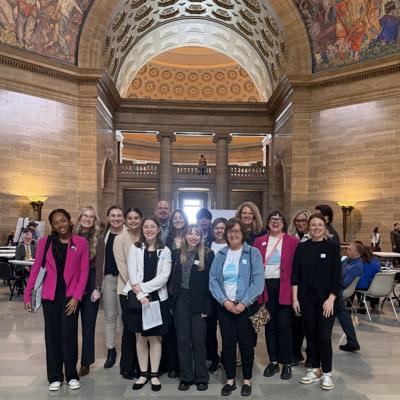
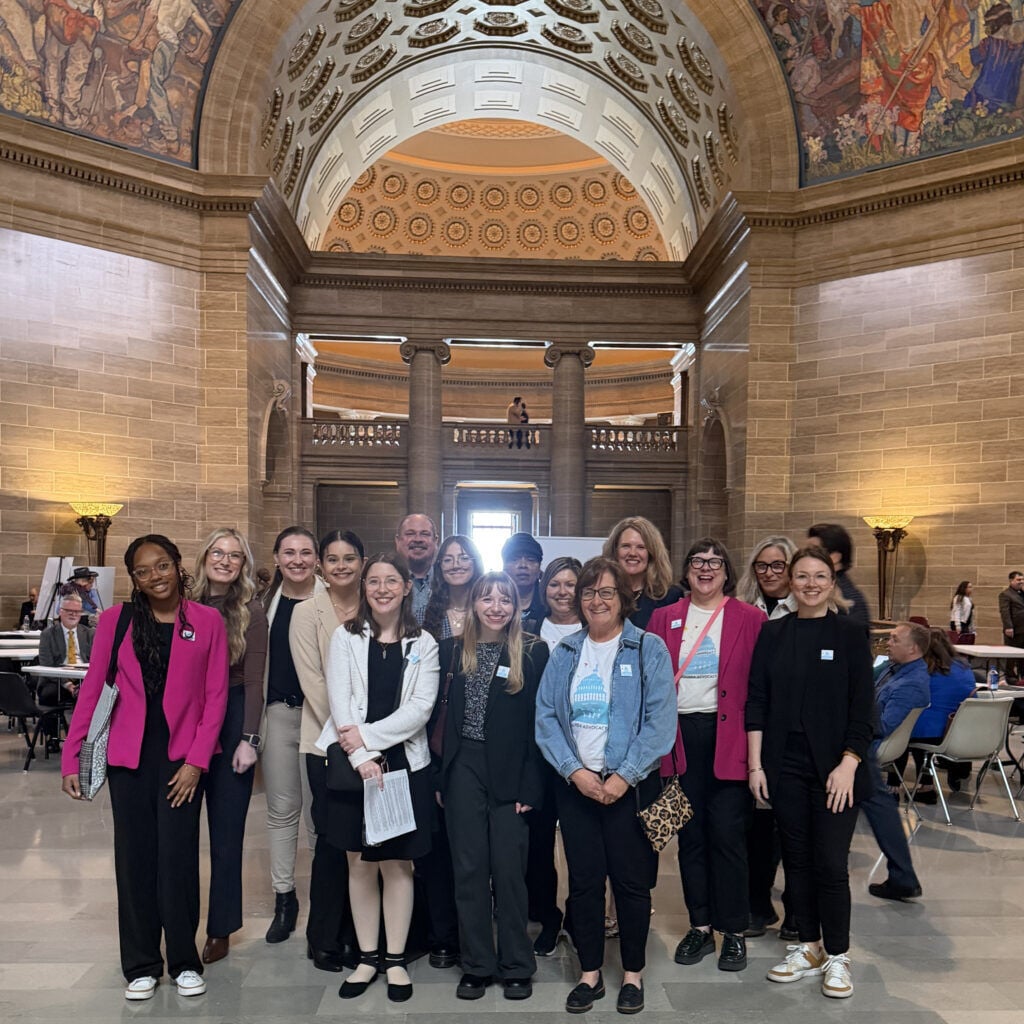
Scott is an intern with VVELL Studio and was one of six Maryville University Interior Design students who accompanied Kerry and Scott Schuette — along with representatives of the IIDA Mid America Chapter based in Kansas City and students from Central Missouri State — to attend Advocacy Day in Jefferson City, MO, last spring. The group met with congressional representatives in their capitol offices. It was not Scott’s first visit with legislators, but each effort brings a sense of satisfaction, she said.
“I’ve never been used to standing up for what I want so knocking on doors was nerve-wracking, but I really want this bill to happen,” Scott said. “I learned how to look them in the eye and tell them how I feel about the legislation and why it’s important. I feel good about that.”
It’s crucial for students to know what’s going on legislatively in their profession so they’re not blindsided when they graduate, said Kirsten Kohm, ’12, director of Maryville’s interior design program. “While in school, students are making big decisions about where they’re going to be employed and if they want to run their own business,” she said.
A legacy of advocacy
During the 2025 congressional session, Schuette testified as a firm owner before a house committee. The appearance marked her first foray into advocacy, but her awareness of the issue was sparked 30 years ago, when she was a non-traditional student at Maryville. Schuette was married at the time and gave birth to her two children during her studies. Then program director Leslie Armontrout was highly involved in advocacy for interior designers and often spoke about the legislative concern. “I have been concerned about it, but as an interior designer who focuses on large commercial projects in the military, health care industry and corporate work, and as one who always had to rely on architects to have work, I was afraid of shaking things up and upsetting my client base. I had bills to pay and employees for whom I was responsible. [But] the rules no longer made sense. It was time to change them so an interior designer, just as any other trade professional, truly has a voice at the table,” she said.
Kohm’s personal journey nearly led her to graduate school for architecture because she feared the struggle to earn respect as an interior designer was too great. Armontrout, by then a former program director serving as a faculty member, suggested she channel her work into interior design if that was her true career preference.
“He told me, ‘You don’t need that, just go be the best interior designer you can be. Help change that stereotype of what interior designers are.’ That had a huge impact on me,” she said. “I joined the local chapter of the IIDA’s advocacy committee because in my role as program director, I feel it’s important to understand more about the industry’s advocacy efforts and continue sharing with the next generation of students.”
The trip to Jefferson City extended a Maryville legacy of advocacy that began more than three decades ago, and for the students it served as an important opportunity to grow and gain confidence in the art of presentation.
“It was a powerful real-world experience because that’s what we do in design. Every day, we teach clients about our process and products,” said Scott Schuette. “Meeting with congressional leaders, students learned to field questions and take feedback. They learned their opinion is valuable.” The energy surrounding this legislation is creating quite a moment for Maryville’s interior design program, said Kohm.
“It’s come full circle, with all of us — students, teachers and professionals — gathering around this legislative concern in our profession,” she said. “The advocacy day meant a lot to the students, and we remain hopeful the bill will pass.”
Update: It’s official!
Gov. Kehoe signed SB 1233 into law on July 13. Moving forward, registered interior design professionals will have the authority to sign and seal their own drawings within their scope of practice. The passing of this bill marks a monumental win for the interior design industry, particularly for Maryville’s alumni and students who advocated for it over the years.
About Maryville University
Founded in 1872, Maryville University is a comprehensive and nationally ranked private institution with an enrollment of well over 9,000 students. Maryville offers over 90 degrees at the undergraduate, master’s and doctoral levels, as well as several certificates that align with the undergraduate and graduate education levels. Maryville is recognized as the third fastest-growing private university in the United States by The Chronicle of Higher Education, serving students from 50 states and 56 countries. More than 50,000 Maryville alumni globally, many of whom work and live in the St. Louis region.