


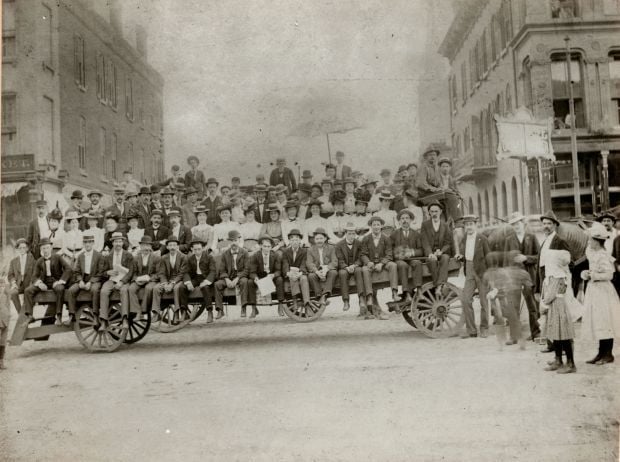
A century ago, streetcars were the wheels of urban life. Neighborhoods and businesses were built along the tracks. Almost everyone, rich and poor, got around on them.
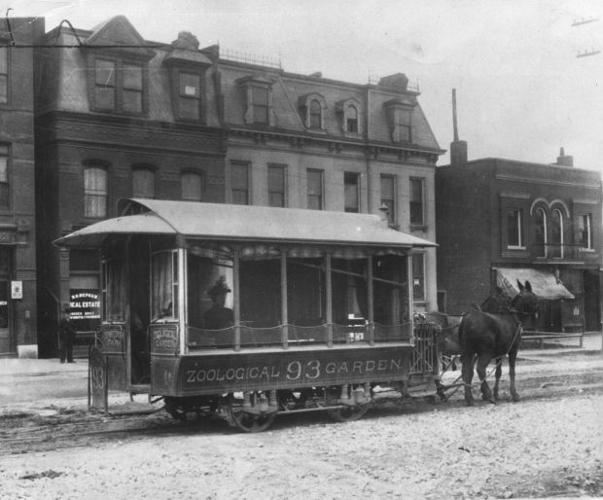
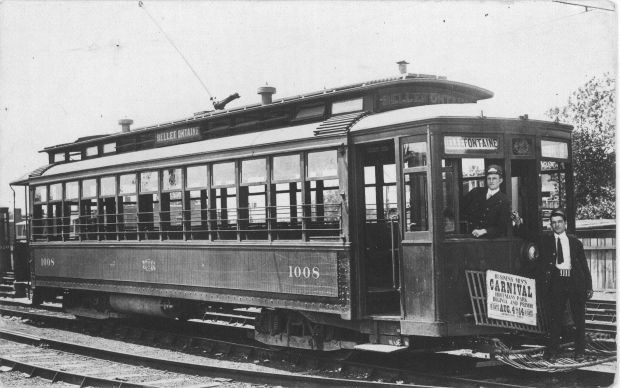
The city’s first street railways, built shortly before the Civil War, were pulled by horses. By the 1890s, a jumble of independent streetcar lines powered their cars with underground cables (as in San Francisco) or the increasingly popular overhead wires.
In 1899, a group of influential businessmen bundled the city lines into a near-monopoly called the St. Louis Transit Co. It quickly began acting like one, leading to the city’s most violent strike and a series of business-and-politics scandals that drew national scorn.
The company, led by banker Edwards Whitaker, reduced service and lengthened workdays. The new Street Railways Union demanded company recognition and better working conditions. The company agreed, then reneged. Union members voted May 8, 1900, to strike.
People are also reading…
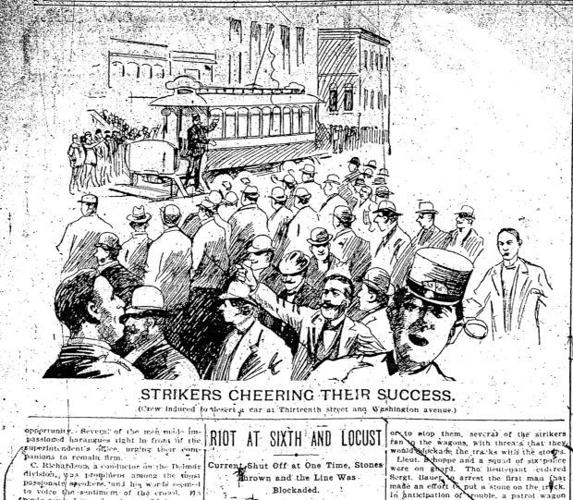
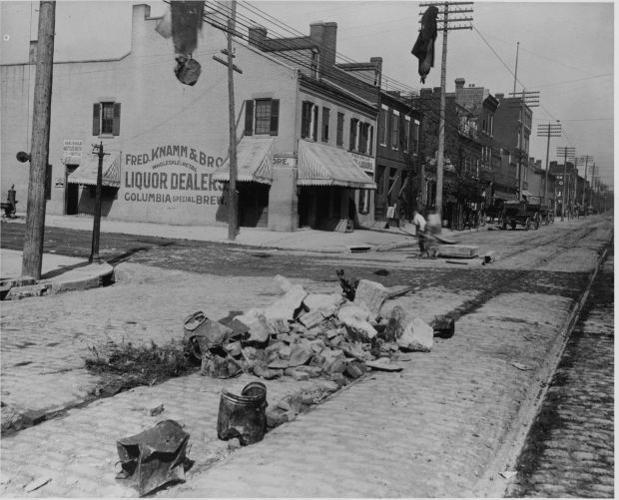
Most of the city’s working class backed the strikers. Women from the Garment Workers Union stood across the tracks on Washington Avenue. Gangs pelted streetcars with rocks and cut overhead lines. Workers wore badges reading, “I will walk until the streetcar companies settle.”
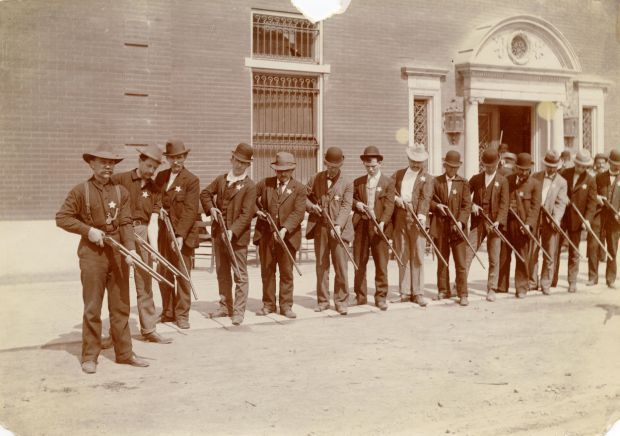
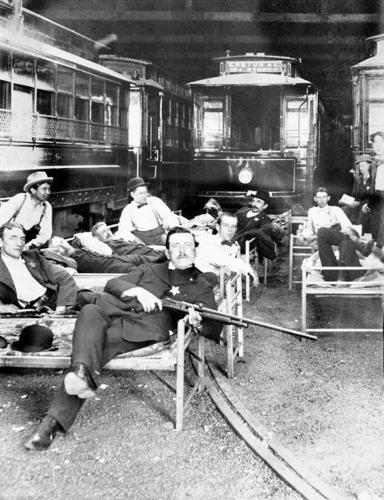
Unlike the General Strike of 1877, when workers took over the city for four days without violence, the streetcar dispute turned deadly. On its second day, a man was shot to death during a demonstration. About 2,500 men of the upper and professional classes formed a posse and rode the streetcars bearing shotguns.
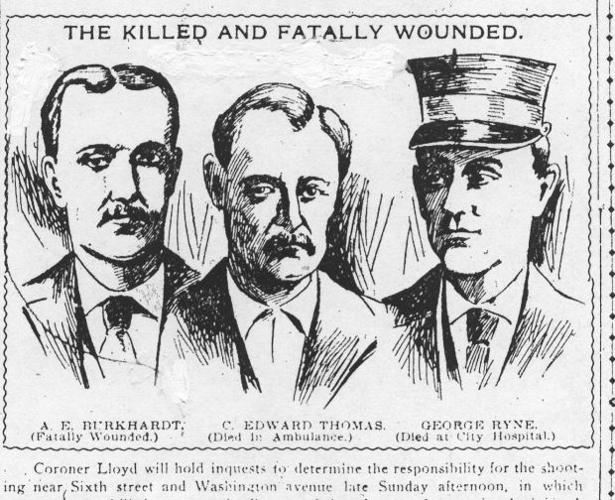
On June 10, strikers were parading past a posse station at 510 Washington when someone threw a brick at a streetcar. Posse members fired, killing three marchers. By the time the strike was broken in September, 14 people had died.
Taking on municipal corruption
Joseph Folk, a young reform-minded lawyer who had made headlines trying to arrange a settlement of the strike, soon filed to run for St. Louis circuit attorney. Among the power brokers who backed him was Ed Butler, a political kingpin called The Boss. Butler and his business cronies soon wished they had paid more attention.
Butler, a blacksmith from Ireland, assembled his fortune and patronage machine through contracts to shoe the city’s horses and mules. His henchmen, who roughed up rivals on election days, were called Butler’s Indians. He was the closest St. Louis got to a Tammany-style boss.
A cabal of business leaders made up the Big Cinch. It dealt regularly with Butler, whose stooges on the Municipal Assembly were known as the Combine. The payoff racket was called the “boodle.”
In 1902, Folk waded into the municipal corruption that greased the Transit Company. Folk couldn’t find Butler’s prints on that deal but snared him for scheming to fix a garbage-collection contract.
“I am not in the general bribery business,” Butler fumed on the stand in Columbia, Missouri, where a jury convicted him in November 1902. The Missouri Supreme Court later overturned the verdict on a thin technicality.
Folk was elected governor in 1904. Whitaker built a mansion on Westmoreland Place. Butler died in 1911 worth $2 million.
Good-hearted manufacturer creates town and recreation for employees
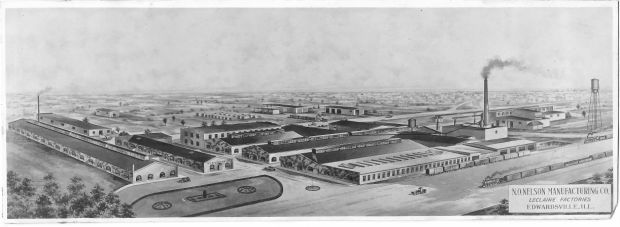
A bird's eye drawing of the N.O. Nelson Co. works in Leclaire, the company's development south of Edwardsville. Nelson was a progressive employer who provided workers with profit-sharing, reasonable working hours and other benefits. It built homes in the village that were sold at cost to employees and non-employees alike. Lewis and Clark Community College in Edwardsville now uses some of the preserved factory buildings, and more than 400 homes are still in use. Edwardsville annexed Leclaire in 1934. Image courtesy Madison County Historical Society
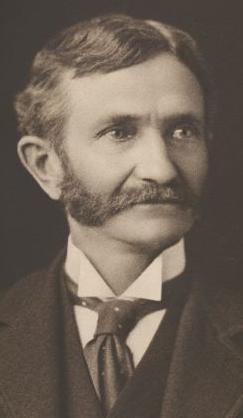
Nelson, whose company made and sold plumbing products.
EDWARDSVILLE • Nelson O. Nelson ran a plumbing-supply business in St. Louis. He was frustrated by labor turmoil, but not in the ways of his fellow business leaders.
Nelson thought most American companies badly mistreated their workers. In his view, that was the main cause of strikes, especially at railroads, that snarled his distribution business. He created profit-sharing for his employees. A genuinely good soul, he also sponsored "open-air missions," day trips for poor families.
In 1889, Nelson began scouting sites for a new factory complex somewhere far from the downtown congestion at his headquarters, Eighth and St. Charles streets. He chose a site south of Edwardsville and broke ground in 1890.
He named his community Leclaire in honor of Edme-Jean Leclaire, a Parisian paint contractor and leader in profit-sharing. Nelson's factory was designed for maximum ventilation and light, and included fire-supression systems. Julius Pitzman, who helped develop Forest Park, laid out the first tree-lined streets for Leclaire.
The company built homes for sale at cost, and people didn't have to work there to live in Leclaire. The village had a school with a library and community hall for lectures by learned guests. It had a fishing lake, athletic fields and a greenhouse that provided free flowers for residents' gardens.
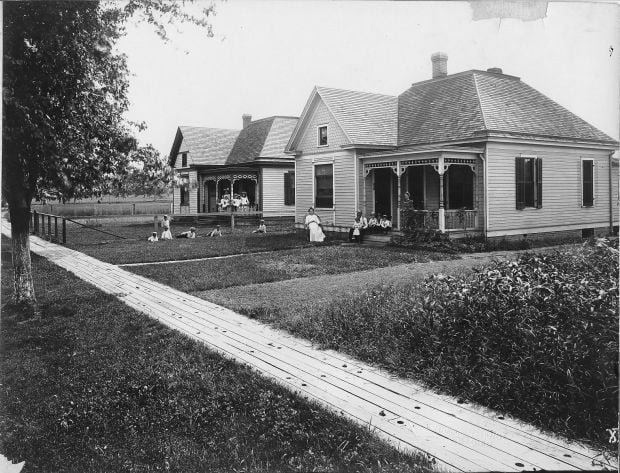
Two of the Leclaire houses on Holyoake Road circa 1900. The wooden sidewalks later were replaced by stone. The houses still exist on the 800 block of Holyoake in the Leclaire neighborhood of Edwardsville. Image courtesy Madison County Historical Society
In addition to profit-sharing, the company had reasonable work hours for the times and provided sick time, widows' benefits and adult-education programs.
Nelson got into personal financial trouble creating a grocery co-op for poor people in New Orleans and was forced from the plumbing company a few years before he died in Los Angeles in 1922 at age 78. He is buried in Bellefontaine Cemetery. Leclaire became part of Edwardsville in 1934.
The Nelson company was sold in 1955. Two old-fashioned business sharpies were found guilty in federal court of looting the transaction.
More than 400 Leclaire houses are still in use. The Lewis and Clark Community College campus in Edwardsville uses restored Nelson factory buildings.


