
It began when a Black mother didn’t want her son sent by bus to a school in a rough neighborhood.

Minnie Liddell, leader of Concerned Parents of North St. Louis, died in 2004 at age 64.
“This is a new twist in busing. Now it’s Blacks who are fighting busing,” said Minnie Liddell, who spoke for parents who wanted their children to remain at Yeatman School near O’Fallon Park in 1971.
The parents prevailed but resented the St. Louis Public Schools’ way of assigning students and teachers. On Feb. 18, 1972, Liddell and the Concerned Parents of North St. Louis filed suit in U.S. District Court, calling the system racially biased. The lead plaintiff was her son, Craton, 12.
After the landmark U.S. Supreme Court ruling in 1954 that outlawed segregated public education, the city had assigned Black and white students to schools within neighborhood districts. At the time, two-thirds of the students were white. Critics said school officials drew districts to avoid integration. Officials said they were powerless to change racial housing patterns. White residents headed for the suburbs in droves. The Black population rose with newcomers from the Deep South.
People are also reading…
In 1972, two-thirds of the city’s 95,000 students were Black, but almost 90 percent of the schools had enrollments that were 90 percent or more of one race. Far south side schools had 30,680 white students and 7,823 Black students. The far north districts had 26,057 Black students and 180 white ones. Most teachers were assigned to schools with students of their own race.
Federal Court, chapter one
On Christmas Eve 1975, U.S. District Judge James Meredith approved a settlement between Liddell’s group and the school board. It promised teacher reassignments and efforts toward “reducing racial isolation,” including new magnet schools to attract white and Black students.
Meredith said busing to achieve racial balance wasn’t necessary — the feature that dominated headlines. Busing was a hot-button issue nationwide, especially after the violence in South Boston in 1974.
But Meredith’s decision was only the beginning.
The NAACP protested, calling the settlement woefully inadequate — even accusing Liddell’s group of having “acquiesced” — and won the right to enter the case. Nathaniel Jones, the NAACP’s national general counsel, said, “If it takes busing to end segregation, so be it.”
Meredith heard 13 weeks of testimony on housing patterns, busing plans and white flight. By 1977, white enrollment had fallen to 28 percent. City school officials suggested the judge include suburban school districts, an idea with enormous significance later.
His ruling in April 1979 still declined to order busing. The NAACP rushed to the 8th U.S. Circuit Court of Appeals, which bluntly overruled Meredith and ordered him to institute a race-based busing program. Anthony Sestric, lawyer for the anti-busing Concerned Parents for Neighborhood Schools, predicted a mass exodus of families. “You can’t keep people from moving,” Sestric said.
Buses roll
On Sept. 3, 1980, more than 7,500 of the city’s 63,000 students boarded buses for desegregation (an additional 8,000 rode simply to get to class). A highlight of “deseg” was sending white students from the south side’s Cleveland High to Soldan High in the west end, and Black students from Soldan to Cleveland. Until then, each school had been overwhelmingly of one race. The swap largely was peaceful, with mixed enthusiasm.
Three months later, Meredith handed the case to fellow federal Judge William Hungate, who eventually expanded the case to include suburban school districts in St. Louis County. He contemplated adding Jefferson and St. Charles counties, creating a single metro school district or ordering a regional busing plan.
Stunned white suburban parents and politicians called for a U.S. constitutional amendment to ban “forced busing.” On July 5, 1983, Hungate approved a massive voluntary student-transfer program across the city-county line and ordered the state of Missouri to pay for it.
Later that year, 3,000 Black students chose to take buses to suburban districts, and 580 white suburban kids went to city magnet schools.
Over the next two decades, as many as 14,000 city students and 1,200 from the county took buses under the Hungate plan each year. Cost to the state: just short of $2 billion.
Vestiges remain
In 1999, a third federal judge downtown, Stephen N. Limbaugh Sr., closed the Liddell case and approved a plan for county districts to reduce participation. Some districts dropped out. Thirteen county districts still participate, with about 4,800 Black city students attending school in the county this year and 120 white suburban children going to city magnets. (Editor's note: In 2022, 3,110 Black city students attended county schools, 85 white county students attended city schools, and none of the 11 county districts remaining in the program met the 25% goal for Black enrollment.)
Whether the program was effective remains a sharply contested, emotion-charged issue. Its major success is in having given more than 60,000 black children from the city a chance to attend better schools in the suburbs.
The results in the city were muddled. Families continued moving out, thwarting the goal of racial balance. Some schools closed, others moved. A few sought-after schools evolved, with lotteries sometimes determining attendance.

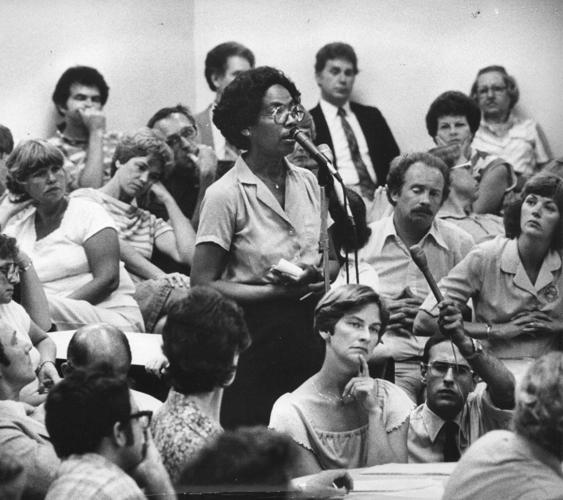
Geraldine Garner speaks in favor of a voluntary city-county busing plan during a Parkway School board meeting in July 1981. Three weeks before, U.S. District Judge William Hungate had begun work on a metro plan.

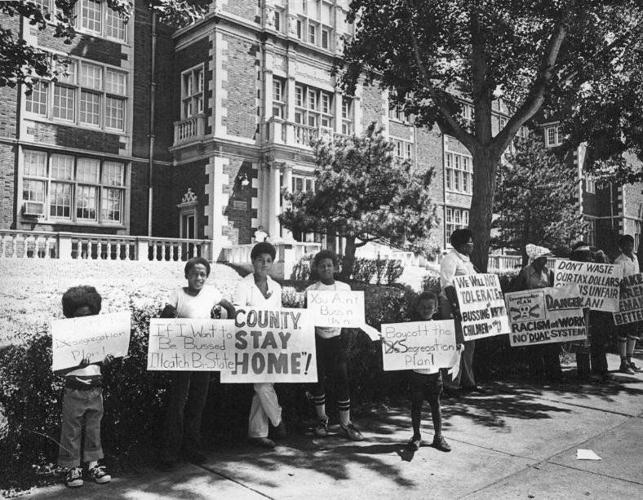
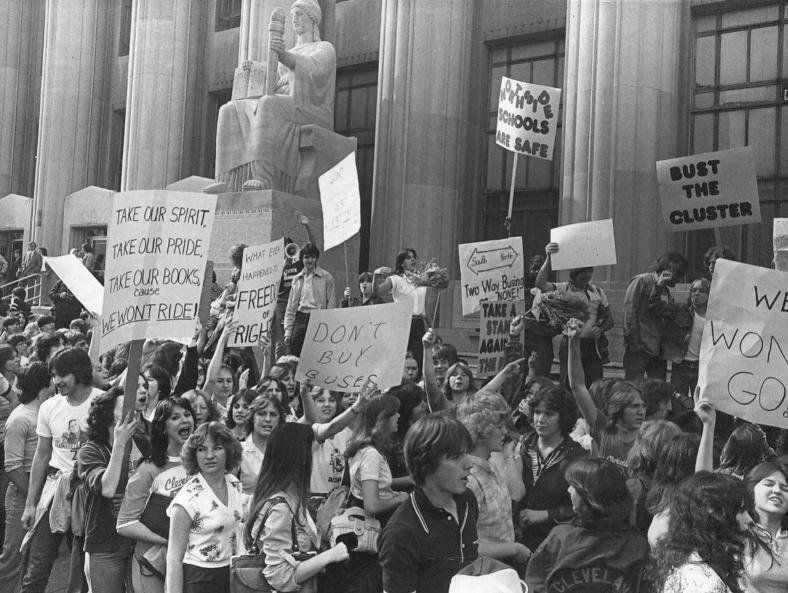
Some black students also opposed the busing plan. This group is picketing in front of Soldan High School, 918 Union Boulevard, in August 1980 during an open house for white students who were to begin classes there in two weeks. When busing began, some black students from Soldan were sent to Cleveland High on the south side, and some white Cleveland students traveled to Soldan.

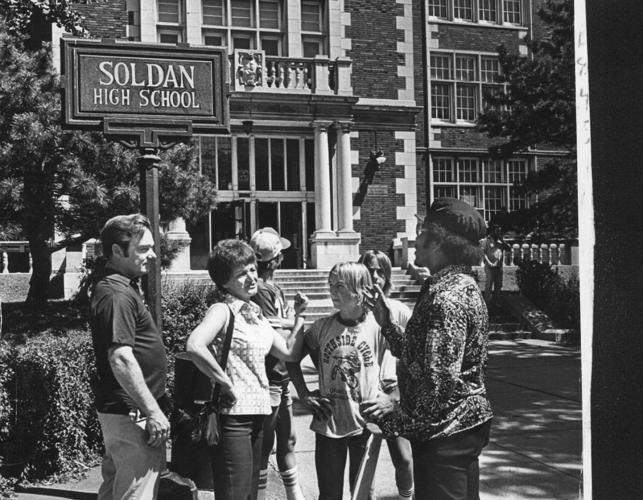
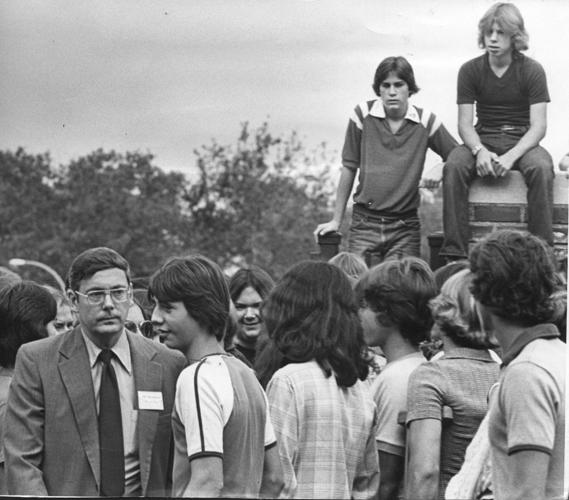
The Argast family visits Soldan High School for its open house in August 1980. They speak with Art Jackson, who is telling them that everyone would be better off if they went to schools in their own neighborhoods.

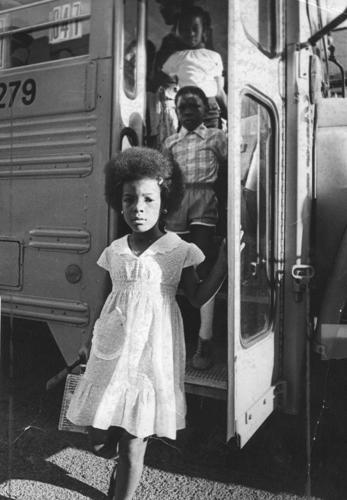
Kimberly Bostic steps off the bus on Sept. 3, 1980, for her first day of second grade at Mann School, just south of Tower Grove Park.

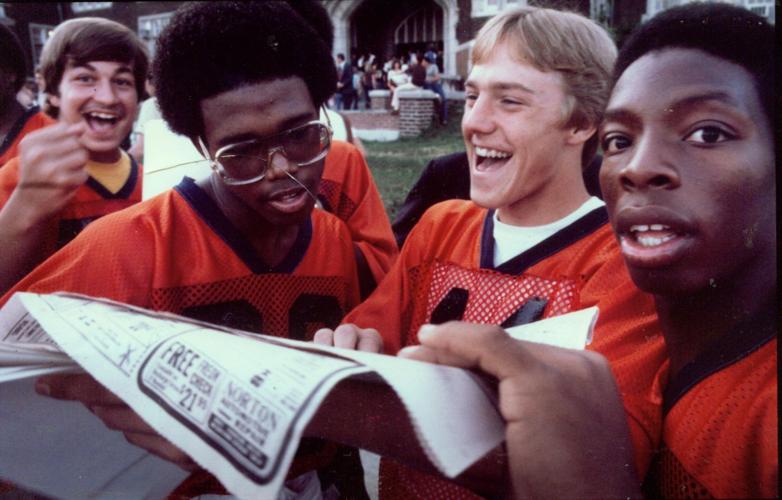
New teammates on the Cleveland High Dutchmen football team read about themselves in a newspaper on Sept. 4, 1980, the second day of busing to achieve racial balance in city public schools. Robert Maxwell is wearing glasses. Holding the paper is Mike Campbell. Under the busing plan, some white students from Cleveland went to Soldan High School, and some black students from Soldan transferred to Cleveland.

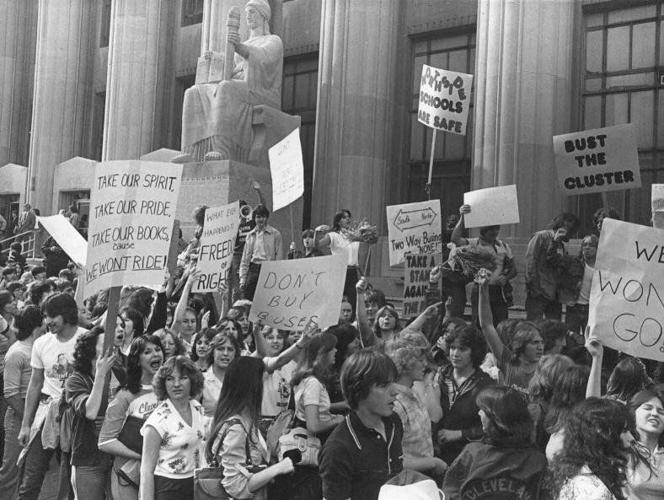
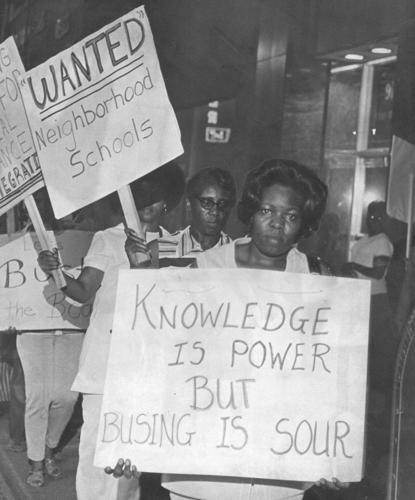
Parents of children at Yeatman School, 4265 Athlone Avenue near O'Fallon Park, picket outside the St. Louis Board of Education downtown in September 1971 to protest having their children bused to Bates School at 1912 North Prairie Avenue, in a declining neighborhood. The parents' organization, Concerned Parents of North St. Louis, filed suit in federal court in February 1972, alleging racial bias in student and teacher assignments in the city schools. That lawsuit led eight years later to the first major busing order.

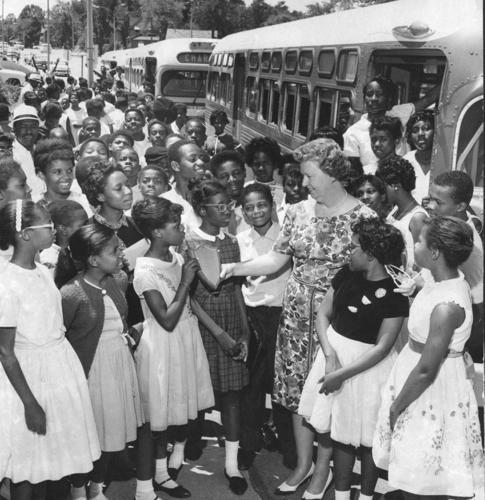
Students from north St. Louis who attended Long School at 5028 Morganford Road present a plaque of appreciation to principal Dorothy Siever in June 1963. St. Louis public schools had used buses to transport students for many years before the federal court ordered busing to achieve racial balance. The city system used Bi-State buses to transport thousands of children if schools near their homes didn't have room.

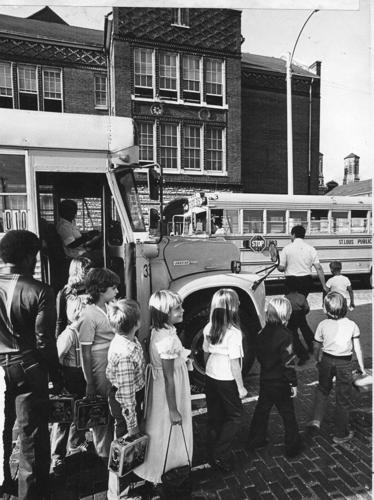
Children from the Carondelet neighborhood get off their bus outside Patrick Henry School, just north of downtown, on Sept. 3, 1980, the first day of court-ordered busing to achieve racial balance in city public schools. The previous school year, most of them attended Lyon School in Carondelet. Other buses took black children to Lyon.

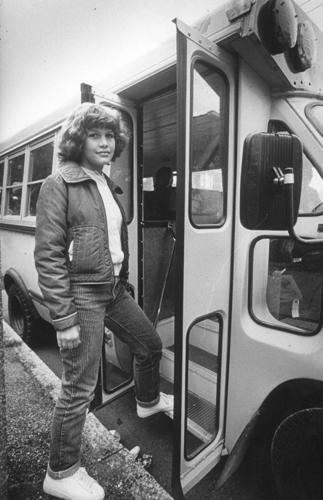
Dora Fette, of Webster Groves, boards a school bus in September 1985 to attend the magnet program at Roosevelt High School in St. Louis. Attracting white county students to city magnets was part of the city-county desegregation plan.

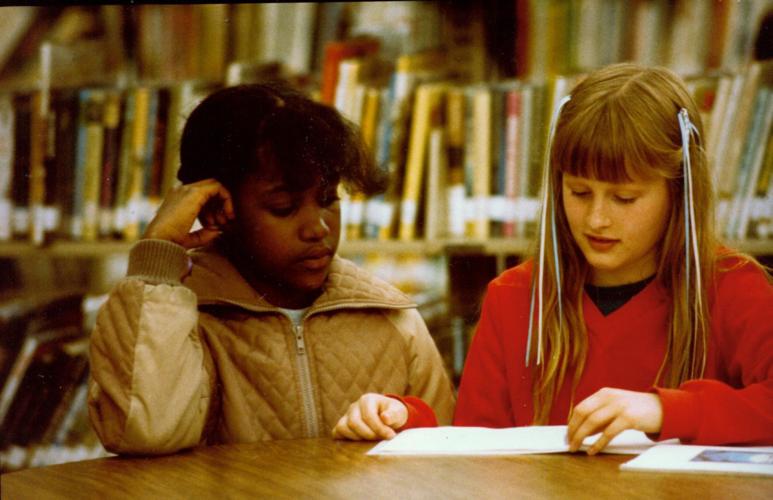
Fourth-graders Annette Curry (left) and Amy Oler reach together in the library of Shenandoah Valley School in Chesterfield in May 1984. Annette attended the school through the voluntary city-county desegregation plan. Their teacher said they had become good friends.

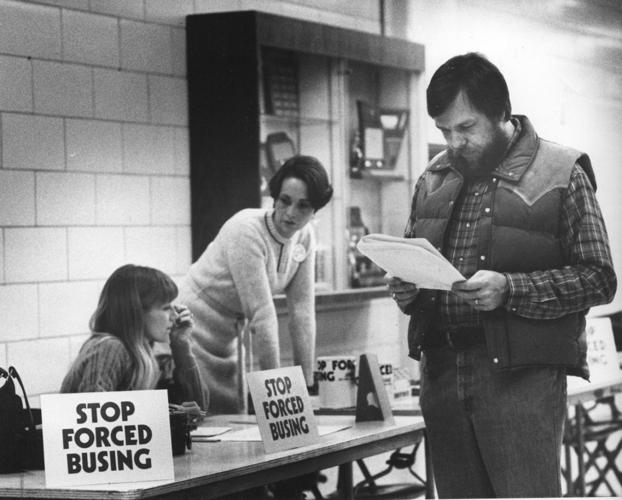
Denny Kreps scans information provided by opponents of race-based school busing at a meeting in November 1980 of the National Association of Neighborhood Schools, held at Lafayette High School in west St. Louis County. Working behind the table are (left) Pat Lorton and Jan Hunt of the local chapter. At the time, the busing case in St. Louis covered only the city, but some groups were calling for a metro-wide plan. Photo by Sam Leone of the Post-Dispatch

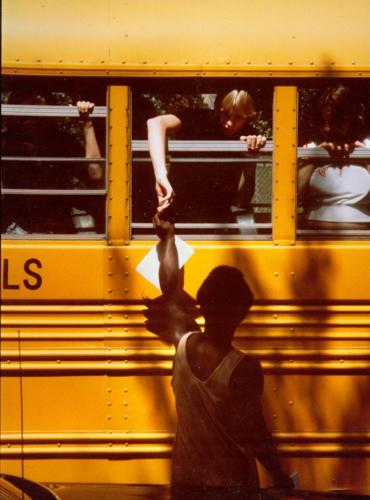
Two students shake hands goodbye for the summer outside Soldan High School at the end of class in June 1981, after the first year of busing to achieve racial balance in the city public schools. The white student took the bus home to south St. Louis. The black student lived near Soldan in the city's west end. Photo by Scott Dine of the Post-Dispatch

White students boycott classes at Cleveland High School on Sept. 12, 1980, to protest reports that black male students had bothered white girls. School officials kept them out for the day and wouldn't let students in the building leave for lunch. Photo by Jim Rackwitz of the Post-Dispatch

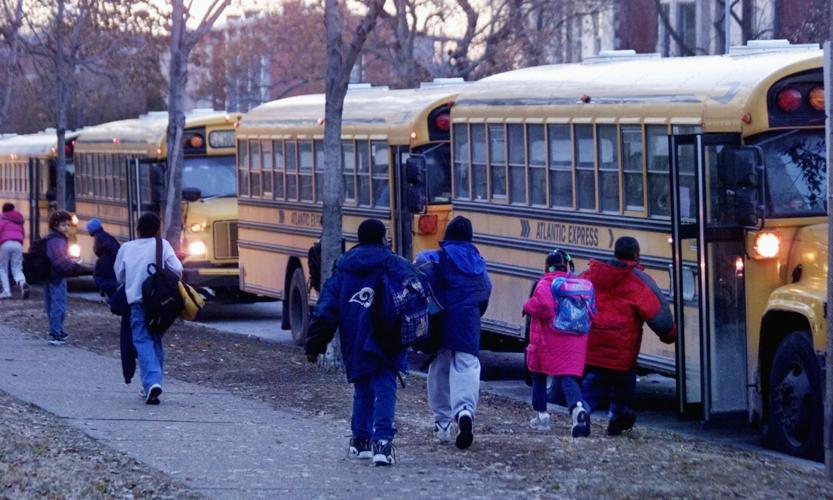
St Louis City public school students change buses at a meeting place on Park Avenue at Lafayette Park in December 2000. Several bus routes included stops on Park for students to continue their rides to school. Photo by Wayne Crosslin of the Post-Dispatch