
In 1929, the Landreth Building was completed at Fourth and Locust streets. It was 18 stories tall, cost $750,000 and was just the latest office tower in a bustling downtown.
But it turned out to be the last major office structure to be built downtown for 30 years.
By the 1950s, the downtown skyline was tired and dingy, the riverfront an empty expanse of cleared ground. Three-fourths of the commercial buildings were more than 50 years old.

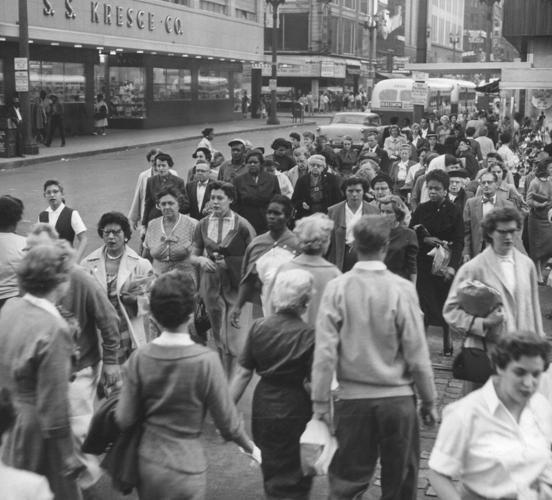
Pedestrian traffic at Washington Avenue and Sixth Street in September 1957. Downtown still was a busy place, with three major department stores. Photo by Floyd Bowser of the Post-Dispatch
Despite the look, downtown remained a busy place. The postwar years were the golden age for Christmas window displays at the major department stores. Families made happy pilgrimages by streetcar to see Santa.
But jobs and retail dollars were heading for the suburbs. Major landscape change usually involved headache balls.
People are also reading…
Civic leaders promoted a campaign to wash downtown buildings of grime accumulated over decades of burning sooty coal for heat and power. More needed to be done, especially with commercial development of once-sleepy Clayton beginning to take off.
On Dec. 9, 1958, Charles Farris, director of the city’s Land Clearance for Redevelopment Authority, proposed building a 50,000-seat sports stadium downtown as a catalyst for rebirth. The idea had been kicked around since the 1930s, but Farris’ timing was right. The Chamber of Commerce jumped on the idea.

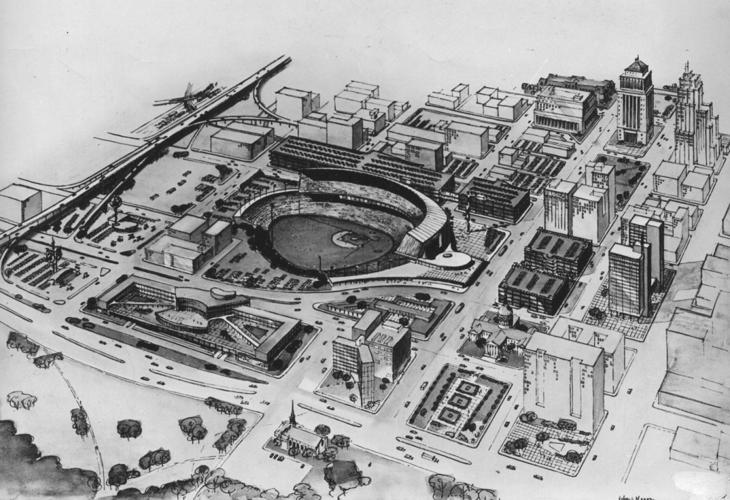
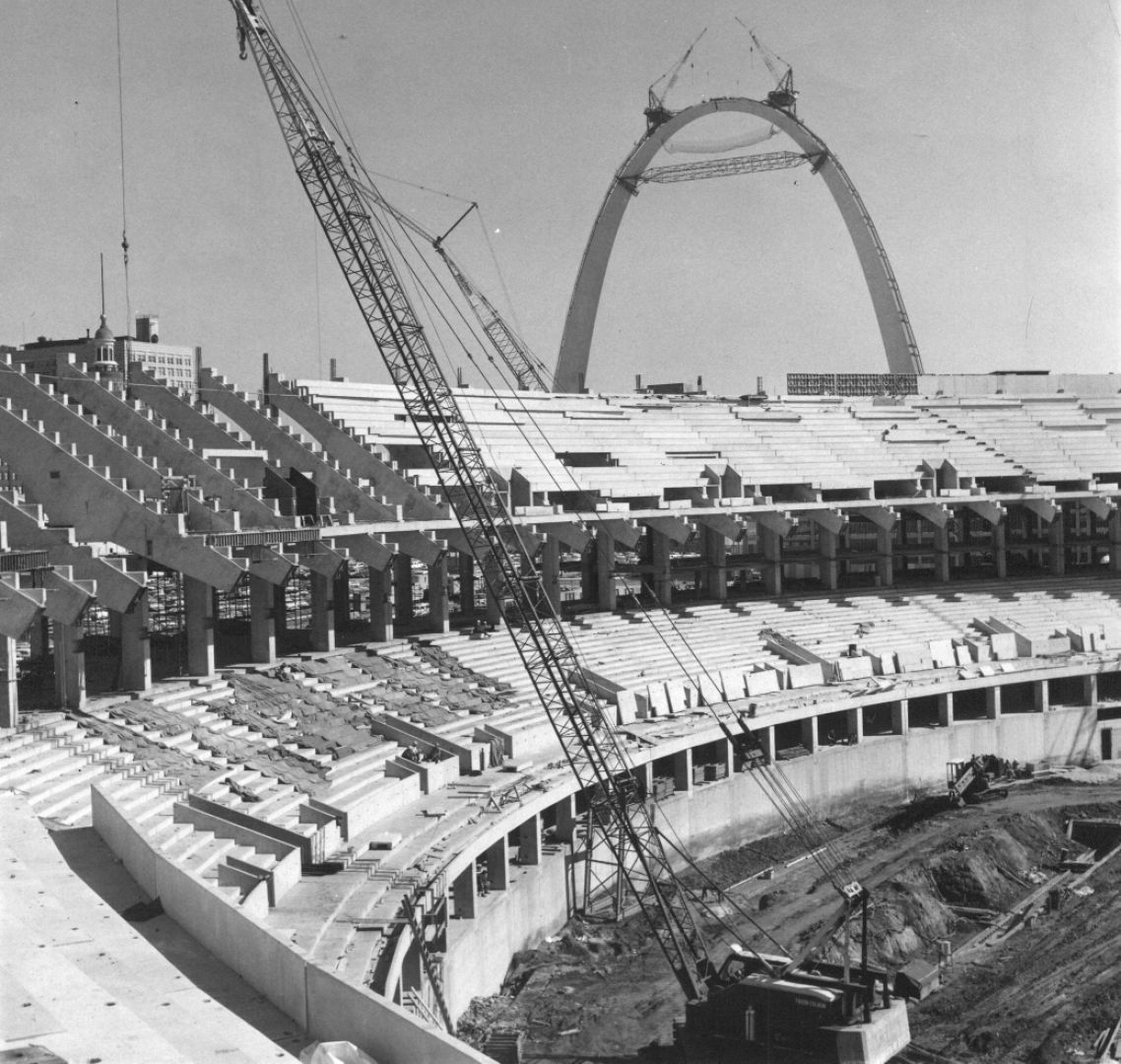
One of the proposals for what became the first Busch Stadium downtown. This design was offered by the metropolitan Chamber of Commerce in 1959. The Civic Center Redevelopment Corp., a private entity created to build the stadium, later chose the round design that was completed in 1966. Post-Dispatch file photo
In 1959, the Civic Center Redevelopment Corp. was formed to build a new stadium, parking garages and other projects across 32 downtown blocks. That same year, the Thomas Jefferson building (now part of Drury Plaza Hotel) was completed at 14 South Fourth — the first major office structure since the Landreth.
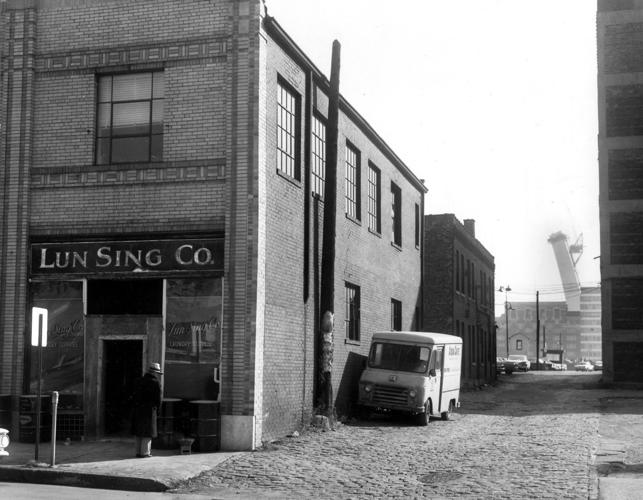
As Civic Center raised money from businesses, labor unions and ordinary citizens, the catalyst was working. The Bel Air East hotel (now a Hampton Inn) went up at Fourth and Washington Avenue. The Land Clearance authority used its muscle to assemble land, obliterating good and bad. Among its victims was Chinatown, a small but century-old commercial district at Seventh and Market streets.
Work began on the Jefferson National Expansion Memorial across all that vacant riverfront. The legs of the Gateway Arch began rising in February 1963. The Landreth was demolished in 1963 with little fanfare to make way for the Mansion House apartments. Construction of a new Busch Stadium began one year later.

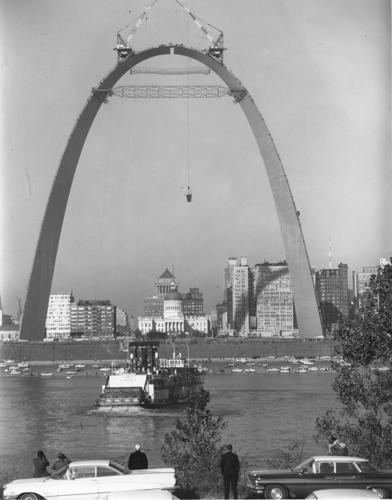
The final wedge of the Gateway Arch is pulled upward on Oct. 28, 1965. It probably was the most significant single day in downtown during the modern era. Over the next two decades, many of the buildings in the 1965 skyline would be replaced. Photo by Renyold Ferguson of the Post-Dispatch
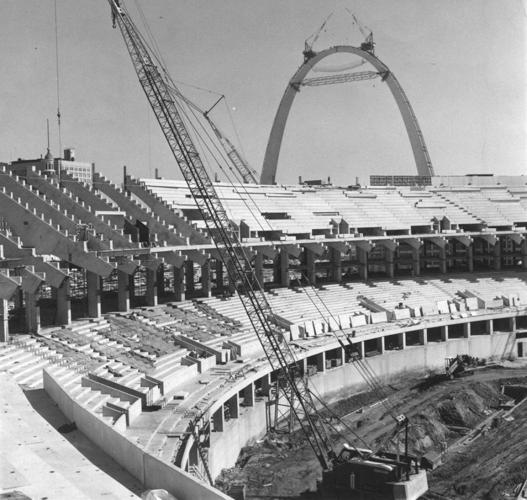
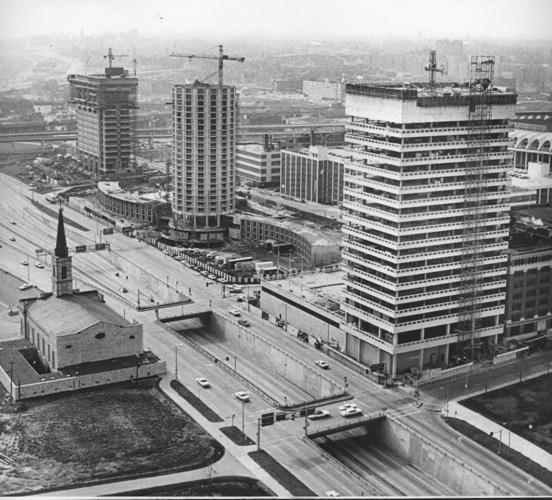
The Arch was topped Oct. 28, 1965. The first Cardinals game in the new $24 million stadium was on May 12, 1966. Within five years, work was underway or completed on the Gateway Tower, Pet Inc., Equitable, 500 North Broadway and Laclede Gas buildings, all of 20 or more stories. The ill-fated Spanish Pavilion (now part of the Hilton Ballpark Hotel) opened in 1969. Buildings for Mercantile and Boatmen’s (former local banks) soon joined them, further transforming the skyline.
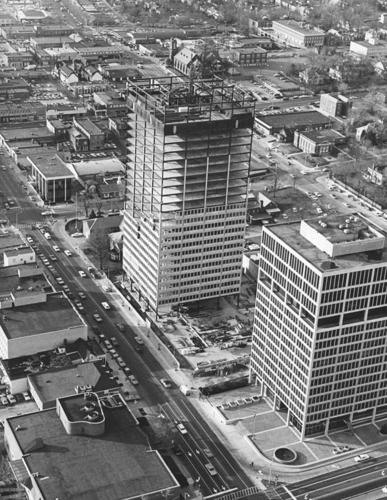
But eight miles west, the competition was growing. In 1959, Clayton scrapped its five-story limit for new buildings, opening a boom in office construction near the courthouse square.
For a while after the stadium opened, downtown was alive with a renaissance of clubs and restaurants — too many, actually, given the steady march of people to the suburbs. By the 1980s, downtown streets were quiet again after 6 p.m.
Construction slowed after the green-roofed Metropolitan Square tower, downtown’s tallest, opened in 1989.

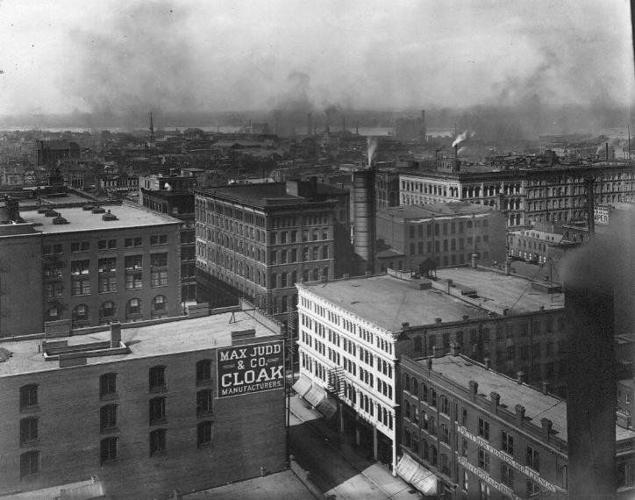
Part of downtown circa 1900, looking northeast from what now is called the Old Post Office. Eighth Street is in the foreground. The area's penchant for burning coal for heat and energy kept the sky hazy. Post-Dispatch file photo
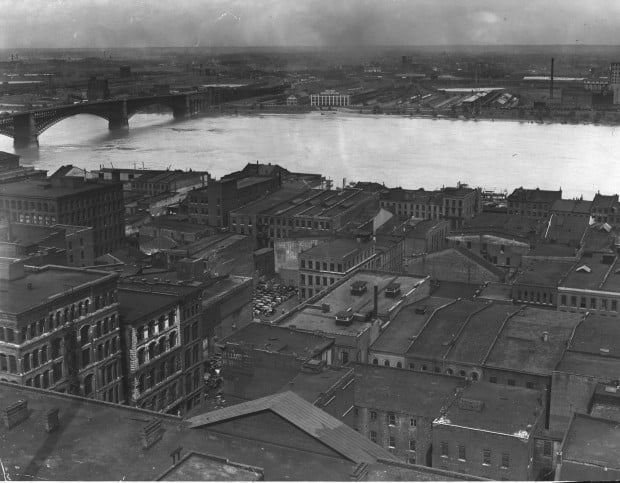
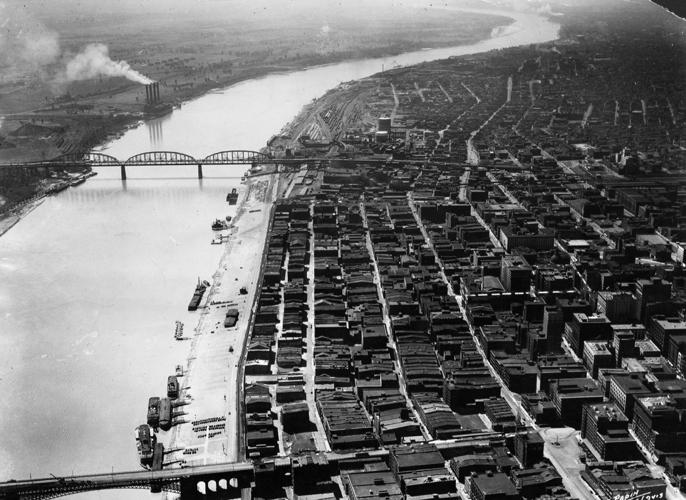
Some of the buildings of the St. Louis riverfront district in the 1930s, before they were demolished to make way for what eventually became the Gateway Arch and park. Civic leaders wanted to clear the dingy area for a riverfront memorial to President Thomas Jefferson and the Louisiana Purchase. Politicians saw the project's potential for jobs during the Depression. Post-Dispatch file photo

An aerial view of the St. Louis riverfront taken in 1933, when local leaders began discussing a major urban-renewal project to honor President Thomas Jefferson with a riverfront memorial. Local lawyer Luther Ely Smith suggested clearing a wide swath of the old riverfront commercial area for the memorial. Beginning in 1939, the city would demolish 486 buildings, sparing only the Old Courthouse, the Old Cathedral and Manuel Lisa's Rock House at Chestnut and Wharf (now Leonor K. Sullivan) streets. By the 1930s, many of the buildings and warehouses along the riverfront were vacant or underused, and many had deteriorated. But the area also included a few gems, such as the Old Customs House at 218 North Third Street. All was swept away, something probably unthinkable today. Post-Dispatch file photo

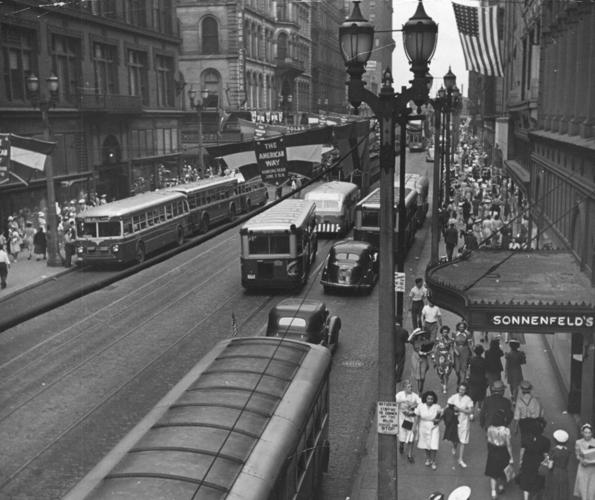
Buses and pedestrians fill Washington Avenue at Sixth Street in June 1940. People went downtown to work, shop, go to the dentist and gather socially. Clayton was a sleepy courthouse town, Chesterfield a country hamlet. Suburban development and automobile ownership after World War II brought about a steady decline in downtown's commerce. Post-Dispatch file photo

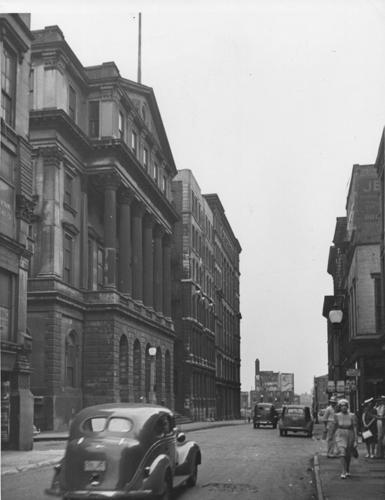
Third Street (now Memorial Drive), looking south from Locust Street in July 1940. The building on the left with columns is a former federal courthouse and Post Office. It and the other buildings on the east side of Third were demolished to clear the riverfront for the Jefferson National Expansion Memorial. Post-Dispatch file photo

Scene of the demolition in the riverfront business district in May 1940 to make way for the future Gateway Arch riverfront park. America's entry into World War II nineteen months later stopped work on the Jefferson National Expansion Memorial. Construction leading to the arch didn't begin until 1959. Post-Dispatch file photo
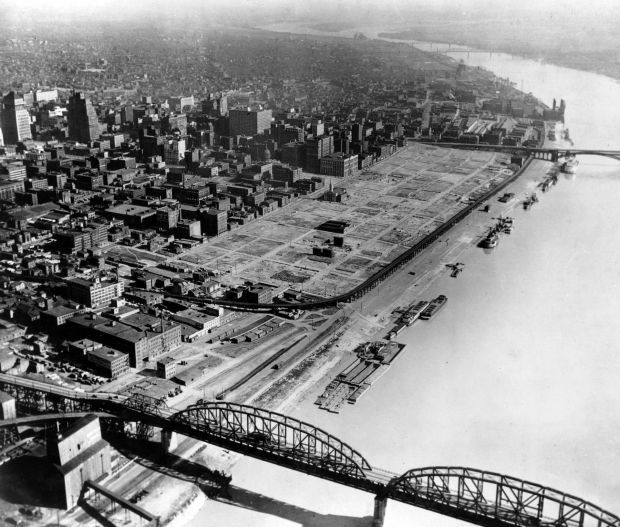
The riverfront was cleared for a memorial to Thomas Jefferson by February 1942. World events halted even the luxury of considering how to create a memorial. France had fallen, England was weathering the Nazis' rain of bombs, and Japan had attacked the United States Navy at Pearl Harbor. A world war would have to be won before St. Louisans could again contemplate creating a monument that would rise to its purpose. File photo

A view of the future Jefferson National Expansion Memorial, looking southeast above Washington Avenue and Third Street in 1935. At left is the streetcar station for service over the Eads Bridge to East St. Louis. To the far right is the Municipal Bridge, renamed the MacArthur Bridge in 1942 in honor of Gen. Douglas MacArthur. Post-Dispatch file photo

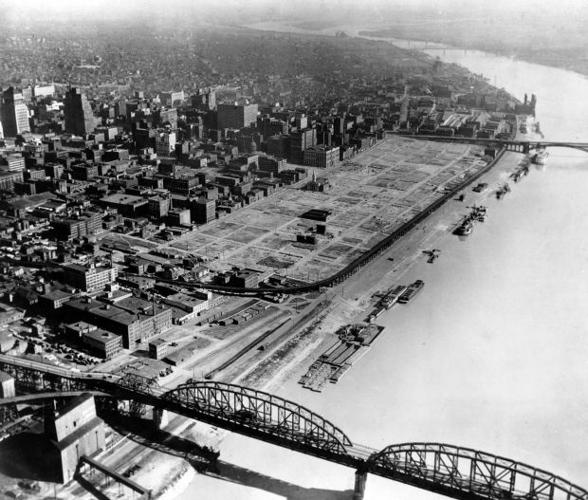
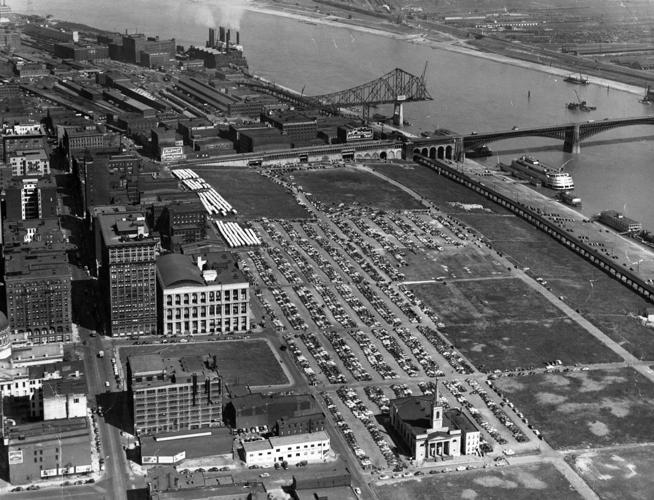
An aerial view of downtown and the riverfront in October 1949, showing the Jefferson National Expansion Memorial site's prolonged use as a temporary parking lot. The land was cleared beginning in 1939, but work on the Gateway Arch wouldn't begin for three decades. The light-colored building in center left was the Merchants Exchange, an ornate structure that was built in 1874 and once was a major gathering place for social and political events. It was demolished in 1957. Work is underway on the Veterans Bridge, later renamed the Martin Luther King Bridge. Post-Dispatch file photo
Pedestrian traffic at Washington Avenue and Sixth Street in September 1957. Downtown still was a busy place, with three major department stores. Photo by Floyd Bowser of the Post-Dispatch

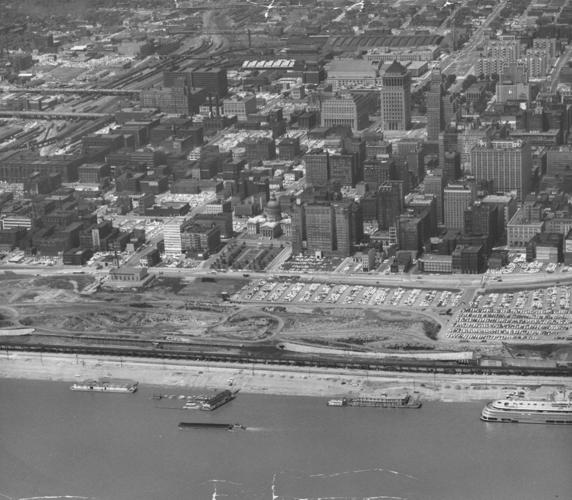
Downtown St. Louis in 1962, during the early phase of construction for the Gateway Arch. More than three-fourths of downtown's buildings were at least 50 years old. Post-Dispatch file photo

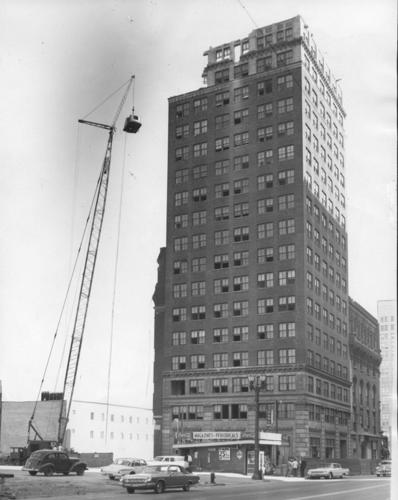
Demolition begins on the Landreth Building, at Fourth and Locust Streets, in July 1963. It had been completed in 1929 for $750,000. It was the newest office building downtown until completion in 1959 of the Thomas Jefferson building, on Fourth near Market streets. The Jefferson now is part of a Drury hotel. Photo by Lloyd Spainhower of the Post-Dispatch

The south leg of the Gateway Arch rises in the background at Hop Alley, part of St. Louis's former Chinatown, in February 1965. The once-thriving district, fronted at Market and Seventh streets, was demolished for Busch Stadium and surrounding developments. Post-Dispatch file photo
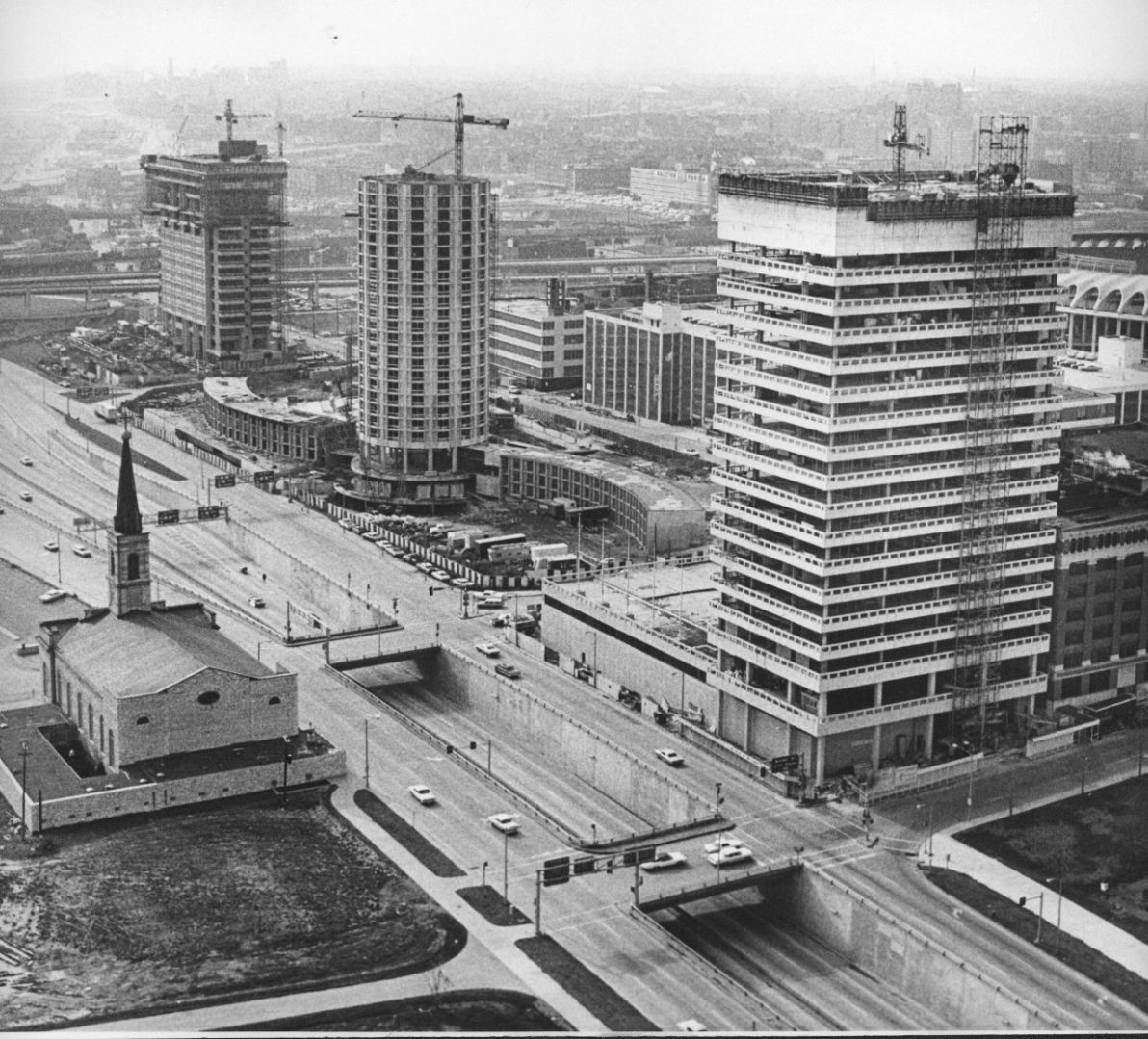
Construction continues in December 1967 on three new buildings along Memorial Drive (Third Street) that helped to transform the downtown skyline. They are (from right) the Gateway Tower, Stouffer’s Riverfront Inn (later the Millennium Hotel) and the Pet Inc. building (now the
Pointe 400apartments). At left is the Old Cathedral, dedicated in 1834.

Work underway in January 1969 on the second building of the Pierre Laclede Center in the 7700 block of Forsyth Boulevard in downtown Clayton. A building boom in Clayton during the 1960s provided serious competition for downtown as a commercial center. Photo by Lester Linck of the Post-Dispatch

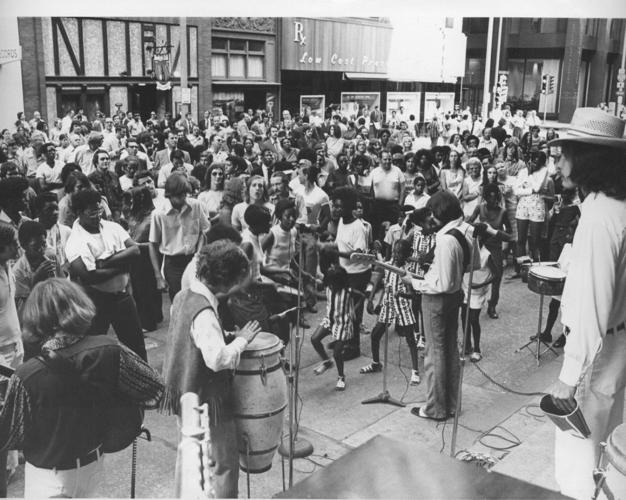
Completion of the Gateway Arch and Busch Stadium in the mid-1960s, and the surrounding developments those projects inspired, helped to draw people back downtown. This is a scene from "Discover Downtown Day" in June 1972. Bob Kuban's band is performing on Eighth Street next to the Old Post Office. Post-Dispatch file photo

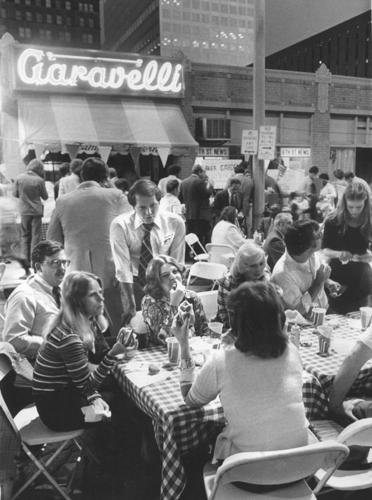
Crowds during a "block party" downtown in September 1976. The event was held annually for several years. Photo by Wayne Crosslin of the Post-Dispatch

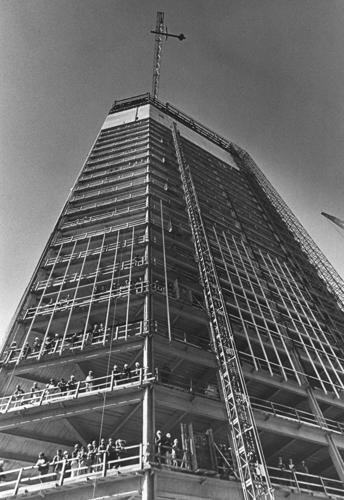
The First National Bank building, under construction at Eighth and Market streets, is topped in a ceremony in January 1981. It is one of the buildings erected after the Gateway Arch and Busch Stadium that transformed the skyline of downtown St. Louis. It now is the Bank of America building. Photo by Jim Rackwitz of the Post-Dispatch

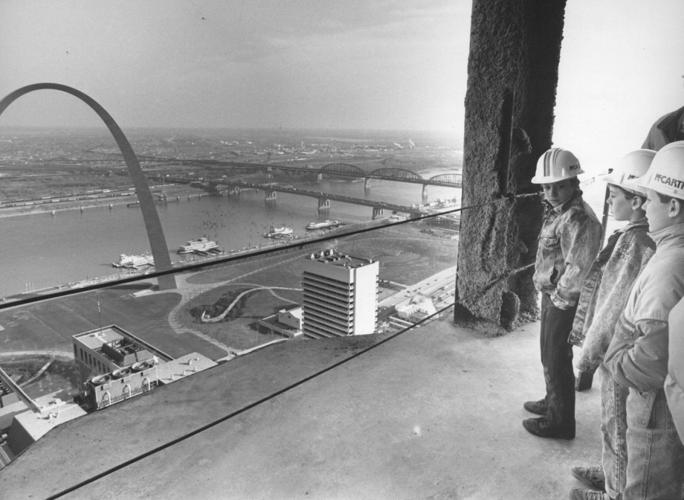
Cub scouts on a field trip from North Glendale School enjoy the vista of the St. Louis riverfront from the 42nd floor of the Metropolitan Square building, nearing completion in March 1988. The boys are (from left) Jake Overcamp, David McNulty and David Pennington. Photo by Odell Mitchell of the Post-Dispatch

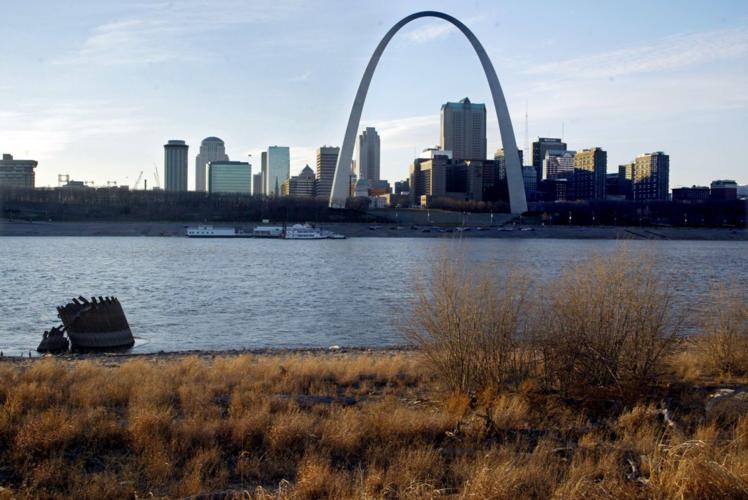
The St. Louis downtown skyline in February 2006. All but a few of the buildings visible were built after 1960. Photo by Wayne Crosslin of the Post-Dispatch