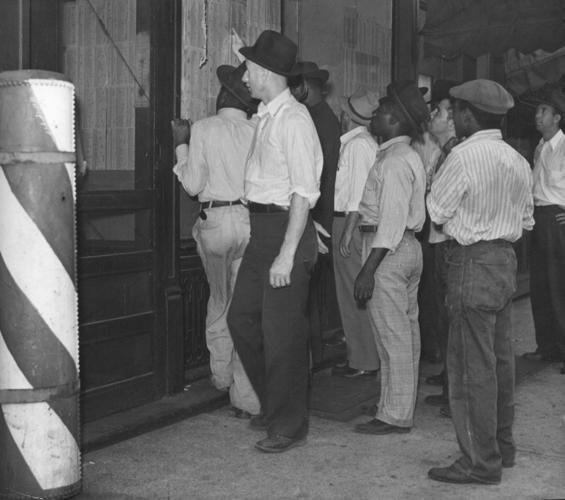

Young men gathered in barber shops, church basements and libraries on Oct. 16, 1940, opening day of registration for the nation’s first-ever peacetime draft.
“See you in Flanders,” said one cocky registrant, referring to the killing fields of World War I. Fighting the last war is a standard human mistake. His words also portray how little many Americans had pondered the bloodshed to come.
A nation that would put 12 million men and women in uniform and build more than 49,000 Sherman tanks summoned draft-age men to fill out paper questionnaires at neighborhood polling places. City wards and county townships were designated “draft districts,” with election workers often doubling as draft boards. St. Louis and St. Louis County combined for 39 districts, divided among 1,022 sign-up locations.
Across the metro area, 182,000 men aged 21 to 35 showed up on the first day, including 107,512 in the city, 19,657 in Madison County and 3,016 in St. Charles County.
People are also reading…
It was an impressive show, given the simplicity of the method. Inductions began the following month, but volunteers filled all the first quotas for the draft districts. With the Depression dragging on, 40 percent of the volunteers were unemployed. That same month, the first local members of national guard and reserve units were mustered into active duty.
The government had reimposed the draft, last used while America was fighting in World War I, with the stated goal of defense from invasion. But signs of inevitable entanglement abroad were becoming obvious.
German bombers pounded London almost nightly. Italian tanks surged into Egypt. The Japanese bluntly told the U.S. to butt out of Asia.
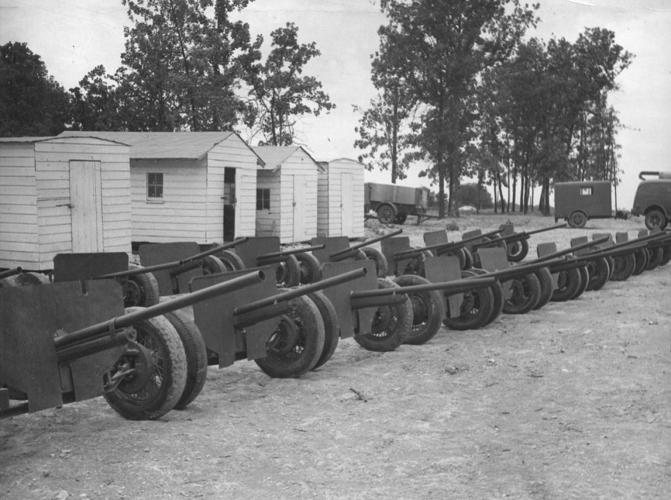
Much needed to be done. At Jefferson Barracks, Army Air Corps volunteers drilled in civilian clothes for lack of uniforms. Future tank mechanics studying at Ranken Technical School had to bunk at a nearby YMCA. At the brand-new Fort Leonard Wood in south-central Missouri, the Army taught basic artillery maneuvers with dummy cannon.
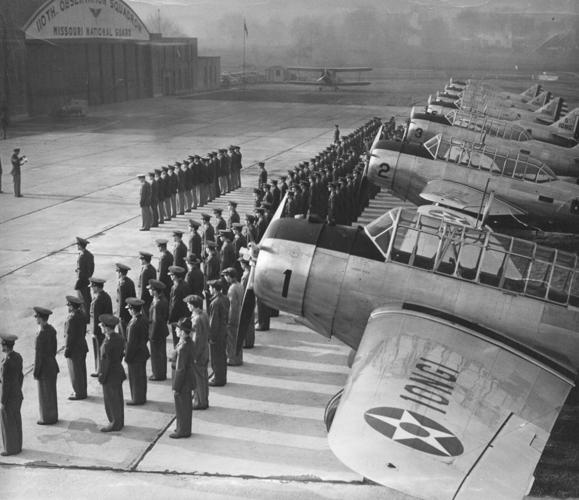
At Lambert Field, members of the Missouri Guard’s 110th Observation Squadron mustered for advanced training with their O-47s, guppy-shaped airplanes equipped with cameras that cruised at a hopelessly vulnerable 200 mph. The 138th Infantry Regiment, based in the armory at 3676 Market Street, went into federal service with World War I helmets and rifles.
On Oct. 11, George J. Roberts of Detroit became the first aviation fatality for Parks Air College in Cahokia, which was training Army pilots. His Fairchild trainer crashed into a field near Dupo.
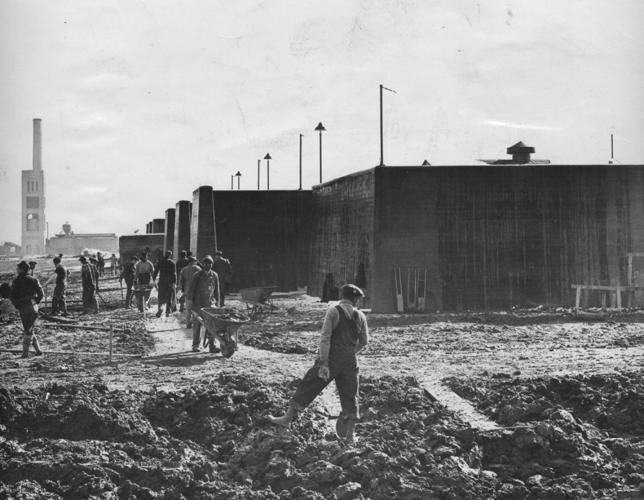
Unemployed people jumped at the chance to build massive new defense industries such as the explosives works at Weldon Spring, which made TNT for artillery shells and bombs, and the small-arms ammunition plant at 4300 Goodfellow Boulevard.
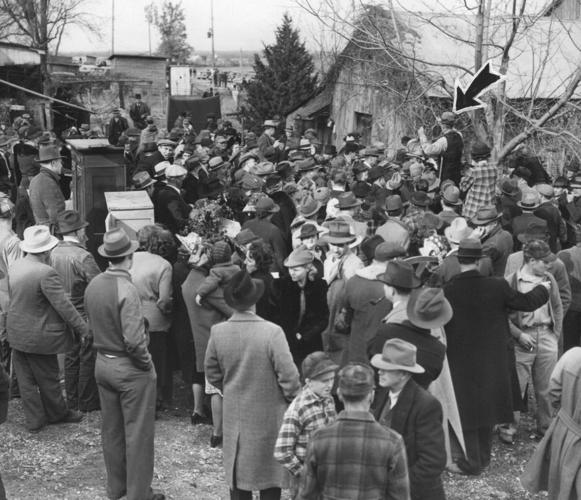
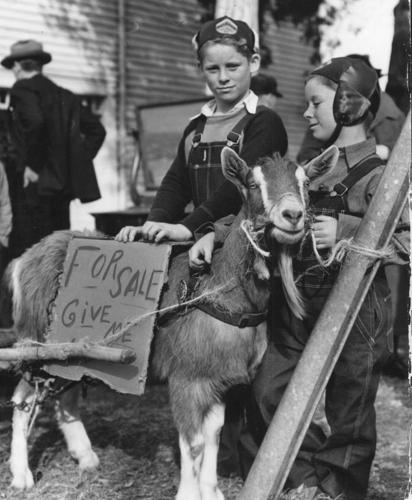
There was no more government dithering. In November 1940, federal officials told nearly 200 farm families across 17,000 acres in St. Charles County they had to pack up and leave to make way for the Weldon Spring plant. The villages of Howell, Hamburg and Toonerville disappeared as construction began one month later. The plant began making explosives in September 1941.
On Goodfellow, construction began in January 1941. The plant produced its first .30-caliber cartridges one week after Pearl Harbor. By war’s end, the two factories had become the largest of their kind in the U.S.

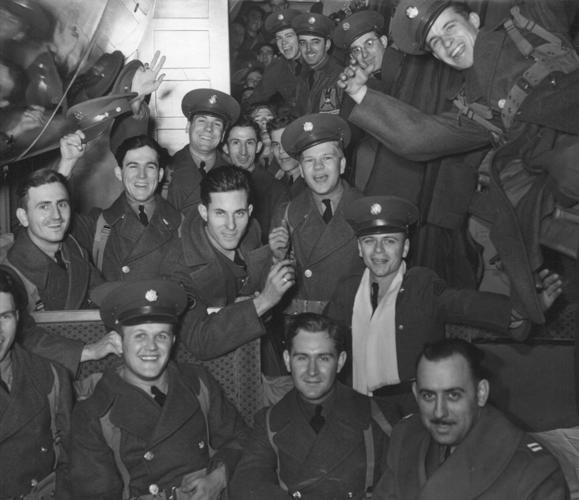
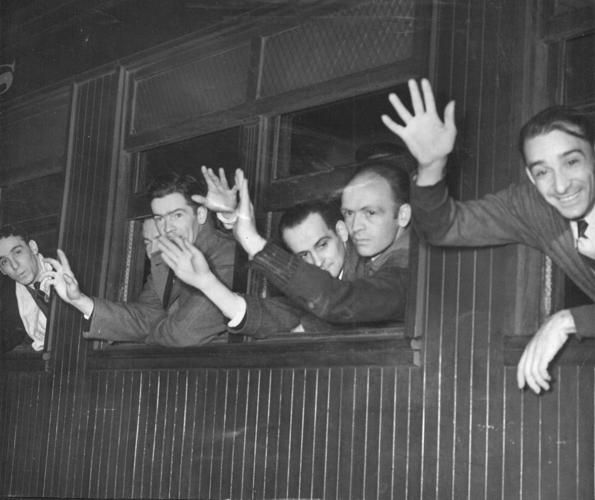
Members of the 110th Observation Squadron, Missouri Air National Guard, on the train to Adams Field near Little Rock, Arkansas, in January 1941, shortly after being mustered into active duty. Their squadron was based at Lambert Field.

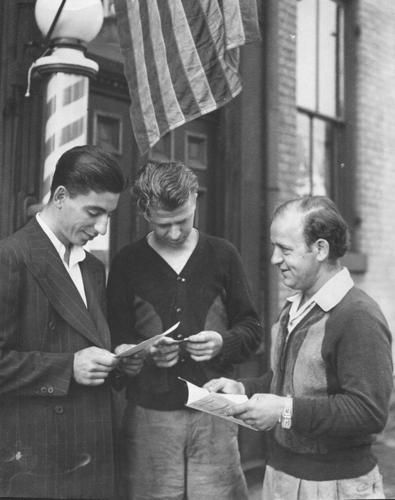
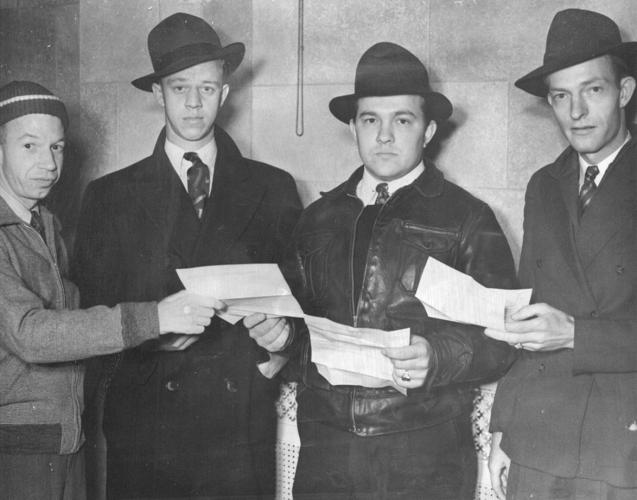
Young men inspect their draft-registration cards on Oct. 16, 1940, the first day of the draft prior to America's entry into World War II one year later. Gathered on the 1400 block of Cass Avenue, just northwest of downtown, are (from left) Andrew Palazzolo, of 1318 Blair Avenue; George Schriefer Jr., of 1452a North 15th Street; and Sam Salvador, of 1414 Blair.

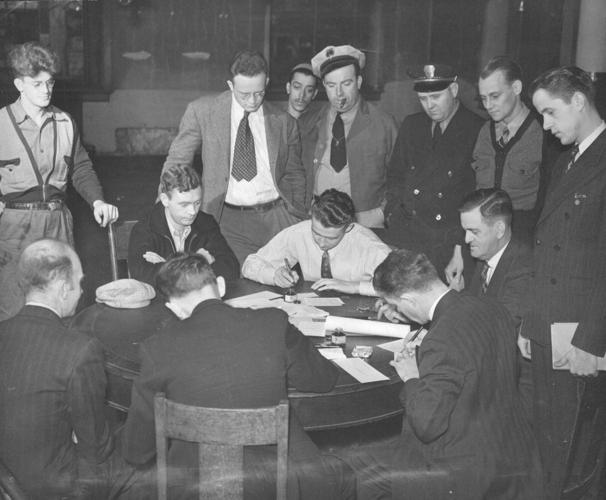
Young men register for the draft in the Old Courthouse downtown on Oct. 16, 1940, the first day of the nation's first peacetime draft. Across the metro area, 182,000 men aged 21 to 35 signed up at neighborhood polling places on that first day.

Mr. and Mrs. Cecil Murdick of 6107 Victoria Avenue, south of Forest Park, check the draft lists at their local polling place on Oct. 30, 1940, two weeks after he signed up. The government gave signees call-up numbers according to a complicated lottery.

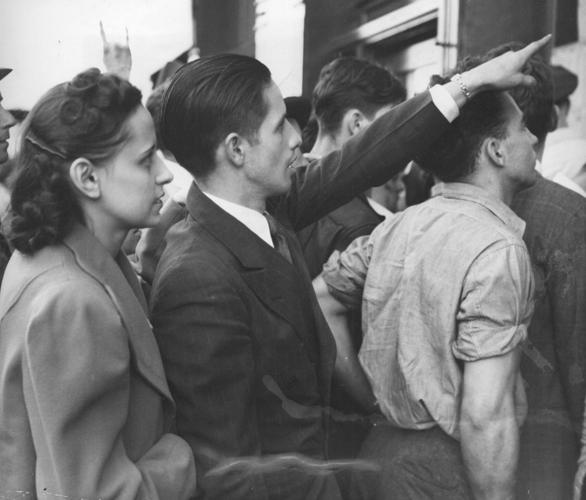
Men scan draft numbers posted at 1817 Vandeventer Avenue, in the city's 20th Ward, on Oct. 30, 1940.

Four residents of the city's 14th Ward volunteer for the Army on Nov. 27, 1940, and sign papers at Union Station. The military accepted volunteers and drafted others to meet quotas. These men are, from left, Charles Lombard of 3534a Juniata Street, Chalmer Kutz of 3500 Shenandoah Avenue, Andrew Nowak of 2814 Shenandoah and Lester Vancil of 2357 Tennessee Avenue. Newspaper files show that a Chalmer Kutz was killed in action in Europe in July 1944, and an Andrew Nowak was decorated for bravery at Okinawa.

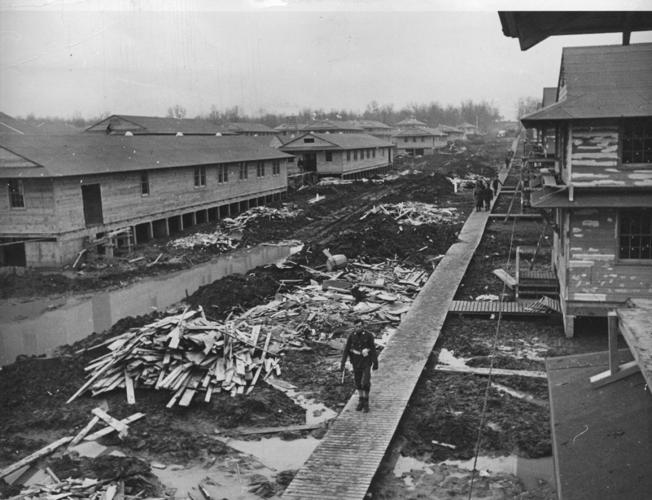
Construction of barracks at the new Fort Leonard Wood, in south-central Missouri, in February 1941. The Army established the base in fall 1940 and named it after Gen. Leonard Wood, a veteran of the Spanish-American war and Army chief of staff. Workers built 1,600 buildings by summer 1941, and the base trained more than 300,000 soldiers during World War II.

Soldiers training for artillery units at Fort Leonard Wood used dummy cannon in summer 1941 because the Army didn't have enough real ones. These mock-ups are of 37-millimeter field pieces. The photo caption claimed they "cannot be told from the real article at 50 feet."

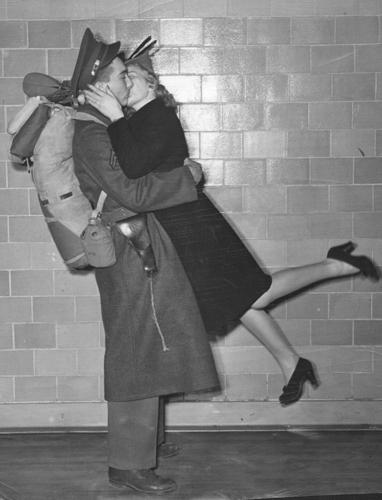
Cpl. John B. Dugger of the 138th Infantry, Missouri National Guard, kisses Daisy Warren at the mustering ceremony Jan. 4, 1941, at the St. Louis Armory, 3676 Market Street, before the unit took a train to Camp Robinson near Little Rock, Arkansas. The 138th was activated in December 1940 in the early days of the nation's buildup before entering World War II.

The first volunteers for the U.S. Army since the government reimposed the draft depart from Union Station by train on Nov. 27, 1940. Volunteers filled the area's first call-up, and 40 percent of them said they were unemployed. The Depression was still on.

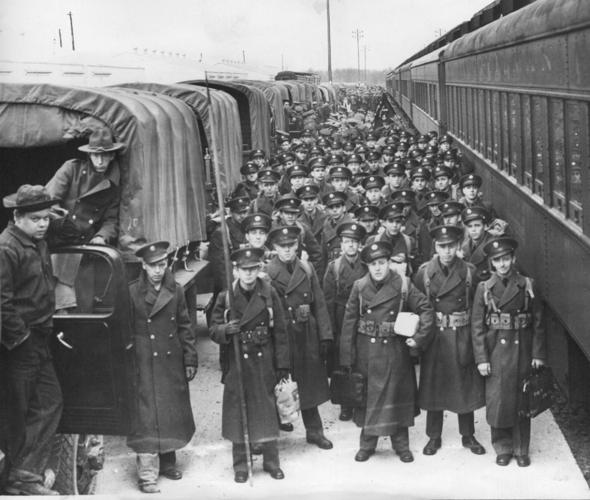
Members of the 138th Infantry, Missouri National Guard from St. Louis, on Jan. 5, 1941, after their train ride to Little Rock, Arkansas, for training. The unit was activated in December 1940.

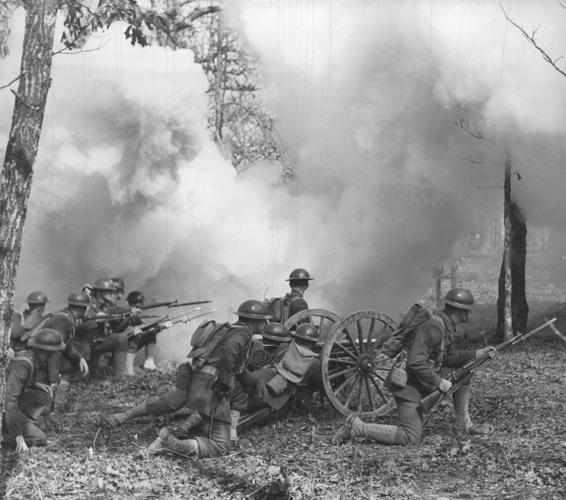
Members of the 138th Infantry, Missouri National Guard, train at Camp Robinson near Little Rock in March 1941. Their use of World War I weapons and helmets shows how much work the nation's military had to do to prepare for World War II.

Members of the Missouri National Guard's 110th Observation Squadron, based at Lambert Field, form up before their aircraft in December 1940 as they were mustered into active duty. Their planes, O-47s, were lumbering observation craft that could cruise at only 200 mph. Equipped with better airplanes, the 110th served in the southwest Pacific as an attack squadron.

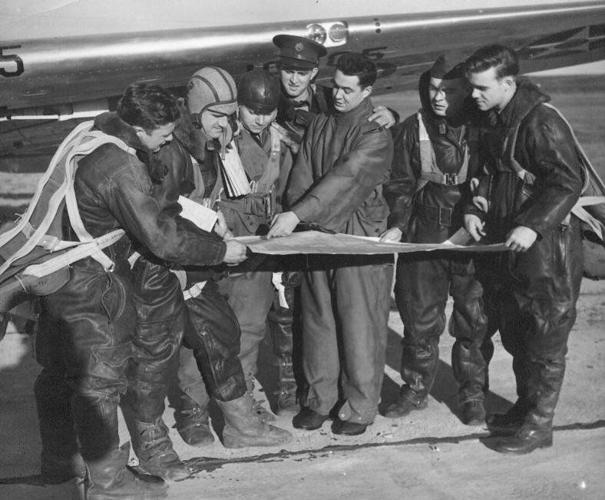
Members of the 110th Observation Squadron, Missouri National Guard, prepare for a training flight at Adams Field near Little Rock in January 1941. At the time, they still flew obsolete O-47s.

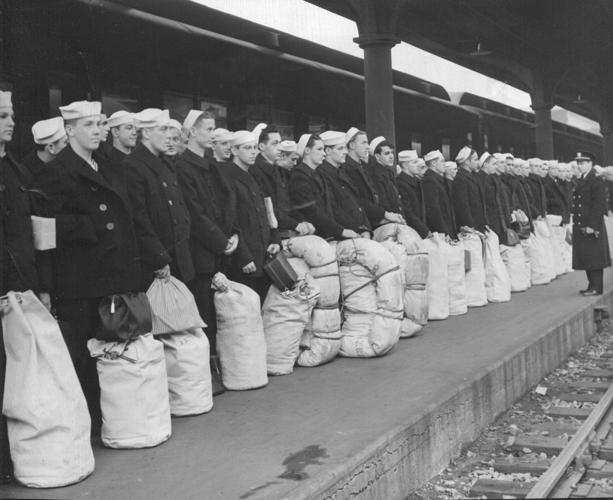
Members of the Naval Reserve in St. Louis wait on a platform at Union Station on Dec. 17, 1940, to depart for San Diego. In addition to reimposing the draft in fall 1940, the government began calling up reservists and national guardsmen. Naval reservists from St. Louis were serving on destroyers at Pearl Harbor when the Japanese attacked on Dec. 7, 1941.

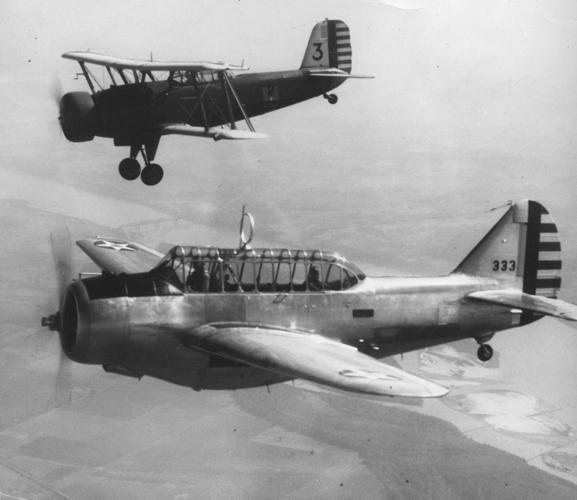
An O-47 observation plane flies in 1938 with the "obsolete" bi-plane that it replaced for the Missouri National Guard. The O-47's oversized belly had windows that allowed the crew to take downward photographs. The lumbering O-47, which could cruise at only 200 mph, soon proved itself obsolete as well as the country geared up for World War II. Equipped with better airplanes, the Missouri National Guard's 110th Observation Squadron served in the southwest Pacific as an attack squadron.

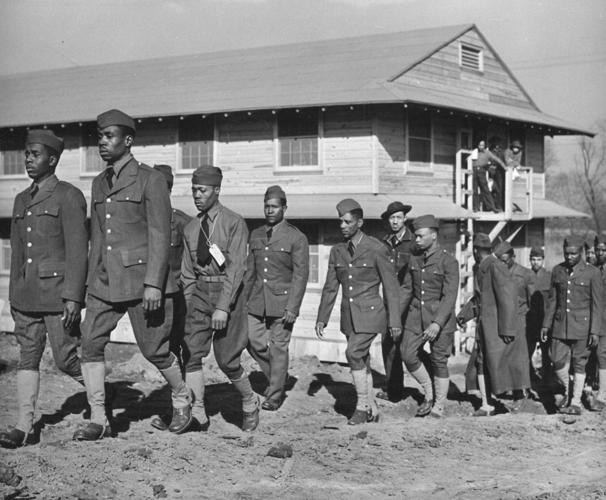
Members of St. Louis' first all-black draft call-up march at Jefferson Barracks in March 1941 after receiving their uniforms. All but six of the 127 men in the draft quota were volunteers. They assembled at Union Station, took a train down to Jefferson Barracks, then departed for other training camps.

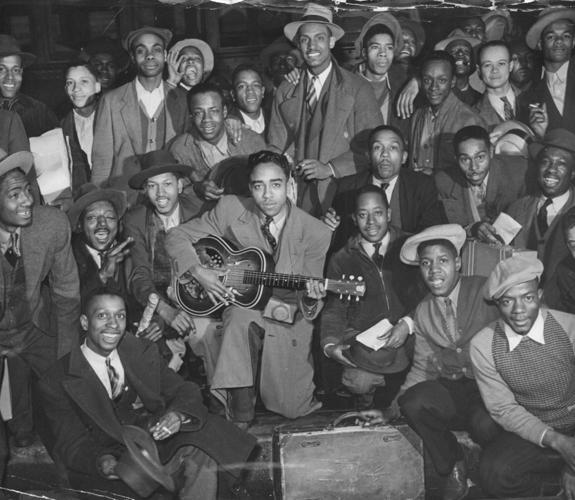
St. Louisans who were part of the first all-black call-up in March 1941 wait to depart from Union Station. All but six were volunteers. The American military operated racially segregated units through the war.

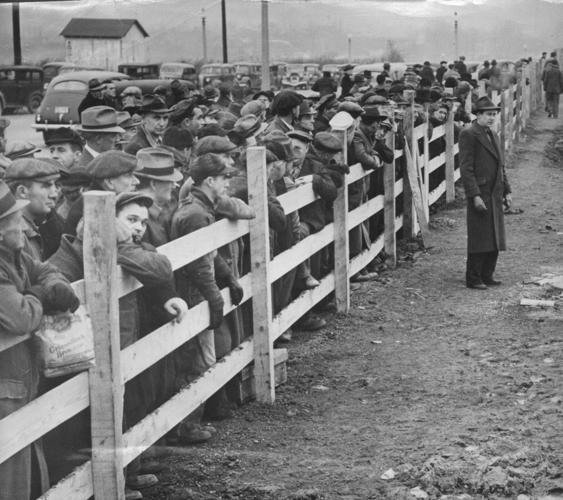
Men line up at the construction site for an ammunition plant at Goodfellow and Bircher boulevards in March 1941. With the Depression still on, the unemployed jumped at the chance to help build the $110 million plant, which produced .30-caliber and .50-caliber cartridges during World War II. Production began Dec. 16, 1941, barely one week after the Japanese Navy bombed Pearl Harbor.

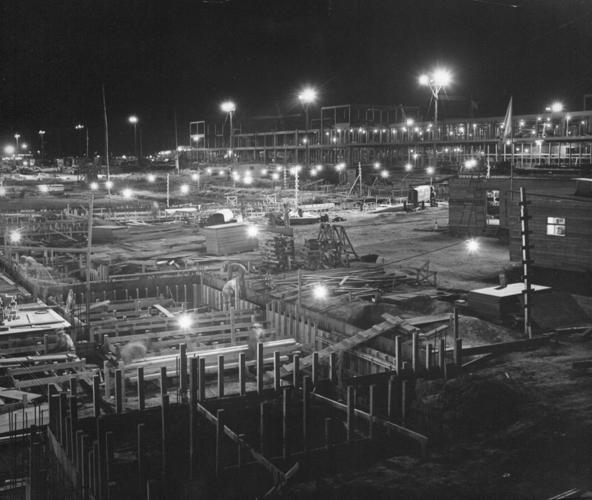
Construction of the small-arms ammunition plant in north St. Louis in July 1941. Work continued around the clock. The plant became the nation's biggest producer of ammunition for rifles and machine guns, turning out 6.7 billion cartridges during World War II.

An auctioneer offers items for sale from families Dec. 1, 1940, in the former village of Howell, in rural St. Charles County, who had to move quickly to make way for the hastily planned Weldon Spring high-explosives factory, which made charges for artillery shells and bombs.

Bobby Delaloye, 9, and his brother, Richard, 6, of the Howell community in St. Charles County, offer their goat for sale in December 1940. The government was forcing out their family and nearly 200 others to make way for construction of a massive high-explosives plant at Weldon Spring. Post-Dispatch file photo

Construction underway for the high-explosives plant in Weldon Spring in 1941. When completed, it produced TNT for artillery shells and bombs, and became the nation's largest such plant.