
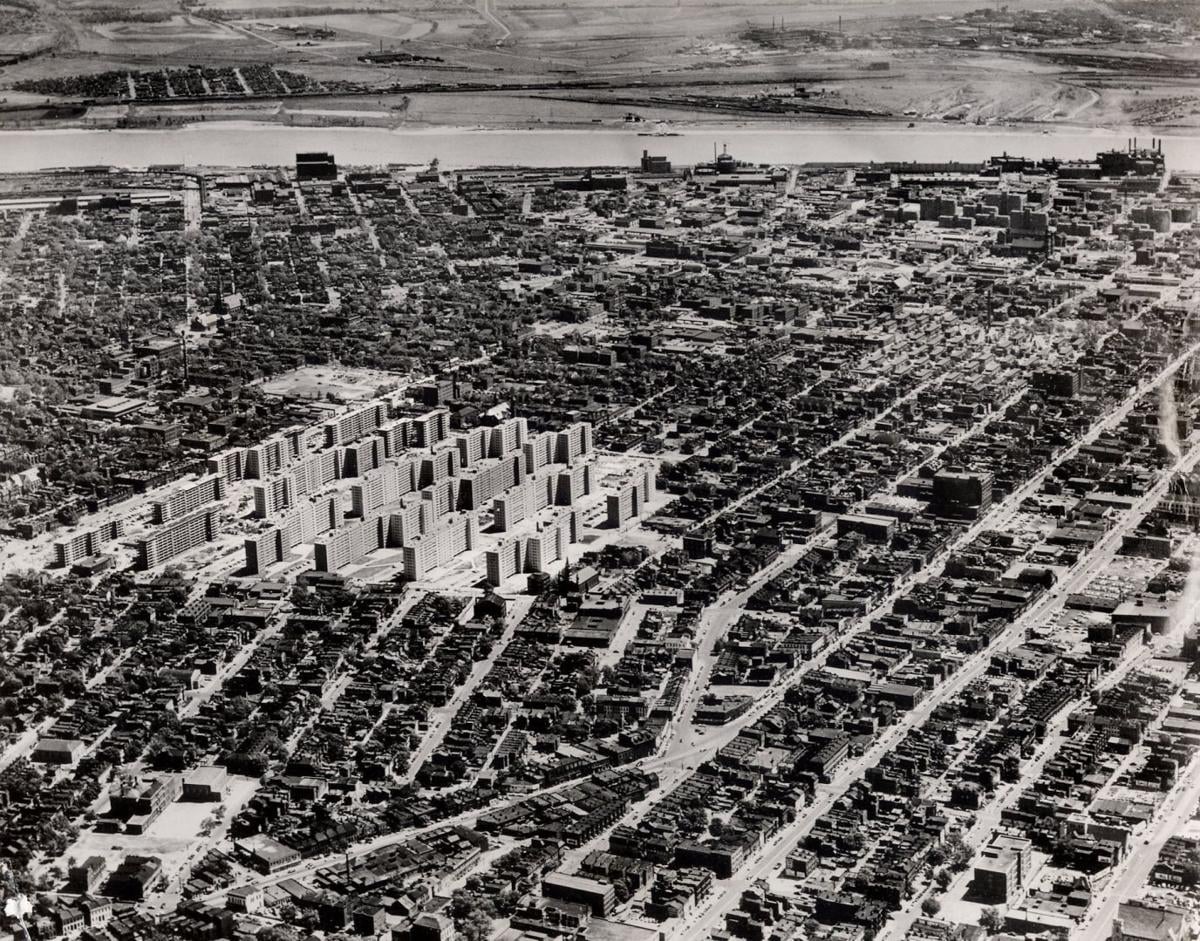
On Sunday, Oct. 20, 1929, the Post-Dispatch classified section included five pages of homes for sale. In the Fairlight Downs subdivision in Olivette, new homes with “every improvement completed” were offered for $8,750. New bungalows in the city went for $5,000.
The stock market crashed five days later, and construction almost ceased. Through the Depression, the signature image of “new” housing was a hobo shack along the Mississippi River.
The St. Louis Housing Authority was created in 1939 to ease the shortage. Three years later, it opened 1,300 units at two developments — Clinton-Peabody on Chouteau Avenue for white people and Carr Square Village northwest of downtown for Black residents. During World War II, construction was diverted to defense industries. Thousands of transplants moved into already crowded neighborhoods to work in the factories. Much of the city’s housing was old and worn out, and there wasn’t enough of it.
People are also reading…
At war’s end in 1945, the vacancy rate was 1 percent. More than 20,000 married veterans and families were doubled up, usually with in-laws. Leaders promised more new housing, but it took time for factories to convert from bazookas to door hinges.
Returning soldiers had an advantage — they knew how to get organized. They pressed the government to get a move on.
“One day is a lot of time for a man who has no roof over his head,” George Londa, a former sailor, testified at City Hall.
Private developers began building new homes, but demand was intense.
As stopgaps, public agencies opened 16 buildings at Jefferson Barracks for temporary lodging. They offered Quonset huts, half-round metal military buildings, for conversions. People hauled away the small wooden homes used by workers at the high-explosives plant at Weldon Spring.
For more permanent solutions, government planners adopted the strategy that won the war: think big, employ resources massively.
They soon were posing with maps of slums to be obliterated and models of new high-rise apartment complexes. Regarded today as examples of government overreach, the projects were embraced back then as progress on a suitably grand scale.
“St. Louisans can point to their city as a model of modern development,” said Mayor Joseph Darst.
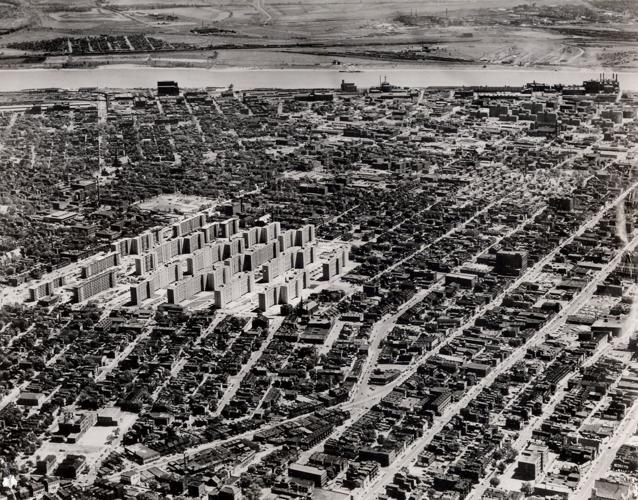
In 1952, the city opened Cochran Gardens for white people at 1200 North Ninth Street and broke ground for a sprawling 20-building complex for Black residents near Jefferson and Cass avenues, to be known as Pruitt homes.
An adjacent project, the first to be integrated, was called Igoe. Soon joined as Pruitt-Igoe, the 33 buildings spread across 20 city blocks provided 2,868 units with rent starting at $20 per month.

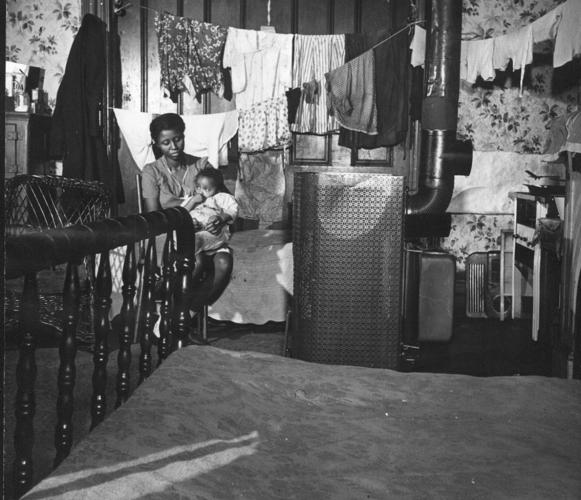
A mother and child were among 29 people living in a ramshackle three-story house in the 2900 block of Pine Street in February 1948. It was in the Mill Creek Valley slum.
The city quickly added the Darst project (later Darst-Webbe) at Chouteau and 12th Street and Vaughn at Carr and 19th streets. With thousands of new apartments available, the city demolished 5,600 slum units, some without running water, in the Mill Creek Valley west of Union Station. For a time, the now-controversial Mill Creek work was the nation’s largest urban-renewal project.
Despite high-minded intentions, the system of large-scale public housing eventually was overwhelmed by crime, poverty and operating deficits. White people fled shortly after integration, followed by Black residents who could afford to move. Many remaining tenants were impoverished newcomers from the rural South.
“They don’t know how to live on an eighth floor,” said tenant leader Helen Floyd.
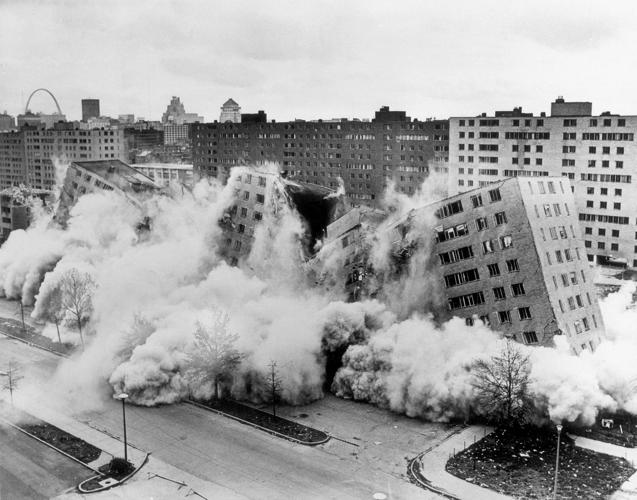
The first vacant Pruitt-Igoe buildings were dynamited infamously in 1972. Just north of Grand Center, Blumeyer tower, the last of the city’s original high rises, was demolished in 2014.

Dynamite brings down some of Pruitt-Igoe in April 1972. Demolition of the 33-building complex had begun two months before. Images of the implosions have become symbolic of failure in the nation's post-World War II housing policies.
The names Pruitt and Igoe stood for honorable achievement
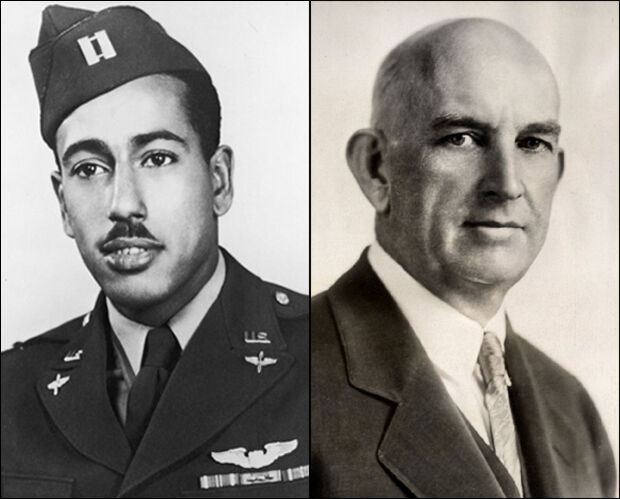
Wendell O. Pruitt (left) and William L. Igoe.
Today, the name "Pruitt-Igoe" is national shorthand for failed public-housing policy. News film of its buildings falling to dynamite is standard fare in college civics class.
In 1955, the words stood for the promise of better housing for families who wanted out of dreary 19th Century tenements. In naming the vast projects, the city sought to honor two of its noble sons.
Wendell O. Pruitt grew up in the Ville neighborhood and graduated from Sumner High School. He enlisted in the nation's segregated armed forces as one of the "Tuskegee Airmen," who learned to be pilots at Tuskegee Institute in Alabama. Pruitt flew fighter planes in Italy during World War II, shooting down three German planes over 70 combat missions. Back in the states as a flight instructor, he was killed in a training crash in April 1945 at age 24.
William L. Igoe, whose parents were from Ireland, grew up in north St. Louis near the future site of Pruitt-Igoe. He earned a law degree from Washington University and entered Democratic politics. He was elected to Congress in 1912 and re-elected three times. He was president of the St. Louis Police Board from 1933 to 1937 and a longtime leader of the local St. Vincent de Paul Society, a Catholic charitable organization.
Igoe died in 1953 at age 73, leaving nearly a third of his estate to St. Vincent de Paul and a religious order.
Demolition of their 57-acre namesake began March 17, 1972. The new campus for the National Geospatial Intelligence Agency is now just to the north of the largely vacant footprint.

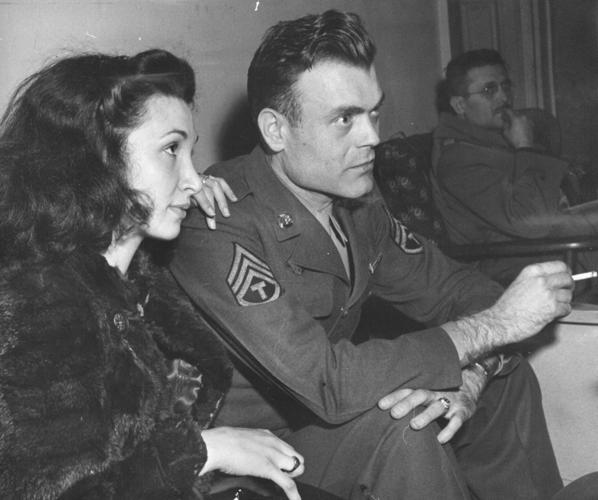
Mr. and Mrs. Robert Cutchens wait to speak with a counselor downtown in December 1945 in hopes of finding their own place to live. At the time, they were living with her relatives at 5154 Lexington Avenue.
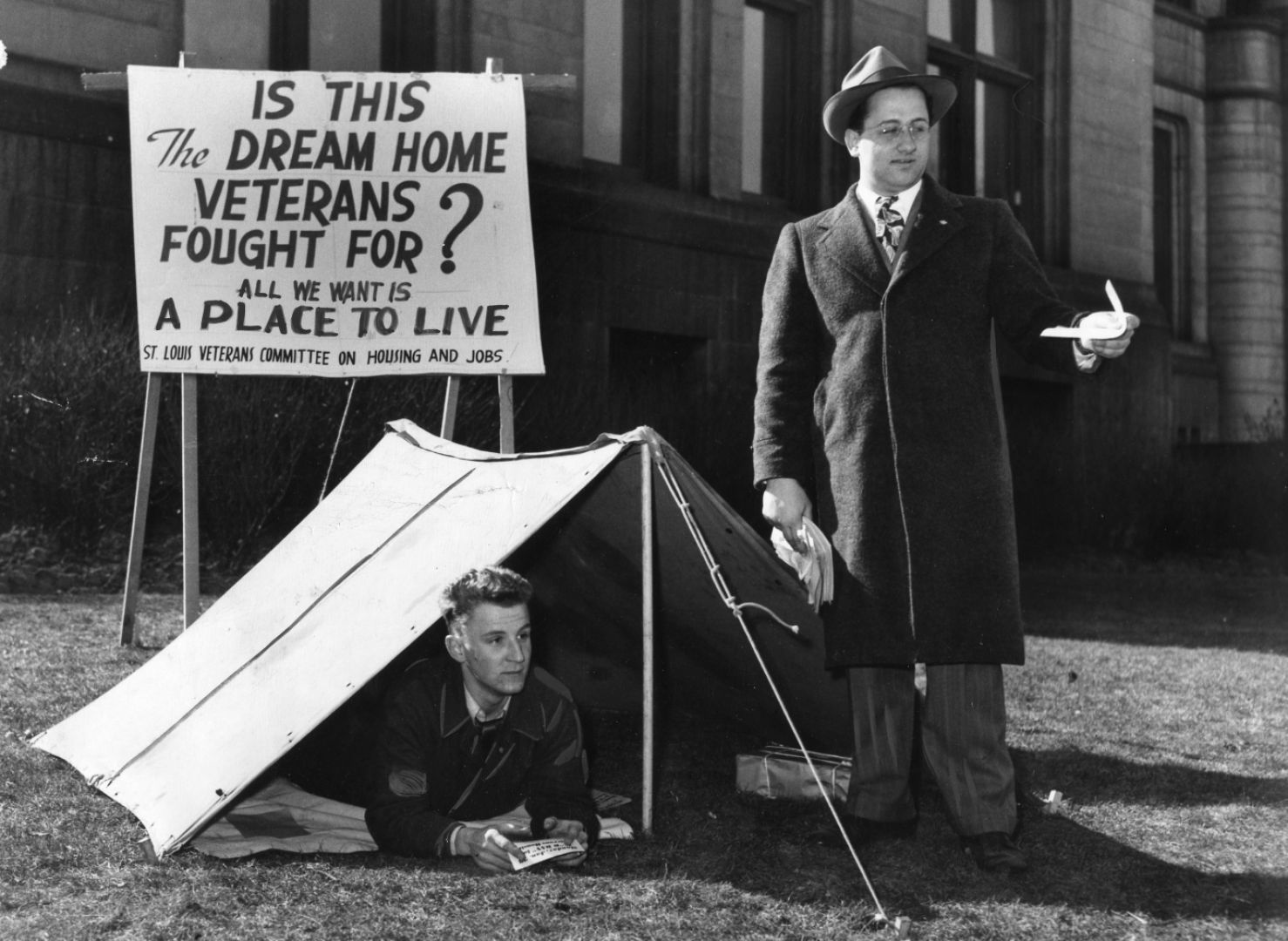
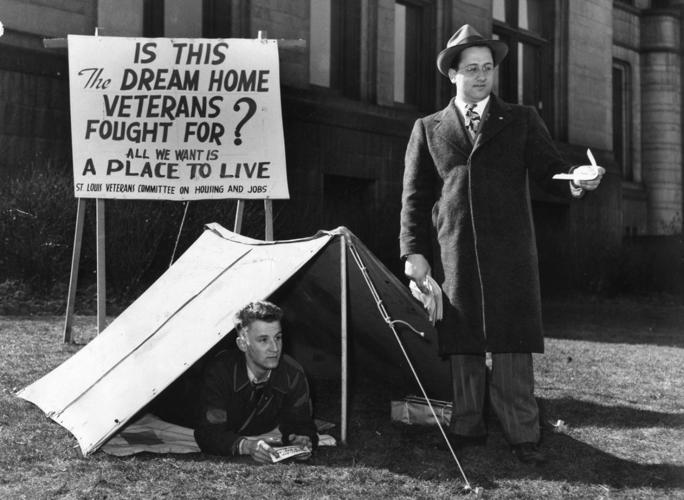
Members of the St. Louis Veterans Committee on Housing and Jobs use a pup tent as a prop at City Hall in December 1945 in their campaign for more housing. Oliver Farr, 6922 Berthold Avenue, is in the tent. Stanley Provenanzo, 4563 Labadie Avenue, is offering handbills proclaiming "D-Day for veterans housing."

Mr. and Mrs. Beverly Davis and their son, David, 2, move into a prefabricated home at Maryland and Gay avenues in Clayton on May 1, 1946. The local Veterans Housing Association had built 10 homes and assembled Quonset huts nearby for married veterans without children.

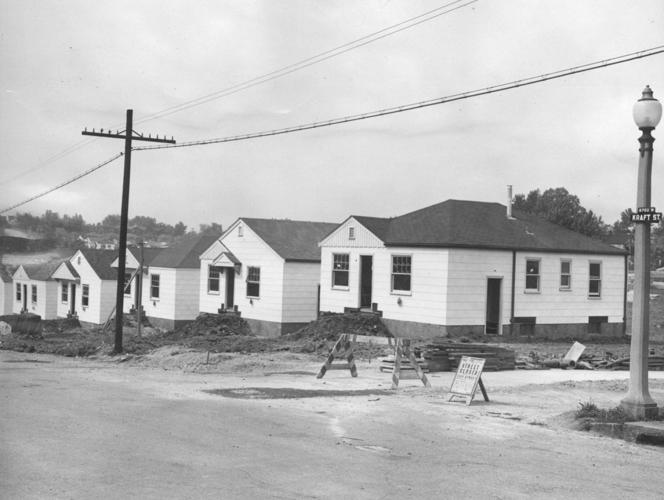
These are some of the 65 homes built south of Forest Park in 1946 to ease the housing shortage after World War II. These homes still stand in the 1300 block of Kraft Street.

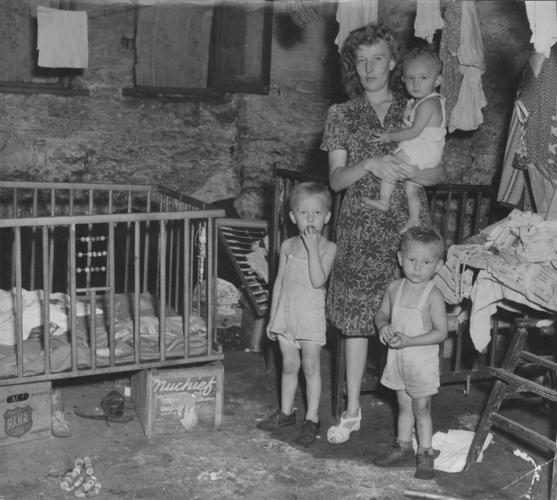
Mrs. William Eberhardt, her husband and their three sons live temporarily in the coal bin of a house at 2330 Albion Place, west of Lafayette Park, in August 1948 because they could not find an affordable apartment. The family was told they had to move soon to make room for a winter's supply of coal.
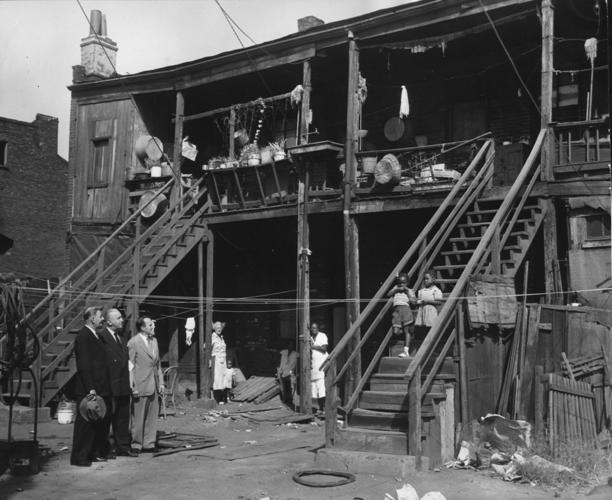
A mother and child were among 29 people living in a ramshackle three-story house in the 2900 block of Pine Street in February 1948. It was in the Mill Creek Valley slum.

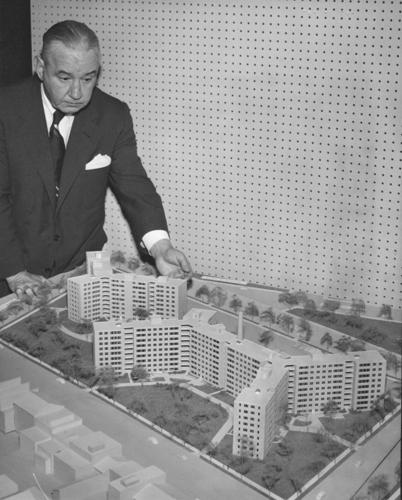
John O'Toole, director of the St. Louis Housing Authority, explains a model of part of the future Darst public housing project at Chouteau Avenue and 12th Street in December. The larger development became known as Darst-Webbe homes.

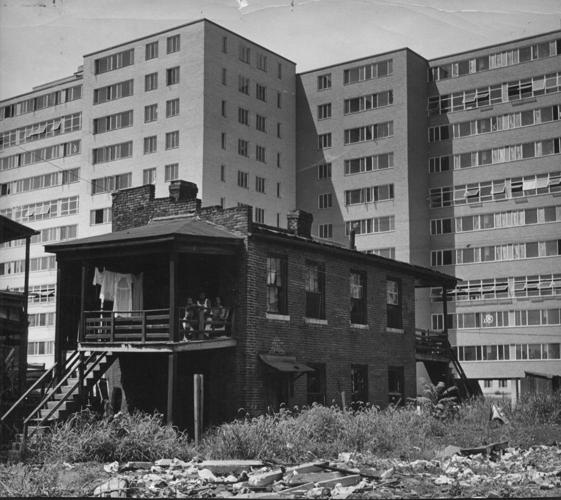
The nearly completed Pruitt homes northwest of downtown tower over one of the tenement buildings they were intended to replace in August 1953.

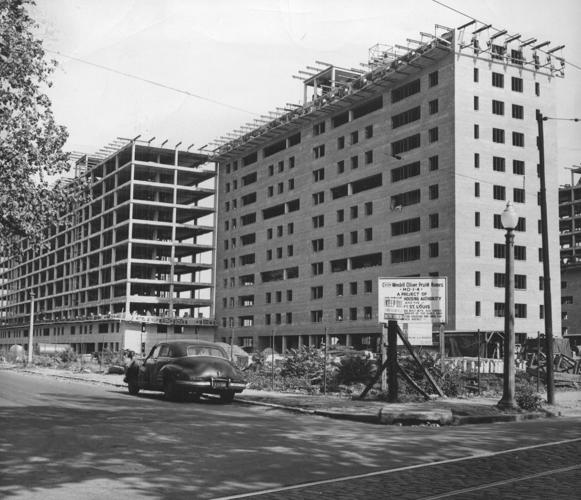
Work underway at the future Wendell Pruitt public housing at Dickson Street and Jefferson Avenue in May 1953. The $21 million project of 20 buildings was intended to provide new apartments for 1,736 black families. Shortly after it opened in 1955, Pruitt homes was combined with the adjacent Igoe project to form Pruitt-Igoe.

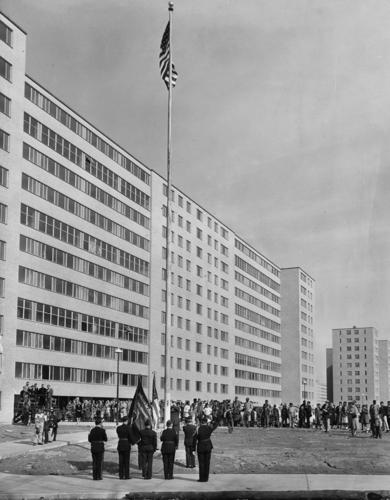
The color guard of Anheuser-Busch American Legion Post 299 stands at attention during the flag-raising on Feb. 26, 1956, to dedicate Igoe Homes. The project soon was combined with the adjacent housing to become Pruitt-Igoe, a 33-building complex of 2,868 apartments.

John O'Toole (center), director of the St. Louis Housing Authority, stands in a back yard at 1918 Division Street west of downtown in October 1953. He is accompanied by two visiting federal housing officials. The dwelling would be demolished for the Vaughn housing project.

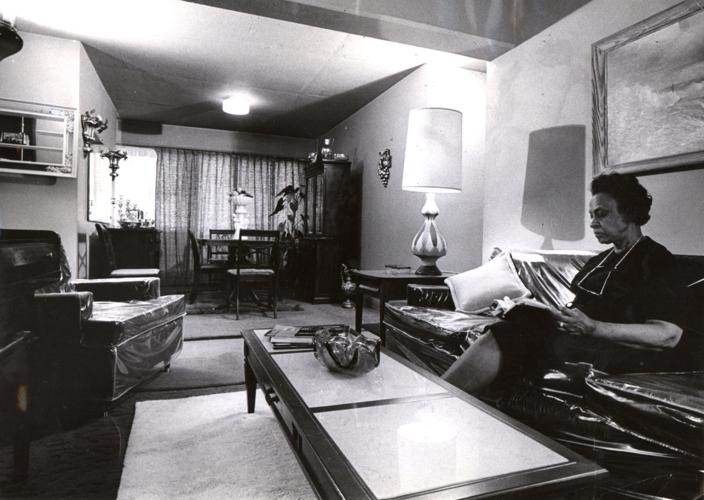
Etta McCowan relaxes in her apartment in Pruitt-Igoe in April 1967. Despite crime and other troubles in the vast complex, some residents wanted to stay. She lived at 2330 Cass Avenue in one of the original Igoe buildings. Her rent for a four-bedroom apartment was $59 a month.

The former site of Pruit-Igoe in 1981, with Jefferson and Cass avenues in the foreground. Most of the site remains vacant.

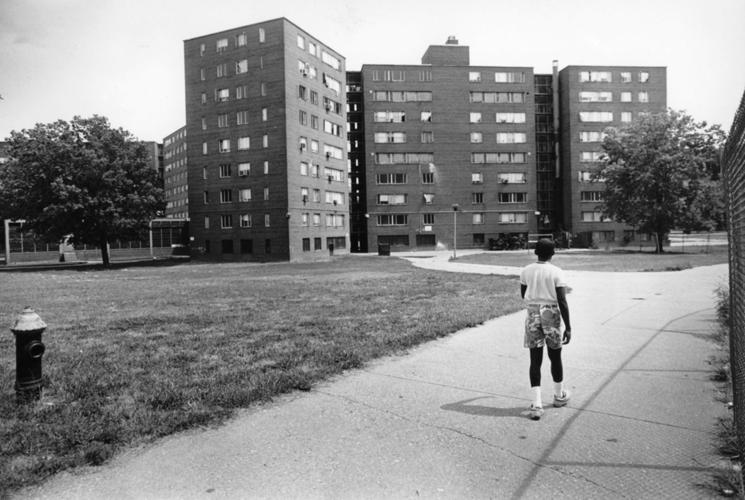
A youth walks toward the Vaughn public housing project in 1988. It was one of the city Housing Authority's high-rise apartment buildings and was demolished in 1995. New two-story housing units were built in its place.

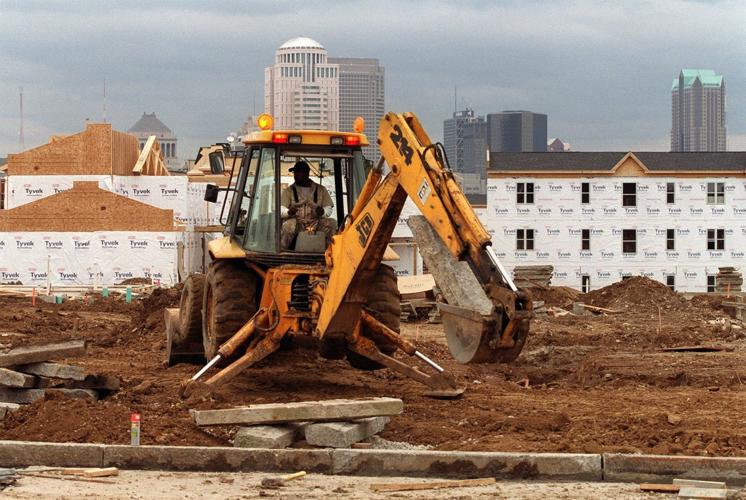
A backhoe operator pulls up old curbing from the former Darst-Webbe housing complex at 14th and Lafayette streets in March 2001. Behind him are new buildings that replaced the old project, which opened in 1956.

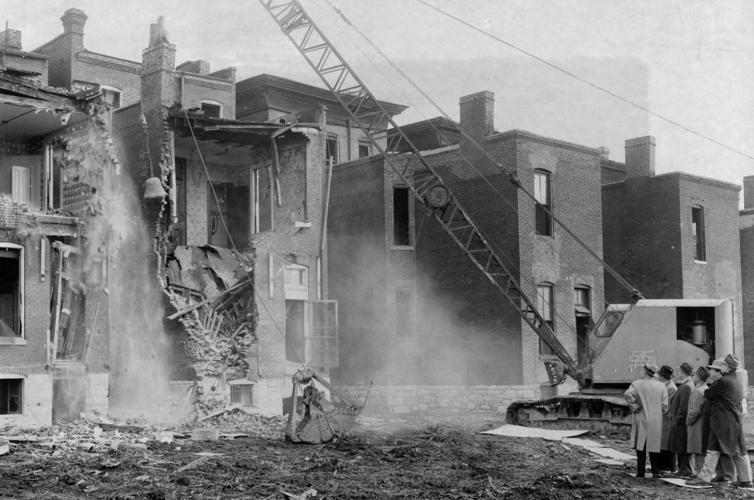
St. Louis Mayor Raymond Tucker (left) and other city officials watch demolition of the Mill Creek Valley redevelopment in February 1959, at the rear of 3518 Laclede Avenue.