
ST. LOUIS • The first and last local commanders under Spanish rule were French by heritage. The first permanent Catholic priest was German.
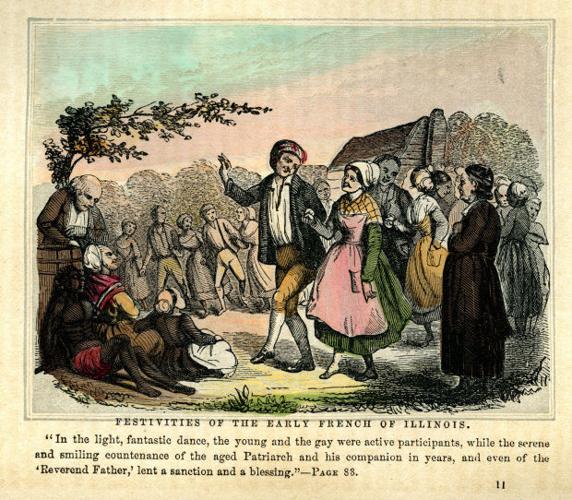
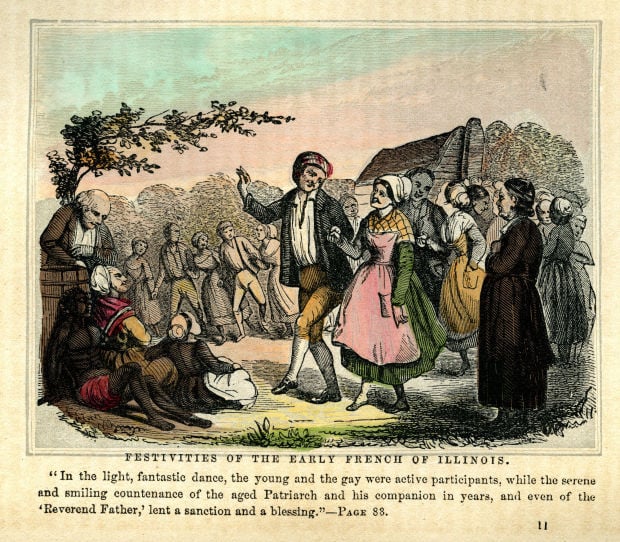
Two kings of Spain named Charles ruled St. Louis for nearly all of its 40 years as a Spanish colony, but their legacy can be easy to miss. Most townfolk remained French by blood and inclination. Spanish commanders, often frustrated by the carefree ways of the residents, generally had the sense to rule with a light touch.
Mainly, that was of necessity. For years, the local garrison consisted of two or three dozen soldiers. Historians say Spanish rule succeeded by being ineffective.
France gave the Louisiana territory, including what would become St. Louis, to Spain in a secret treaty signed in 1762. That news didn’t reach New Orleans until September 1764, seven months after Pierre Laclede founded St. Louis as a fur-trading post.
People are also reading…
The first de facto Spanish official here was Capt. Louis St. Ange de Bellerive, a French-Canadian soldier who moved across the Mississippi River after the British claimed the Illinois country in 1765. St. Ange dutifully sent dispatches to the Spanish governor in New Orleans, but he and Laclede ran the village as they wished.
St. Ange lived in the limestone house Laclede shared with Madame Marie Chouteau, the town’s founding mother. Also there was St. Ange’s Indian mistress.
The first temporary Spanish commander didn’t show up until September 1767. His replacement, Don Pedro Piernas, grumbled that “everyone does as he pleases” in St. Louis.
A string of successors shared that view. Don Fernando de Leyba, who led the city’s defense against British attack in 1780, reported to New Orleans that St. Louisans were too easily tempted by “the world, the flesh and the devil.”
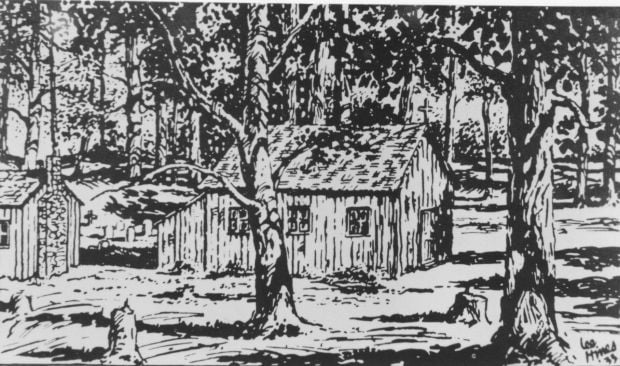
A depiction of the original log church in St. Louis, built in 1770 where the Old Cathedral stands today.
The Spanish promoted religiosity and built the town’s first log church in 1770. They appointed the Rev. Bernard de Limpach, a German, its first full-time pastor six years later. Even then, the fun-loving locals raced horses after Mass on Sundays.
Spain regarded the Louisiana colony largely as a bulwark against the British and Americans. St. Louisans didn’t much care who was king, but the Spanish sometimes worried about their loyalty.
In 1796, locals founded a chapter of the “Sans Culottes,” inspired by the radical commoners of the French Revolution. Its gatherings tended toward dances and banquets. But in New Orleans, Spanish governor Baron de Carondelet heard of the frolic and dispatched Irish-born Capt. Don Carlos Howard upriver with 110 soldiers on five large boats.
Howard found no zeal for insurrection. The locals regarded his arrival as a grand event.
Charles Dehault Delassus, a Frenchman by birth and the last Spanish commander here, was present when the Americans took over on March 9, 1804. The French, who had secretly taken back Louisiana and sold it to the United States, were represented that day by an American.
Skeptical of the transfer, Delassus wrote, “The devil may take all.”