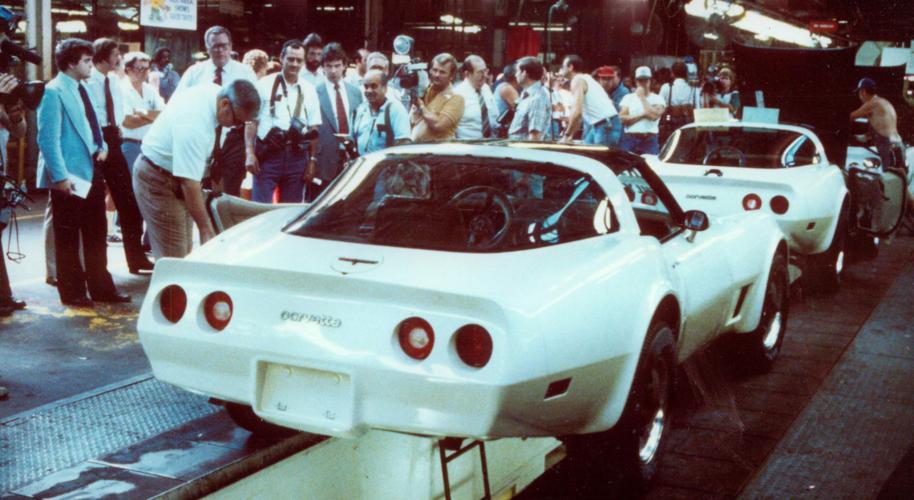






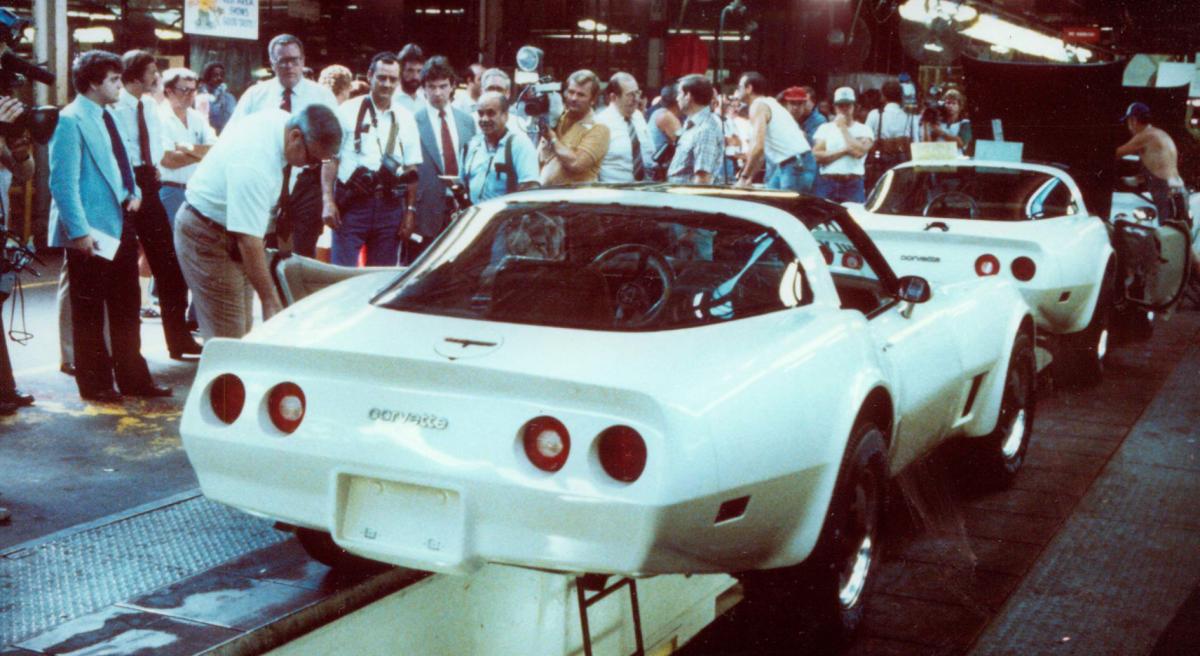
The last Corvette was frost beige in color, had a 350 cubic-inch engine and a fat sticker price of $19,000.
Cleo Hagar, a senior production worker on the Corvette line, helped roll it away at 1:48 p.m. on July 31, 1981. General Motors Corp. was moving production of its glamorous Chevrolet muscle car to a new factory in Bowling Green, Ky. Except for about 300 test models from Flint, Mich., St. Louis had been home of the Corvette since 1953, turning out nearly 700,000.
A force of 1,450 workers finished 10 cars each hour. The line was one part of the sprawling GM plant at Natural Bridge Avenue and Union Boulevard, which had been a major local employer since 1920. At its postwar peak, the GM complex employed more than 10,000.
“The work was steady and there was a lot of overtime,” Hagar said. From a blue-collar guy, that’s high praise for a job.
People are also reading…
Factory work used to be a steady thing indeed around here. Departure of the Corvette line was significant mainly for emotional symbolism — the car was one of those products St. Louisans were particularly proud of, like spacecraft, jet fighters and Budweiser.
From a postwar high of more than 35 percent of the regional workforce, industrial payrolls had fallen to 20 percent when the Corvette line went away. Plant closings and layoffs were standard fare in the newspapers.
In 2014, about 110,000 people work in metro-area factories. They account for 8.5 percent of the region’s 1.3 million workers — less than the national average.
That stark comparison is significant for a region that once turned out subway cars for New York, Army tank turrets, pork steaks, shoes, electric fans, towboats and industrial boilers.
In 1930, St. Louis was the nation’s seventh largest city — and seventh biggest producer of industrial goods.
Two decades later, 266,000 people — 35.4 percent of all workers — toiled to the hiss of pneumatic power, the slam of punch presses, the dense odor of lubricating oil and ever-present grime. Factories provided decent paychecks for people without much formal education. They could buy bungalows and station wagons and take the kids to play Skee-Ball at Lake of the Ozarks.
In 1950, St. Louis’ boast was being first in booze, first in shoes and second-last in the American League (the Browns having edged the Philadelphia Athletics that season). Shoe factories here employed 15,500 workers. An additional 10,000 worked for 27 meat packers or the stockyards in National City, which handled 3.9 million hogs and cattle annually — and provided hides for St. Louis shoemakers.
The largest employer was the Missouri Pacific Railroad. Other big payrolls included the Frisco Railroad, St. Louis Car (rapid-transit trains), General Steel Castings (tank turrets), Carter Carburetor, Wagner Electric, Hunter Packing — all of which disappeared in the years shortly before and after the last Corvette.
Back then, St. Louis was the nation’s second-largest carmaker. About 29,000 people worked at the local GM, Ford and Chrysler plants or related industries that provided brake shoes, seats and heater motors.
The vast GM plant on Union made its last truck in 1987. Ford closed the Hazelwood plant in 2006, Chrysler its Fenton works three years later.
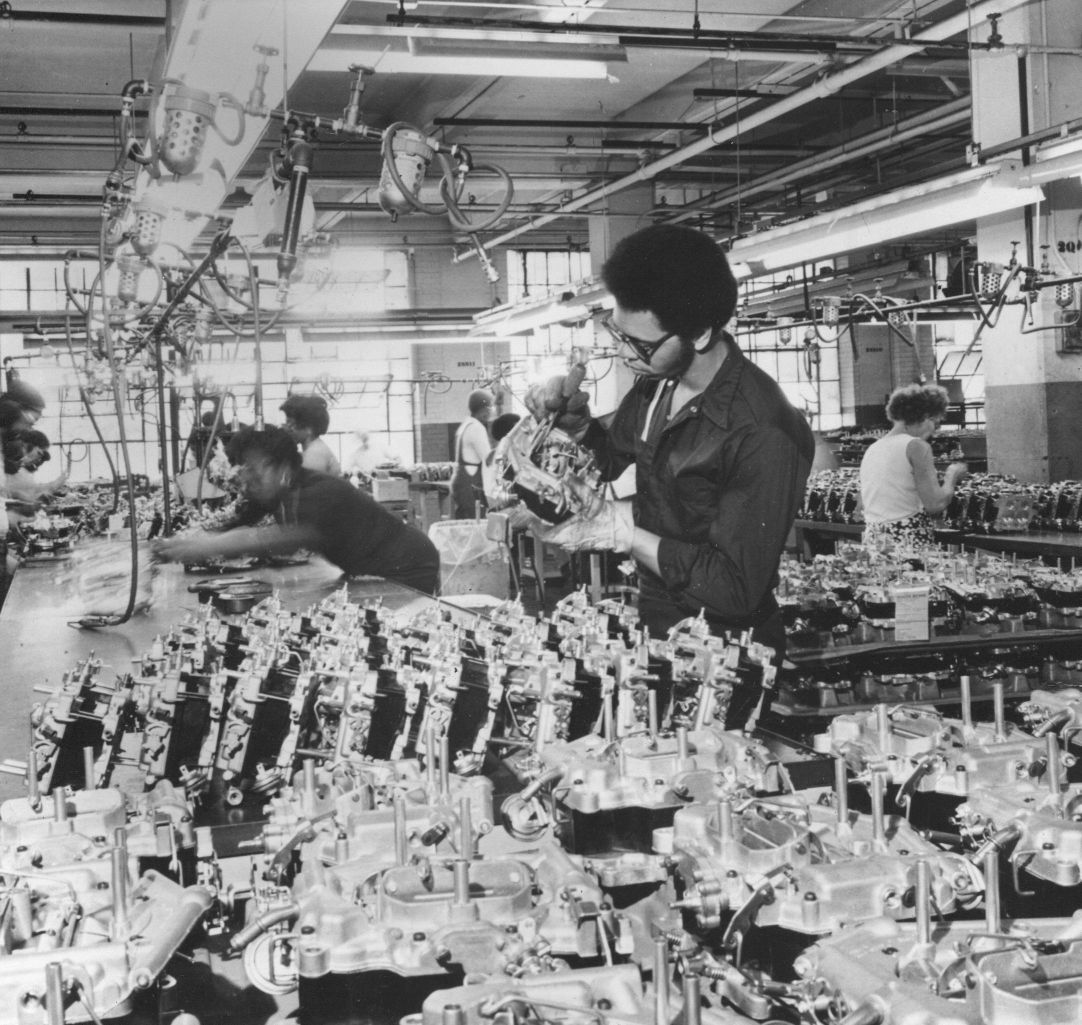
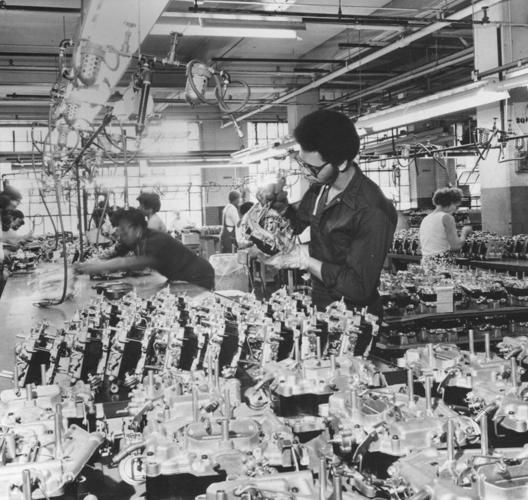
A worker at Carter Carburetor Corp., 2840 North Spring Avenue, assembles carburetors in 1980, four years before the plant closed. Carter once was a major local industrial employer, but the widespread shift to fuel injection in vehicle engines eliminated its markets.

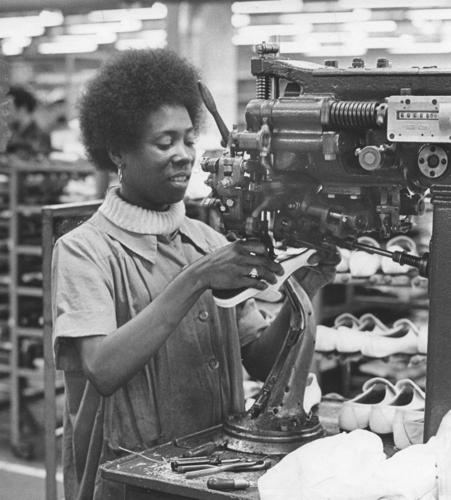
Kattie Williams stitches a sole onto a shoe at the Brown Shoe Co. plant at 1211 North Jefferson Avenue in 1972. The factory closed in 1995, eliminating 90 jobs. Into the 1950s, shoe manufacturing in St. Louis still employed nearly 16,000 people. By 1995, Brown Shoe only had five factories left in the United States.

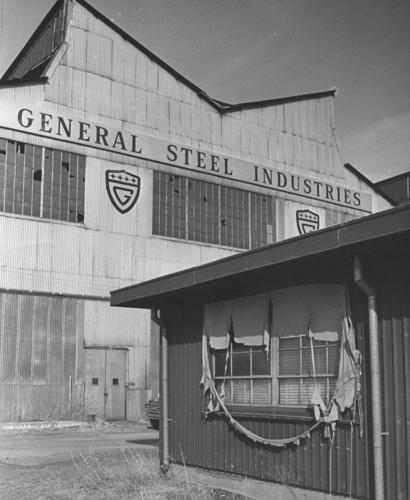
General Steel's plant in Granite City in 1973, shortly after it closed, laying off a skeletal force of only 40 workers.

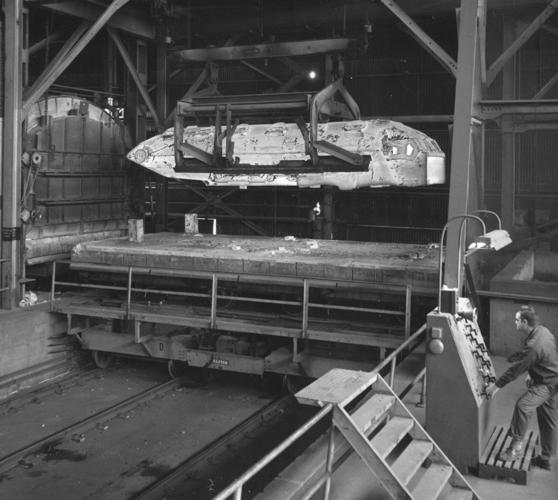
A worker at General Steel Industries in Granite City moves a still-glowing cast of military tank armor in 1967. During World War II, it employed more than 4,000 people. It still had 1,200 workers one year before it closed in 1973.

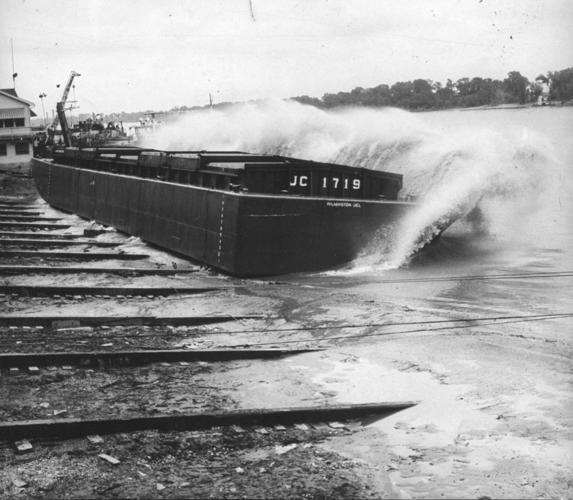
A finished barge slides into the Mississippi River in 1967 at St. Louis Ship, at the foot of Marceau Street. The yard built towboats until 1984 and closed two years later.

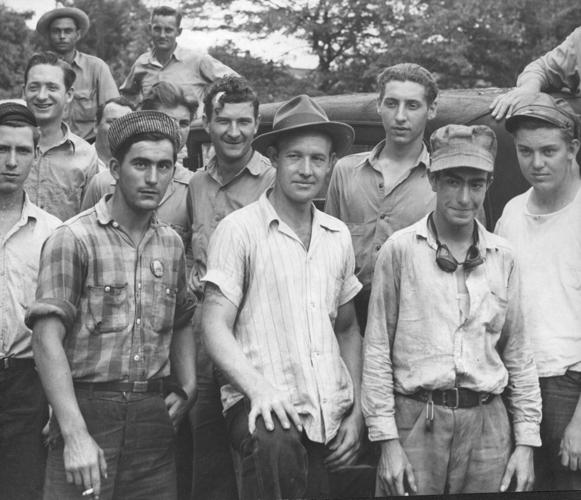
Some of the workers at St. Louis Ship, on the Mississippi River at the foot of Marceau Street in Carondelet, in 1944. The boatyard produced towboats and barges until it closed in 1985. Herman Pott had opened the yard in 1933, although there had been boatbuilding in the area since the Civil War, when James B. Eads made ironclad gunboats for the Union. In 1981, four years before closing, St. Louis Ship still employed 1,100 people.

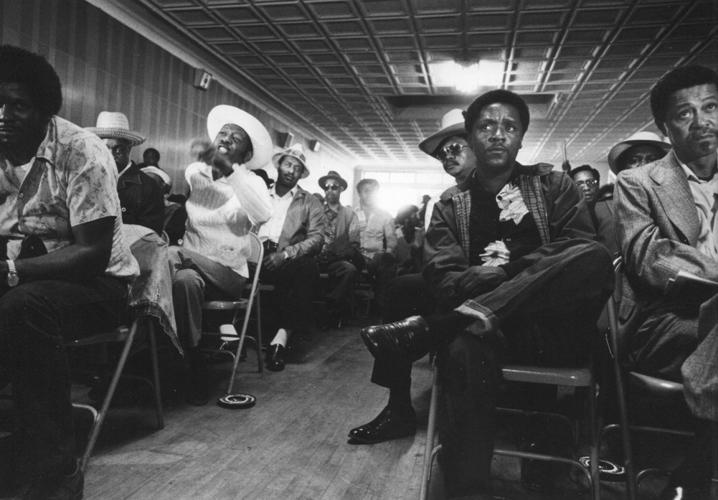
Former Scullin Steel Co. workers gather in September 1981 with leaders of their union, United Steel Workers Local 1062, shortly after the plant was suddenly closed, laying off 680 workers. Scullin had been a major local industrial employer for 82 years. The factory was demolished in 1987.

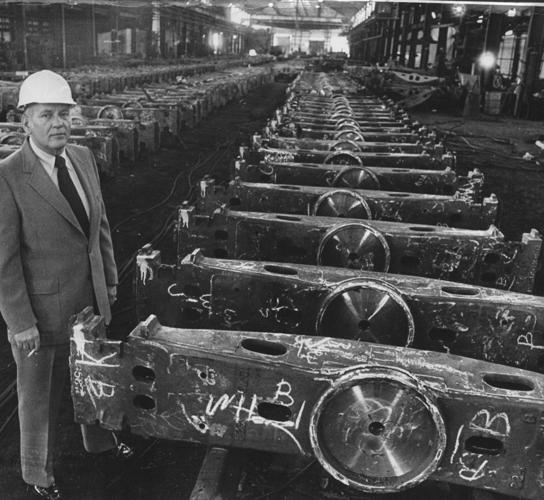
F.J. "Pete" Vasel, chief executive of Scullin Steel Co., stands alongside a row of parts for railroad-car wheel assemblies in 1979. The plant cast them from molten steel.

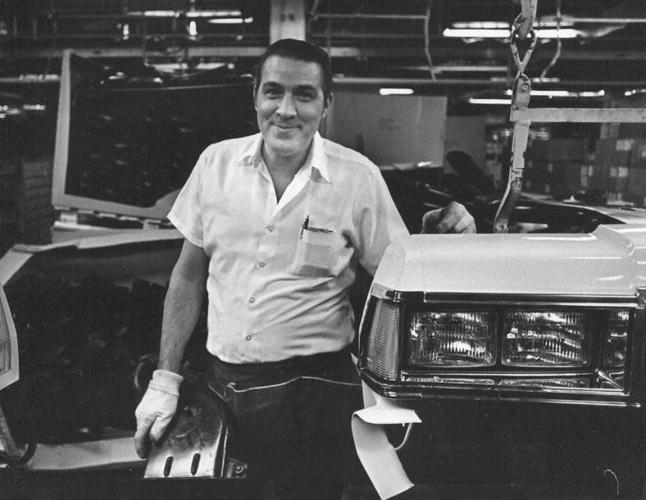
Robert J. Cobb on the General Motors Corp. assembly line in January 1977. He attached plates for installing front bumpers.

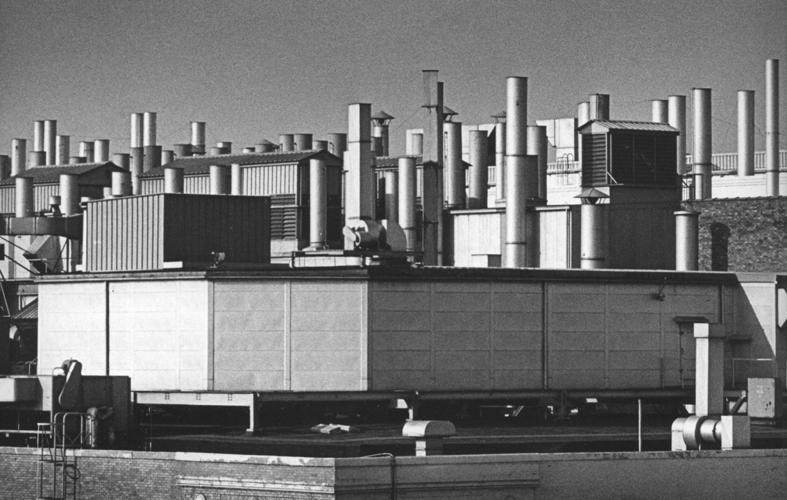
Some of the 800 smokestacks and ventilators for the General Motors Corp. plant in north St. Louis, shown in 1970.

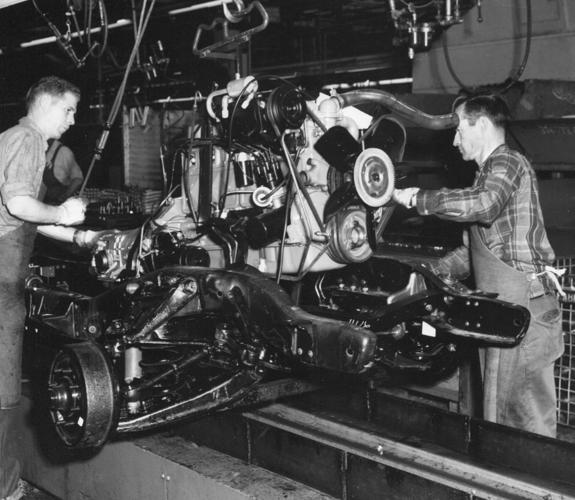
Production workers install an engine onto a chassis on the General Motors Corp. truck line in north St. Louis in 1968. The sprawling plant produced cars and trucks over 67 years.

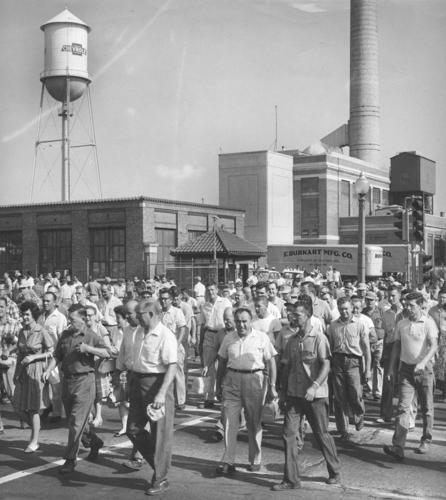
Workers leave the sprawling General Motors Corp. plant at Natural Bridge Avenue and Union Boulevard in 1961. First opened in 1920, the plant employed more than 10,000 workers in the 1970s. It closed in 1987.

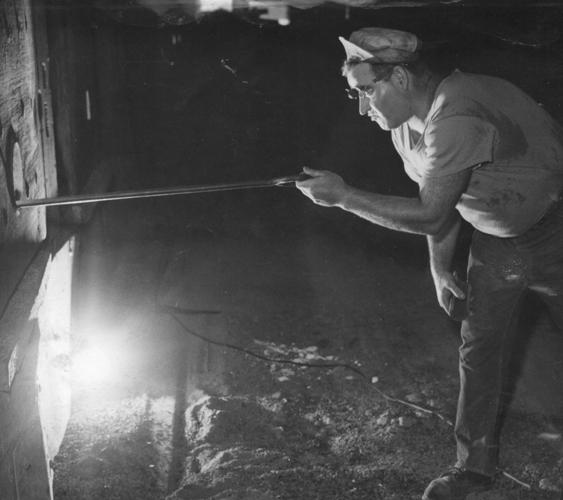
Clarence Eoff tends a blast furnace at Scullin Steel Co. on a day in July 1947 when the temperature outside reached 101 degrees. The furnace ran at 3,200 degrees, so Eoff didn't much notice the weather. Eoff, of Maplewood, had worked at Scullin for 21 years.

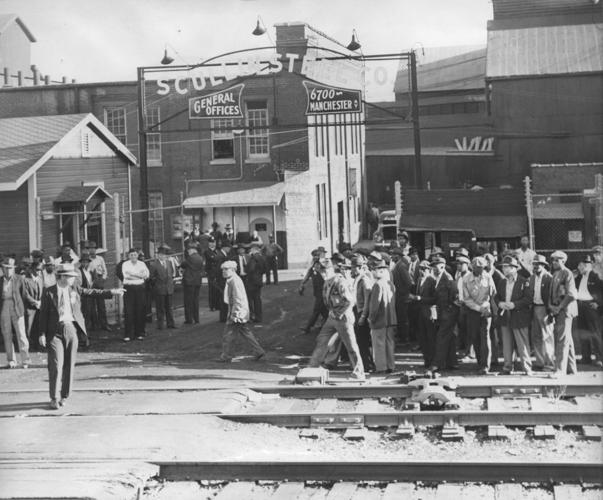
Workers at Scullin Steel Co., 6700 Manchester Avenue, gather at the plant gate in October 1940, expecting a strike. The plant, in the River Des Peres industrial valley west of Kingshighway, made steel castings for 82 years until it closed in 1981.

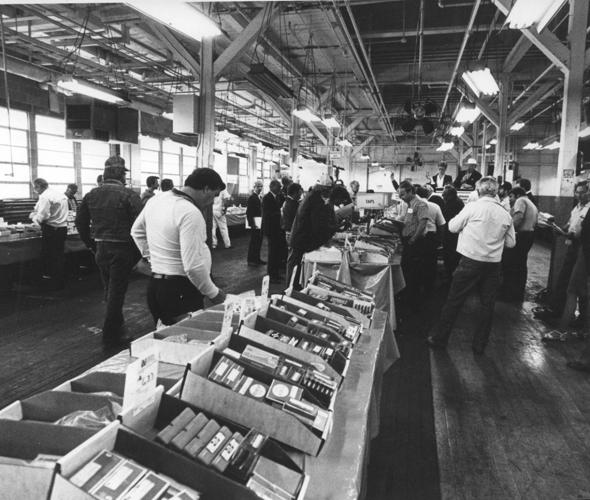
Potential buyers look through production items up for auction at the old Wagner Electric Co. plant, 6400 Plymouth Avenue in Wellston, in May 1983, two years after it closed.

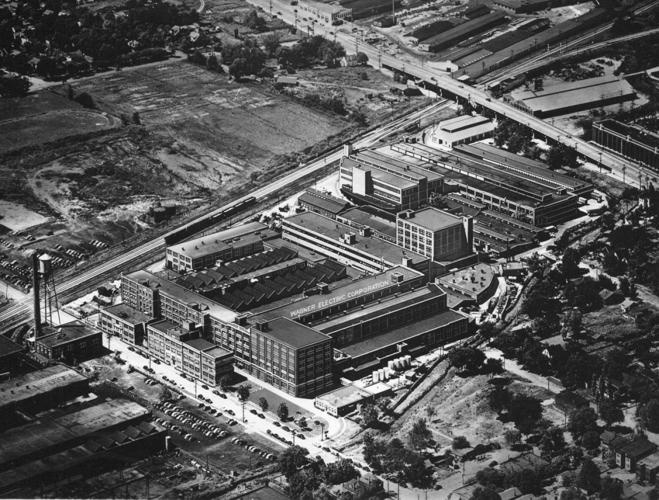
An aerial view of the Wagner Electric Co. works in Wellston in 1948. Once employing 6,000 people, the plant closed in 1981.

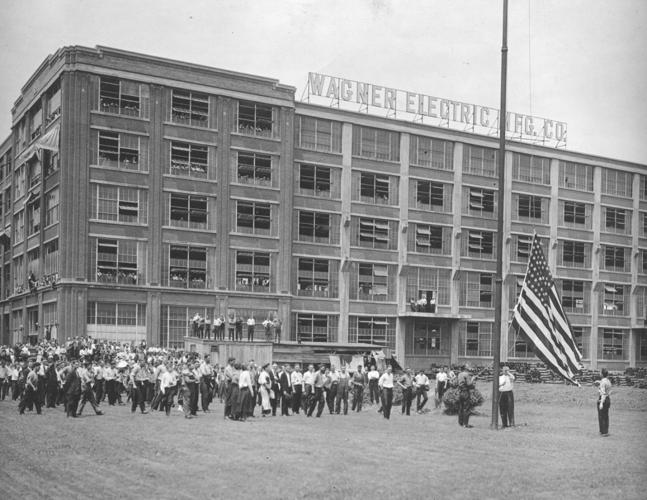
Employees at Wagner Electric Co. in Wellston take part in a flag-raising in 1947. In the 1950s, the plant employed nearly 6,000 workers.
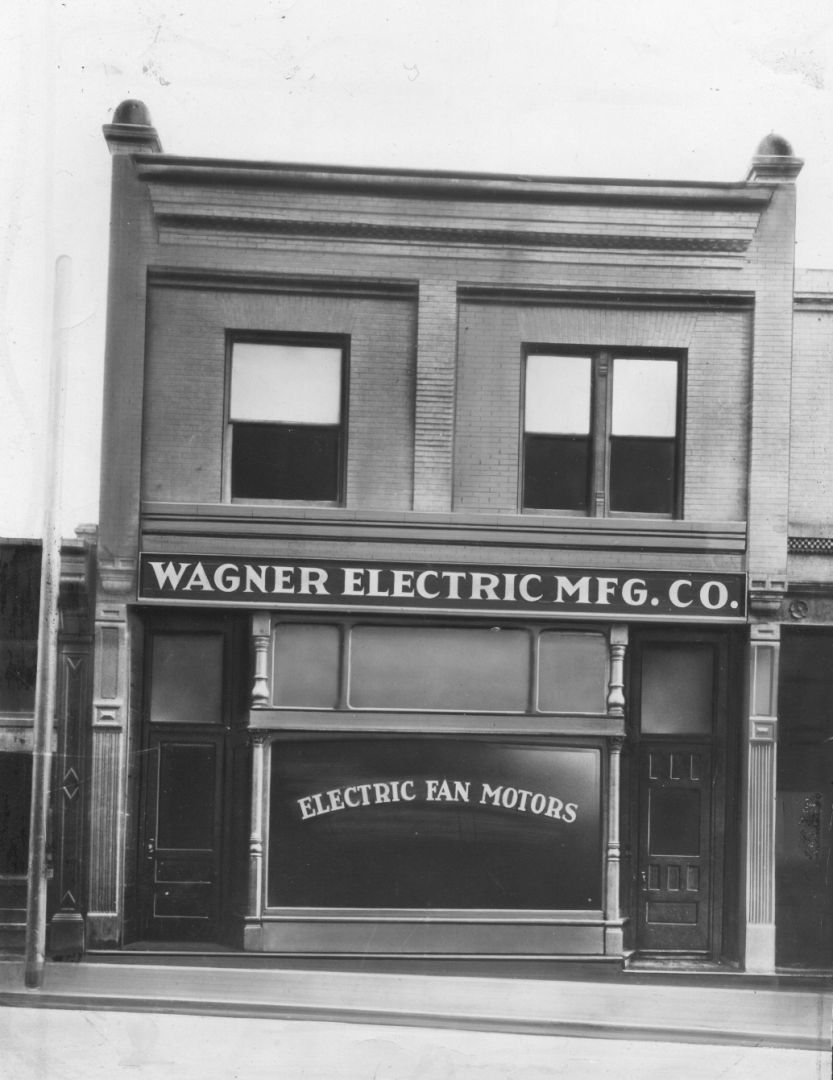
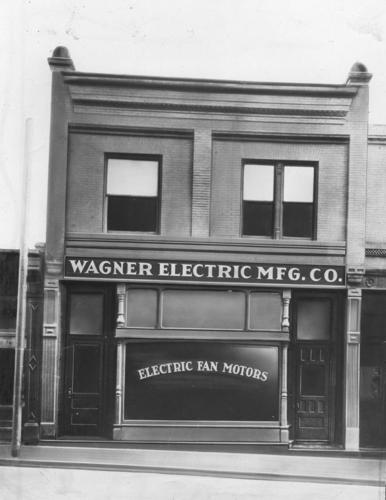
Wagner Electric Co.'s first factory at 1822 Olive Street. The company opened in 1892 with 22 employees.
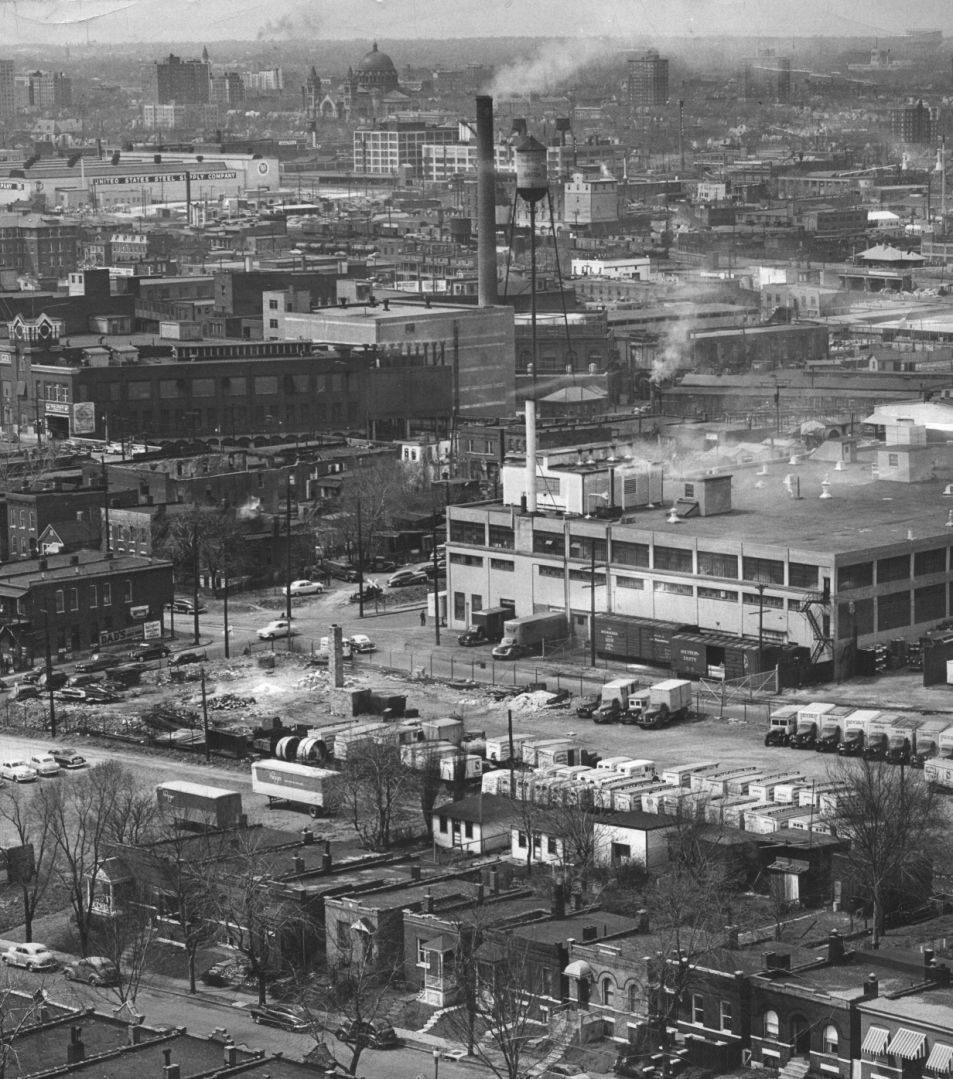
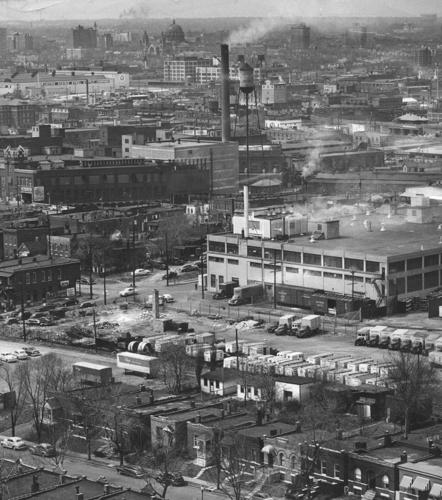
A view of the industrial district near Chouteau and Vandeventer avenues, three miles west of downtown. In the years after World War II, when 35 percent of the region's workforce was employed in manufacturing, smoky factories were a big part of the local landscape.