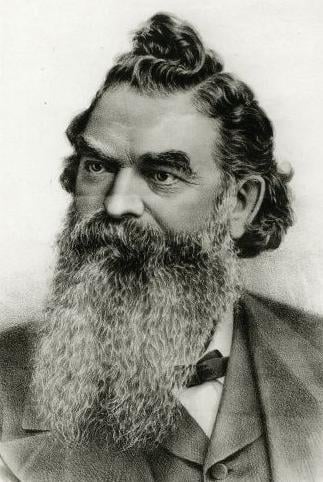
Logan Uriah Reavis
Logan Uriah Reavis was the right man for his time and place.
Reavis toiled on Illinois newspapers and peddled real estate in Nebraska before he bought the struggling St. Louis Daily Press in 1866. It soon failed, but he was fired by a dream for his new home.
Reavis inspired a brief but nationally noteworthy effort to move the nation’s capital to St. Louis from Washington. It drew support from the nation’s burgeoning westward movement.
St. Louis, busy recovering from the Civil War and competing with upstart Chicago, jumped on Reavis’ idea. His promotions were filled with typically outlandish 19th century cheerleading. He called St. Louis “the Babylon of the New World” and wrote a book, “St. Louis: The Future Great City of the World.” He proposed dismantling the White House, Capitol and other buildings for reassembly here.
People are also reading…
In 1869, a national conference to move the capital was held in the St. Louis Mercantile Library, 510 Locust Street. Delegates from 17 states took part, although Pennsylvania was the only eastern state represented.
Henry T. Blow, a businessman and former congressman in St. Louis, offered 1,000 acres along the Mississippi River in far south St. Louis County for a new District of Columbia. (The White House religious retreat center on Christopher Drive gets its name from that offer).
A second meeting was held in Cincinnati, with more talk but no results. Eastern interests saw to that.
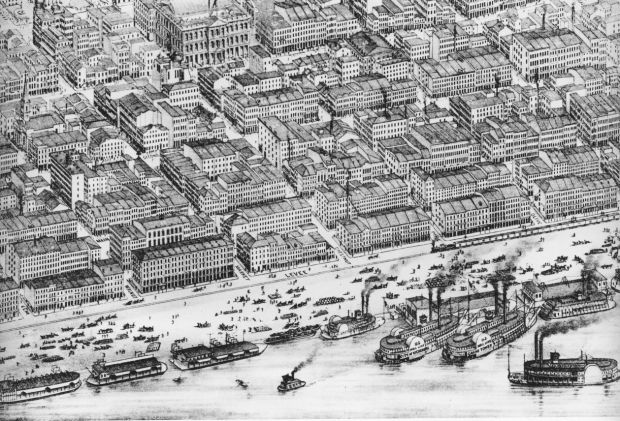
Meanwhile, progress in stone and steel was underway on the St. Louis riverfront, where James B. Eads was busy building a bridge. Chicago railroad interests had put trains across the Mississippi River at Rock Island, Ill., in 1856. Slow, cumbersome ferries did the job in St. Louis. Work finally began on the St. Louis bridge in 1867.
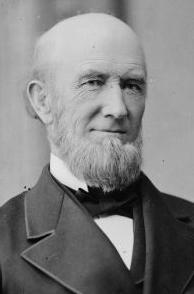
James B. Eads
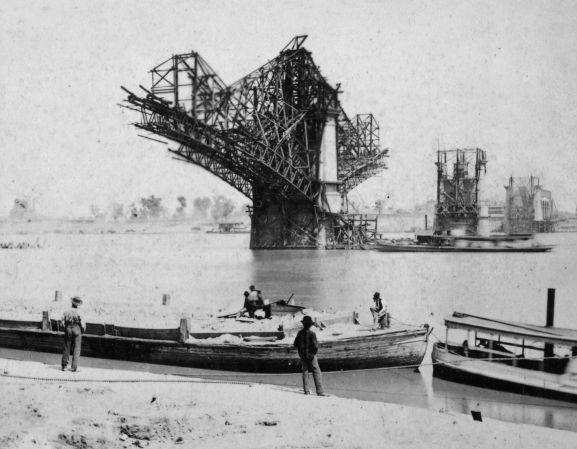
The St. Louis Bridge, known as the Eads Bridge, under construction
The 1860 federal census reported St. Louis had 160,773 residents, still well ahead of faster-growing Chicago. As Reavis preached and Eads built, St. Louis interests fretted and schemed over the looming 1870 census.
William McKee, a newspaper owner and a Republican patronage boss, prevailed upon the local census staff to let Chicago show numbers first. Shortly after it reported 298,977 residents, St. Louis gleefully released its own: 310,864.
That made St. Louis the nation’s fourth-largest city behind New York, Philadelphia and Brooklyn (then its own city). McKee’s newspaper, the Missouri Democrat, declared Chicago whipped.
A few sober skeptics wondered how it was possible, but the census was tub-thumping news.
On July 4, 1874, the St. Louis Bridge was dedicated to thunderous celebration. An estimated 200,000 people turned out — not bad, even for a town with an inflated census, which the 1870 report surely was.
Later estimates put the population in 1870 at about 230,000. When the 1880 census was released, Chicago was fourth with 503,185 people. St. Louis “fell” to sixth with 350,518.
Hand-wringing newspaper investigations uncovered the frauds a decade too late. But in 1900, St. Louis legitimately was ranked the fourth largest city.
Reavis kept promoting St. Louis on the speakers’ circuit but died bankrupt in 1889. He is buried in Bellefontaine Cemetery.
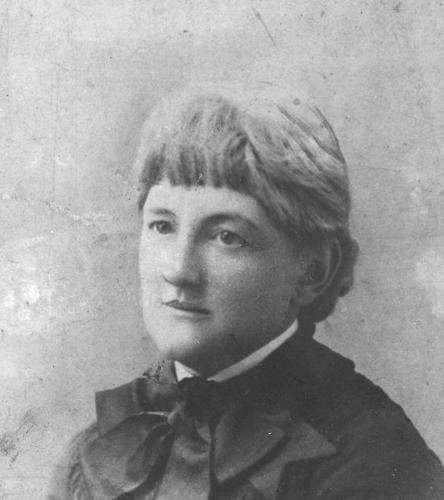
Susan Blow, daughter of privilege, leader in early-childhood education
Her grandfather brought the slave Dred Scott to St. Louis. An uncle freed Scott and his wife, Harriet. Her father, Henry T. Blow, was a congressman and leading industrialist. Their family home in Carondelet had a large library.
Susan Blow, the oldest of six children, was born in 1843 to comfort and intellectual stimulation. She attended private schools in New Orleans and New York. She took part in the St. Louis Society, a philosophical club, where she met William Torrey Harris, who later became St. Louis schools superintendent.
And during a trip to Germany, she studied the work of Frederick Froebel, pioneer in early-childhood education. Blow returned home and outlined her inspiration to Harris.
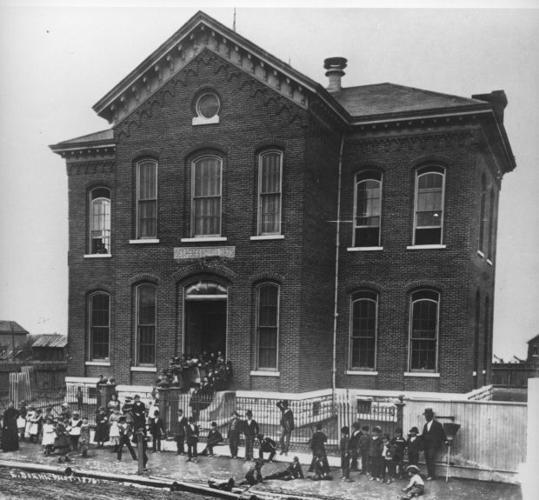
The result was Blow's kindergarten at Des Peres School on Michigan Avenue in Carondelet in 1873 — the first successful public kindergarten in the United States. Six years later, the St. Louis school system had 53 of them, all designed by Blow.
Befitting the concept of a "child's garden," her classrooms were bright and colorful. Children played with blocks and yarn. They learned about colors, shapes and numbers.
She lectured at the Columbia University Teachers' College in New York. Blow died in 1916 at age 72 and is buried in Bellefontaine Cemetery.

Des Peres School, at 6303 Michigan Avenue in the Carondelet neighborhood of St. Louis.

Susan Blow opened the nation's first successful public kindergarten at Des Peres School in the Carondelet neighborhood, near her family's estate.
Henry Shaw, merchant, leaves tranquil refuge to the public
Henry Blow offered land for a new national capital. Henry Shaw provided St. Louis with a restful refuge of beauty.
Shaw was born in Sheffield, England, a center of cutlery manufacture. When he was 18, he and his father sailed for Canada as merchants. The younger Shaw moved to St. Louis, where he soon became rich dealing in furs, cotton, tobacco and other American goods.
On a ride through the countryside southwest of St. Louis, Shaw stumbled upon a wide prairie. He bought 760 acres and, in 1849, he had an Italianate house built on the estate. The area became known as Tower Grove.
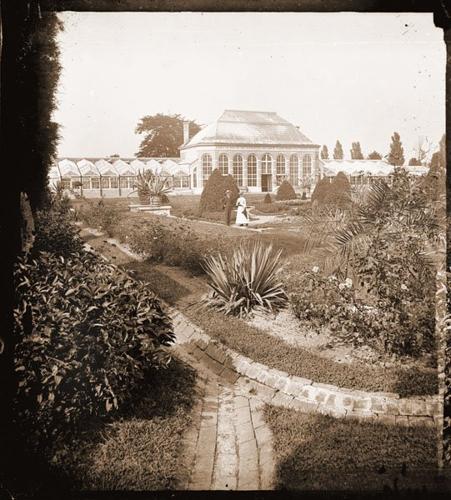
Two years later, after touring formal gardens in England, Shaw decided to develop a public garden for St. Louis. Enlisting the help of noted botanists, he directed plantings of many varieties of trees and flowering plants. In 1859, it opened as the Missouri Botanical Garden.
Nine years later, Shaw provided 276 acres of his land for what became Tower Grove Park. Because it was outside the city limit at the time, he created a controlling park commission and financed an endowment for maintenance. The park features gazebos, stone gates and lily pools.
Shaw died in 1889 at age 89 and is buried on the Botanical Garden grounds.
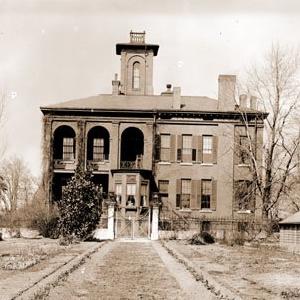
Henry Shaw's country home, the Tower Grove House, circa 1910.

The conservatory and greenhouse at the Missouri Botanical Garden circa 1880. The garden opened to the public in 1859. The buildings were demolished in 1914. The rose garden and lily pool are on that site. Image courtesy Missouri Botanical Garden