


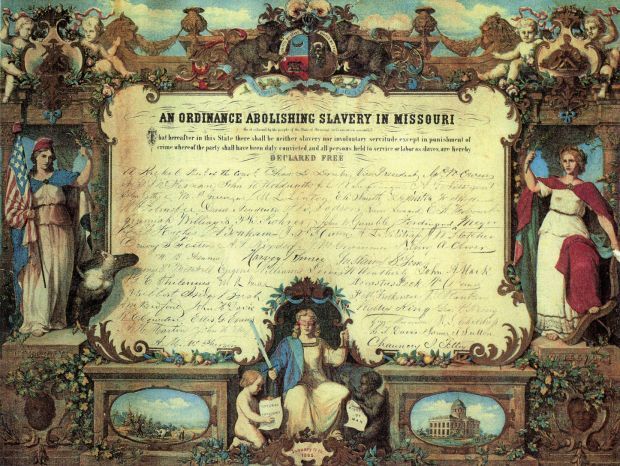
Happy crowds jammed the streets. Cannon thundered, fireworks crackled. The most joyous in the jostling mix were Black people.
Slavery in Missouri was no more.
Delegates to a special state convention, meeting in the Mercantile Library at 510 Locust Street, emancipated Missouri’s slaves on Jan. 11, 1865. President Abraham Lincoln’s famous proclamation hadn’t applied to loyal slave states, such as Missouri.
Gov. Claiborne Fox Jackson created the first special state convention in 1861 hoping that its delegates would take Missouri into the Confederacy. They didn’t. After Union troops chased Jackson from Jefferson City, he and like-minded refugee legislators declared for Dixie. It didn’t matter.
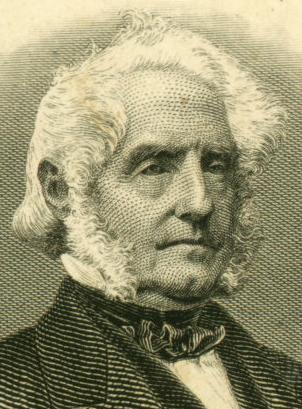
Hamilton R. Gamble
The special convention, with changing membership, continued through the war as a parallel state government of sorts. In Jackson’s absence, it made Hamilton Gamble of St. Louis, a Virginia-born lawyer, provisional governor. Gamble was a Unionist who backed slavery, as did many leading citizens in 1861.
People are also reading…
But the nasty guerrilla war raging across Missouri hardened many Unionists and filled St. Louis with refugees. The military, headquartered in St. Louis, enforced loyalty oaths and martial law. The convention recommended a plan for gradual emancipation.
By 1864, when Gov. Gamble died, political power had shifted to the state’s “Radical” Republicans, so named for their loathing of slavery, secession and secessionists. Their leader was Charles Drake, another St. Louis lawyer who once had supported slavery. They dominated the 1865 session of the special convention.
After declaring immediate emancipation, the delegates expanded the state’s loyalty test into the “Ironclad Oath,” requiring voters and anyone in public office or several professions — including law and the ministry — to assert they had always been pure of the slightest Confederate inclinations. The Radicals enshrined their oath in a proposed new state constitution and ousted hundreds of officeholders, including two Supreme Court judges.
The constitution was called Drake’s in honor of its lead author. Opponents derided it as “Draconian.”
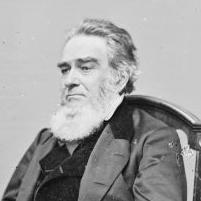
Edward Bates
The proposal split Unionists. Prominent among opponents in St. Louis were Edward Bates, Lincoln’s first attorney general, and Francis Blair, who helped save St. Louis for the Union in 1861.
The much-reduced pool of eligible voters narrowly ratified the constitution on June 6, 1865. St. Louis voters rejected it 2-to-1, but there was strong support in areas laid waste by Rebels.
The constitution guaranteed public education for Black children, but didn’t grant the vote to Black people or women.
The Legislature rewarded Drake with a U.S. Senate seat. But the return of Confederate veterans and infighting among Radicals reduced support for the Ironclad Oath, which voters overwhelmingly repealed in 1870. Democrats won the mayor’s office in 1871 and the governor’s mansion in 1872.
Only 12 years later, Missourians made John Marmaduke, a St. Louis insurance man, their governor. Marmaduke had been a general in the Confederate army.
Charles Drake, anti-Dixie firebrand
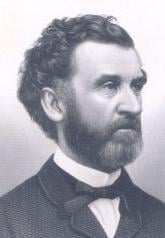
Charles D. Drake
Charles Drake had a prickly personality that made him a difficult politician. He knew an enemy when he saw one.
Drake, born in Cincinnati, moved to St. Louis to work as a lawyer with Hamilton Gamble, a future governor. Drake threw himself into politics, but party spoils eluded him. Elected in 1858 to the Missouri Legislature, his arrogance and criticism of Missouri's German immigrants kept him a one-term representative.
Originally a supporter of slavery, he became a strident critic of the Southern cause as the Civil War exploded. In 1863, he was the main speaker at the founding political rally of the state's "Radical" Republican movement. He denounced Gamble, then governor, as too soft for wartime.
Drake was elected to the special wartime convention. When it reconvened in January 1865, he was the Radicals' leader.
Determined to destroy "the crime of secession," Drake worked to bar former Rebels or their sympathizers from state politics. In 1867, the Legislature sent him to the U.S. Senate. But he damaged his cause two years later with another rant against the Germans.
Drake died in Washington in 1892 at age 80 and is interred in Bellefontaine Cemetery.
The Rev. Cummings, lawbreaker
The Rev. John Cummings, a young Catholic priest, gave a homily during Mass on Sept. 3, 1865, at St. Joseph's parish in Louisiana, Mo. It made him a lawbreaker.
Cummings had been ordained only two years before. Many in his flock were Irish railroad workers and their families. If he had strong opinions about the Civil War, Cummings never made them public.
But a new Missouri Constitution included the "Ironclad Oath," which covered such professions as lawyers and ministers, on the notion that they were powerful opinion leaders.
St. Louis Archbishop Peter Kenrick and other Missouri church leaders, including Episcopal Bishop C.O. Hawks and Methodist Bishop Henry Kavanaugh, said the oath violated religious liberty. Cummings didn't sign. Because he delivered a sermon without swearing the oath, he was jailed and fined.
The Missouri Supreme Court affirmed the conviction. But on Jan. 14, 1867, the U.S. Supreme Court rejected the oath for lawyers and ministers in a 5-4 decision.
Cummings continued in his priestly duties and died in St. Louis at about age 33 in 1873. He is buried in Calvary Cemetery.


