
The Union firmly controlled this city during the Civil War, but gaping social and political divisions bubbled in turmoil.
Church congregations were fractured. The Chamber of Commerce withered after a pro-Union bloc formed a purified Union Merchants Exchange. Ardent secessionists harbored spies, mail couriers and escaped prisoners of war.
The city became swamped with soldiers, prisoners of war and destitute refugees from brutal guerrilla conflict elsewhere in Missouri. Union military commanders hounded Confederate sympathizers by demanding loyalty oaths, confiscating goods and banishing the most brazen.
People are also reading…
St. Louis was a strategic rail hub and supply base in a border state. President Abraham Lincoln desperately needed to keep Missouri.
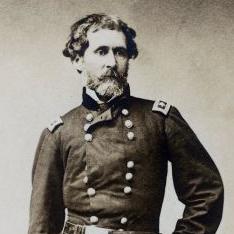
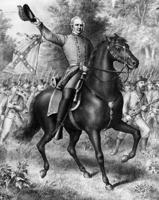
Gen. John C. Fremont
In July 1861, he named Gen. John Fremont commander here. He seemed a good choice — Republican presidential candidate in 1856 and husband of Jessie Benton, the savvy daughter of the late senator Thomas Hart Benton of Missouri.
Lincoln soon regretted it. Without consulting the president, Fremont emancipated the slaves of Missouri rebels. Conservative Unionists were furious. Lincoln overturned the order and sacked Fremont after three months.
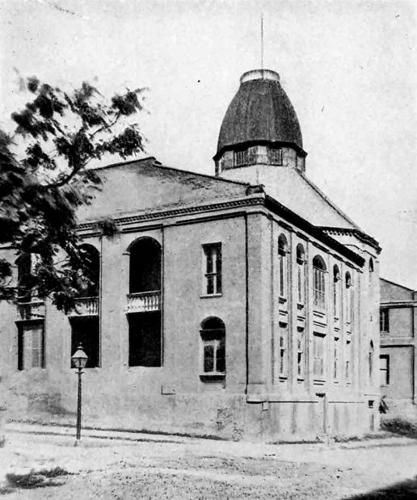
A succession of commanders tightened the screws. After Dr. Joseph McDowell joined the Rebel army, his medical college at Gratiot and Eighth streets was turned into a military prison. Margaret McLure’s mansion at 70 North Sixth Street became a federal jail for defiantly secessionist society ladies, such as herself.

Dr. Joseph McDowell's former medical college at Eighth and Gratiot streets, which was converted into the Gratiot Street Prison to house rebel prisoners of war and civilian sympathizers.
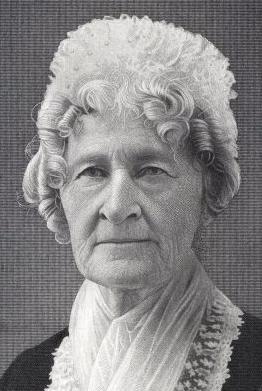
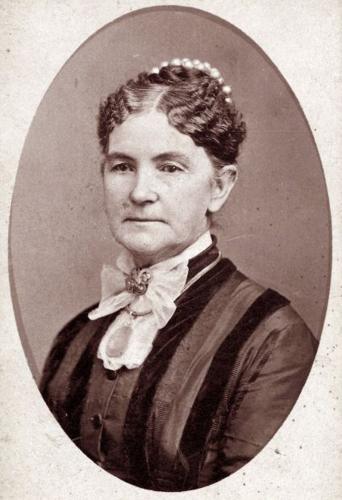
Margaret McLure
In May 1863, soldiers rounded up McLure and two dozen other disloyal civilians and dispatched them downriver to the Confederate lines. (After the war, she returned to St. Louis and became a leader of the United Daughters of the Confederacy.)
The war damaged city commerce, but Union soldiers and supplies crowded the railroads and river landing. James B. Eads’ shipyard in Carondelet built burly ironclad gunboats.
The noblest achievement here was creation of a homegrown system of care for wounded soldiers. Local Union women and men formed the Ladies Union Aid Society and the Western Sanitary Commission. They managed 15 hospitals with 5,000 beds. More than 300 female nurses worked in hospitals and on commission steamboats.
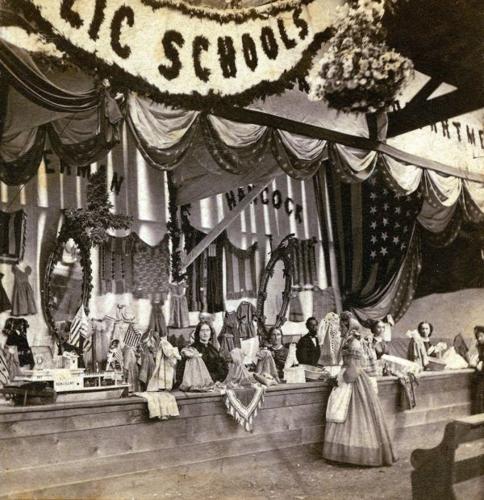
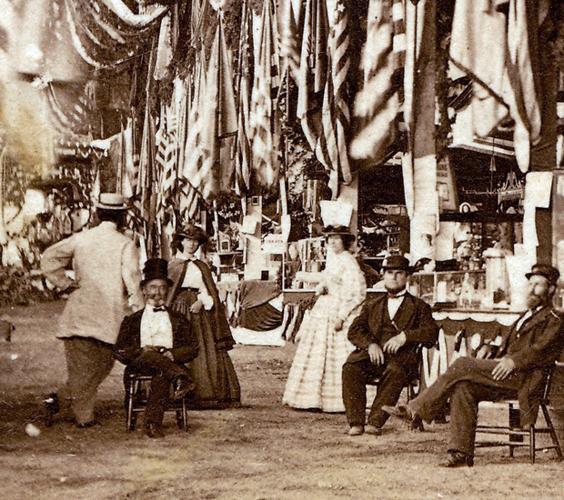
In May 1864, they held the Mississippi Valley Sanitary Fair in a temporary arena in the middle of 12th Street (now Tucker Boulevard). Its one-month run raised $550,000 for medical care.

The Mississippi Valley Sanitary Fair had 54 booths offering knitting and embroidery, hardware and early sewing machines.

The Mississippi Valley Sanitary Fair raised money in a temporary building in the middle of 12th Street (Tucker Boulevard). It ran for a month and raised $550,000.
In fall 1864, Confederate Gen. Sterling Price, a former Missouri governor, gave St. Louis its last big scare by marching north with 12,000 soldiers. After a battle Sept. 27 at Pilot Knob, the Iron Mountain Railroad terminus 80 miles to the south, Price turned toward Kansas City. A few of his cavalrymen stormed into the post office at Cheltenham, near Hampton and Manchester avenues, then rode off.
But blood was shed in the city. After the bodies of six captured Union soldiers were found dumped near Washington, Missouri, the local commander ordered the retaliatory executions of six Rebel prisoners chosen at random.
They were shot on Oct. 29 in a field near Jefferson and Shenandoah avenues.
Adaline Couzins, Union nurse, wounded at Vicksburg

Adaline Couzins
Adaline Couzins was born in England, arrived in America as a child and moved to St. Louis in 1834 with her husband, John, a carpenter. The couple helped lead relief efforts during the city's cholera epidemic in 1849.
In August 1861, they met the first trains bringing wounded soldiers from the Battle of Wilson's Creek near Springfield, Mo. She volunteered for the Ladies Union Aid Society.
Couzins waded into the horror, working in the city's crowded army hospitals. She changed dressings and helped treat badly wounded young men.
She traveled to battlefields, including Shiloh in Tennessee and Vicksburg, Miss., to tend to the wounded. At Vicksburg, she was wounded in a knee by a rifle shot.
A chief surgeon praised her for "untiring activity."
After the war, she led the Ladies Sanitary Corps of the city health department and campaigned for women's suffrage.
She died in 1892 at age 76 and is buried in Bellefontaine Cemetery.
McPheeters brothers bear Union wrath
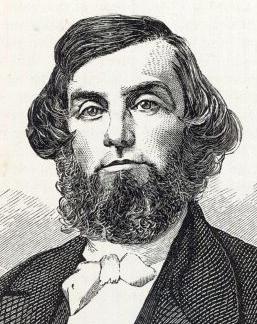
The Rev. Samuel McPheeters
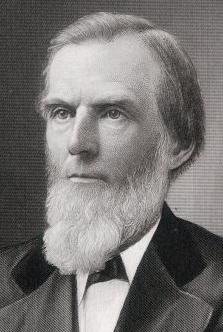
Dr. William McPheeters
William and Samuel McPheeters were brothers from North Carolina who became prominent citizens of St. Louis.
William, a physician, treated patients during the 1849 cholera epidemic. Samuel became a minister and moved here in 1851. When the war began, the Rev. McPheeters was on medical leave from his pastorate at Pine Street Presbyterian Church, 11th and Pine streets.
Dr. McPheeters was outraged by Union actions and refused to take the oath of allegiance required of doctors. In January 1862, the local Union command confiscated his household goods and sold them at auction. He departed for the South and served as a Confederate army surgeon.
Suspicion turned to his brother, who never publicly expressed sentiment about the war. Stridently Unionist members of his church demanded his banishment.
The Rev. McPheeters protested in person to the White House in December 1862. President Abraham Lincoln instructed the St. Louis command to leave the reverend alone, saying government shouldn't run churches.
Rev. McPheeters still lost his pulpit. After the war, he declined the congregation's invitation to return and died in Kentucky in 1870. His brother returned to medicine in St. Louis, died in 1905 at age 89 and is buried in Bellefontaine Cemetery.
Professor of history at the University of Missouri at St. Louis wrote this essay on the Civil War in Missouri