


Missouri abolished slavery to great fanfare. Expanding the right to vote took longer.
The special wartime governing body that freed the slaves within the state on Jan. 11, 1865, also proposed a new state constitution that granted Black people almost every right of citizenship — except to vote or hold public office.
Convention delegates, assembled downtown at the Mercantile Library, were afraid their constitution would be rejected if it extended the franchise to former slaves. Their instincts may have been correct — five months later, it barely won adoption as written.
In 1865, the Missouri electorate was limited to white men who had been loyal to the Union during the Civil War. The ruling Republicans, known as Radicals, tried to keep it that way with the “Ironclad Oath” in their constitution. It barred anyone who had even been sympathetic to the Confederacy.
People are also reading…
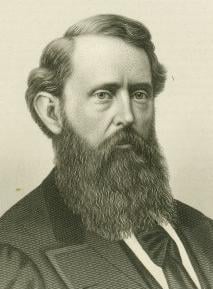
Gratz Brown
But war’s end led to a split among Missouri Republicans. U.S. Sen. Gratz Brown of St. Louis, one of the state’s first abolitionists, wanted to give the vote to Black people and former Rebels. Charles Drake, leader of the steadfast Radicals, mustered his allies in the Missouri Legislature to oppose amnesty for rebels. They also replaced Brown with Drake in the U.S. Senate in 1867. (Back then, legislators chose senators.)
Legislators did agree to put the question of Black suffrage to a statewide referendum. James Milton Turner, born a slave in St. Louis County and leader of the Missouri Equal Rights League, worked tirelessly to win voting rights for Black people.
But in November 1868, the proposition to give Black people the ballot box was rejected by 57 percent of votes cast. In St. Louis, it failed 2-to-1.
Black Missourians had to await the 15th Amendment to the U.S. Constitution, which granted the vote to the freedmen nationwide. Ratification in February 1870 largely settled the issue in Missouri, despite backlash in a few former Rebel strongholds. Turner’s efforts helped to inspire nearly 20,000 Black Missourians to vote that November.
But it was a bad day for the Radicals. Brown was elected governor with Democratic support. Voters overwhelmingly restored the vote to former Confederates, which Turner opposed. That assured a Democratic revival and led in 1875 to a new constitution — without the Ironclad Oath.
Women had to wait much longer.
Members of the Ladies Union Aid Society in St. Louis, who worked in military hospitals during the war, formed the core of Missouri’s first women’s suffrage movement. Among them was Virginia Minor of St. Louis, a founder of the Woman Suffrage Association of Missouri.
Members petitioned the Legislature but were rebuffed. In 1869, they sent a delegation by train to Jefferson City. One legislator said the suffragists had “unsexed themselves.”
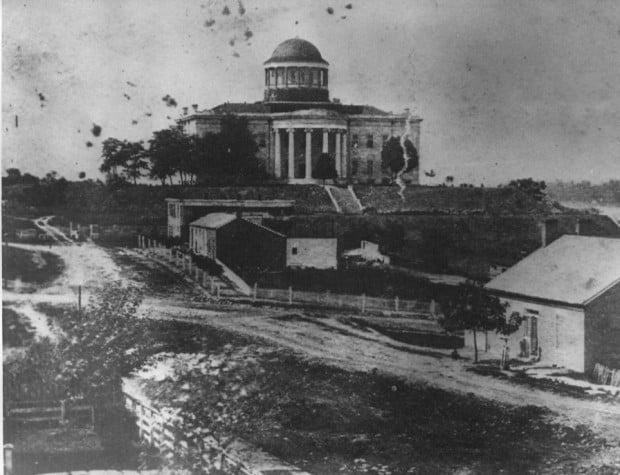
The Missouri State Capitol as it appeared in 1869
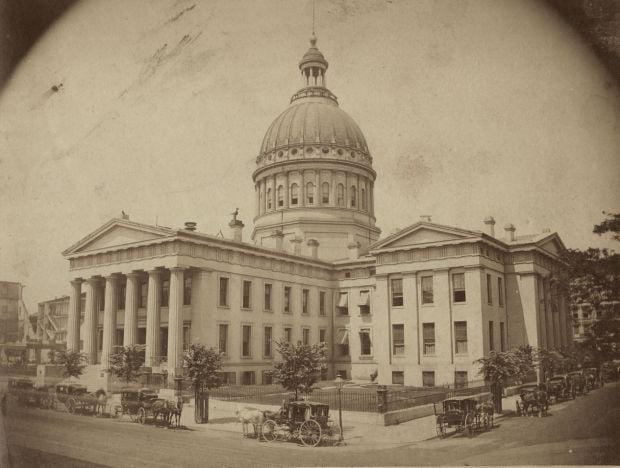
On Oct. 15, 1872, Minor went to the St. Louis County (Old) Courthouse and tried to register to vote. She was refused. Two years later, the U.S. Supreme Court rejected her appeal, unanimously leaving the issue to the states.
In 1914, Missouri’s men voted 2-to-1 against sharing the ballot with women. Five years later, the Legislature agreed to let women vote only in presidential elections. The federal 19th Amendment, adopted in 1920, finally secured full rights.
James Milton Turner, from slave to political leader
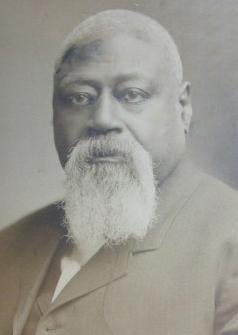
James Milton Turner
James Milton Turner was born on a farm on the St. Charles Rock Road, west of today's Interstate 170. His mother was a slave, his father a former slave. When Turner was four, his owner emancipated the family.
Hannah and John Turner took their son to St. Louis, where he was educated by nuns at the St. Louis Cathedral and the school run by Rev. John Berry Meachum in spite of a state ban on educating Black people. Turner attended Oberlin College in Ohio, then an abolitionist hotbed.
He served as valet to a Union officer from St. Louis and was wounded at the Battle of Shiloh. After the war, he helped create the Missouri Equal Rights League and was its first secretary.
He extensively traveled Missouri to promote suffrage and public education for Black people, earning the goodwill of freed slaves. When Black people won the right to vote by federal constitutional amendment, he had a political network ready — and helped get about 20,000 new voters to the polls in 1870.
His side lost, but President Ulysses S. Grant named him the first Black ambassador to Liberia. Returning to St. Louis in 1878, he tried to win a congressional seat. He died in 1915 in Oklahoma at age 76 and is buried in Father Dickson Cemetery in Crestwood.
Virginia Minor, wartime nurse and suffrage leader
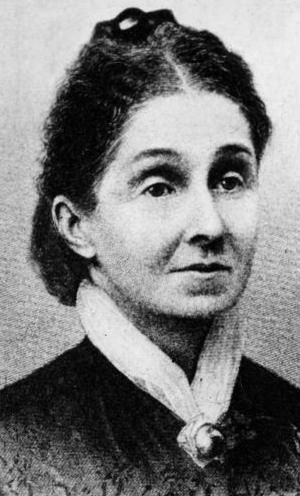
Virginia Minor
Virginia Minor was born in Virginia and moved to St. Louis with her husband, Francis, in 1845. They had a farm just north of today's Central West End.
The Minors supported the Union during the Civil War and provided farm produce to Benton Barracks (Fairground Park), where Missouri mustered its first Black soldiers in December 1863. Minor joined the Ladies Union Aid Society and volunteered at local hospitals that cared for wounded soldiers.
On May 8, 1867, she became president of the Woman Suffrage Association of Missouri at its founding meeting in the Mercantile Library, 510 Locust Street. "I believe the Constitution of the United States gives me every right and privilege to which every other citizen is entitled," she said.
After Minor tried to register to vote in St. Louis in 1872, her husband had to file an appeal on her behalf. (Married women couldn't file lawsuits in Missouri until 1889). Despite the U.S. Supreme Court ruling against her, she kept working for suffrage without ever securing it. She testified before the U.S. Senate and took part in national suffrage conventions.
She died in 1894 at age 70 and is buried in Bellefontaine Cemetery.


